
Homework Answers
Add Answer to:
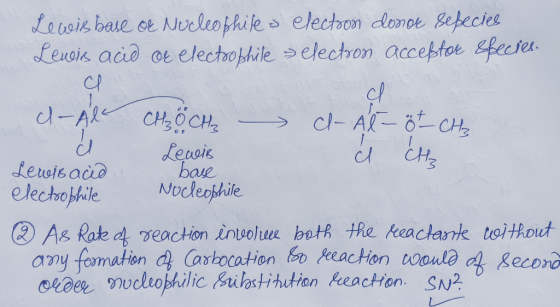
3. Label the reactants as the Lewis base or the Lewis acid. How are these terms...
Draw the complete mechanism for the reaction if HBr with 2-methylcyclohepta-1,3-diene. Label the Lewis acid, Lewis...
Draw the complete mechanism for the reaction if HBr with 2-methylcyclohepta-1,3-diene. Label the Lewis acid, Lewis base, nucleophile and electrophile in each step. (PLEASE ANSWER QUICKLY I WILL RATE).
1. Label your assigned reactants in these acid-base reactions as Lewis acids (electrophiles) or Lewis bases...
 1. Label your assigned reactants in these acid-base reactions as Lewis acids (electrophiles) or Lewis bases (nucleophiles). (a) CH,6: + CH –C: • CHO–CH, + C: (4) CH, NH, + CHỊ–CH2–Cl: • CH, NH–CH,CH, + : (h) CH=CH, + BF, BF;-CH, —CH,
Draw the product of the Lewis acid-base reaction. Label the electrophile and nucleophile. H20 draw structure...
 Draw the product of the Lewis acid-base reaction. Label the electrophile and nucleophile. H20 draw structure . (select) (select) <>
Part A In the acid-base mechanism, the base is a proton acceptor, and the acid is...
 Part A In the acid-base mechanism, the base is a proton acceptor, and the acid is the proton donor. An acid-base reaction is visualized as the reaction in which proton transfer takes place. However, in a nucleophilic substitution reaction, the nucleophile attacks a substrate (usually an electrophile), and the leaving group is removed from the substrate as a weaker nucleophile. The nature of the reactants determines whether a reaction will proceed as an acid-base reaction or a nucleophilic substitution reaction....
reactants are in second picture! circled Label your assigned reactants in these acid-base reactions as Lewis...
 reactants are in second picture! circled
Label your assigned reactants in these acid-base reactions as Lewis acids (electrophiles) or Lewis bases (nucleophiles) 2. The following compound can become protonated on any of the three N atoms. However, one of the N is much more basic than the others. a. Draw the molecule with all three N protonated and then draw resonance structures for this protonated molecule. NH CH-NH-C NH b. For each resonance structure, give the formal charges on each...
reactants are in second picture! circled
Label your assigned reactants in these acid-base reactions as Lewis acids (electrophiles) or Lewis bases (nucleophiles) 2. The following compound can become protonated on any of the three N atoms. However, one of the N is much more basic than the others. a. Draw the molecule with all three N protonated and then draw resonance structures for this protonated molecule. NH CH-NH-C NH b. For each resonance structure, give the formal charges on each...
5. (3 points) Complete the Lewis acid-base reactions below. Label the acid and the base. a....
 5. (3 points) Complete the Lewis acid-base reactions below. Label the acid and the base. a. B(OH)3 + H20 → b. CO2 + H20 → c. MgO + 2HNO, →
For the chemical reaction answer the following questions: 1. Is the mechanism Sn1 or Sn2? 2....
 For the chemical reaction answer the following questions:
1. Is the mechanism Sn1 or Sn2?
2. What kind of substrate reacts in the following reaction? (2 °
, 2 ° allylic , 3 ° )
3. Is the role of the alkyl halide reactant an acid, base,
electrophile, nucleophile , or both a nucleophile and base?
4. Is the role of the reagent KI an acid, base, electrophile,
nucleophile , or both a nucleophile and base?
5. What is the...
For the chemical reaction answer the following questions:
1. Is the mechanism Sn1 or Sn2?
2. What kind of substrate reacts in the following reaction? (2 °
, 2 ° allylic , 3 ° )
3. Is the role of the alkyl halide reactant an acid, base,
electrophile, nucleophile , or both a nucleophile and base?
4. Is the role of the reagent KI an acid, base, electrophile,
nucleophile , or both a nucleophile and base?
5. What is the...
2.) Complete each of the following, assuming reaction in a Lewis acid/base sense. Include formal charges....
 2.) Complete each of the following, assuming reaction in a Lewis acid/base sense. Include formal charges. Label the reactants as either a Lewis acid or Lewis base. Also, show electron pushing to show the changes taking place. Ag : Br + Br: a. CH3 CH3 :CI: HаC C CI: Al C: H с. :5: T
Identify the Lewis acid and Lewis base from among the reactants in each of the following...
 Identify the Lewis acid and Lewis base from among the reactants in each of the following equations. a. Fe^3+(aq) + 6H_2O(l) Fe(H_20)^3+_6 (aq) b. Zn^2+(aq) + 4(NH_3) (aq) Zn(NH_3)^2+_4 (aq) c. (CH_3)_3N(g) + BF_3 (g) (CH_3)_3NBF_3(aq) Fill in the blank for the following. d. Non-metal oxides are _____ acids. e. Metal oxides are _____ bases. f. Non-metal hydroxides are _____ acids. g. Metal hydroxides are _____ bases.
3. Acids and Bases. (15 pts) (a) Circle the weakest acid in each series shown below (9 pts). Seri...
 poease answer and explain all. thank you!
3. Acids and Bases. (15 pts) (a) Circle the weakest acid in each series shown below (9 pts). Series 1 HC CH2 Series 2 OH он OH Series 3 Cl ai pk, 9.38 pk, 10.2 (b) Draw the products of the following acid-base reaction (6 pts). CH3O reactants products 4. Use curved arrow to indieate the flow of electrons for the following elementary steps. Label each step with a proper name such as...
poease answer and explain all. thank you!
3. Acids and Bases. (15 pts) (a) Circle the weakest acid in each series shown below (9 pts). Series 1 HC CH2 Series 2 OH он OH Series 3 Cl ai pk, 9.38 pk, 10.2 (b) Draw the products of the following acid-base reaction (6 pts). CH3O reactants products 4. Use curved arrow to indieate the flow of electrons for the following elementary steps. Label each step with a proper name such as...
 1. Label your assigned reactants in these acid-base reactions as Lewis acids (electrophiles) or Lewis bases (nucleophiles). (a) CH,6: + CH –C: • CHO–CH, + C: (4) CH, NH, + CHỊ–CH2–Cl: • CH, NH–CH,CH, + : (h) CH=CH, + BF, BF;-CH, —CH,
 Draw the product of the Lewis acid-base reaction. Label the electrophile and nucleophile. H20 draw structure . (select) (select) <>
 Part A In the acid-base mechanism, the base is a proton acceptor, and the acid is the proton donor. An acid-base reaction is visualized as the reaction in which proton transfer takes place. However, in a nucleophilic substitution reaction, the nucleophile attacks a substrate (usually an electrophile), and the leaving group is removed from the substrate as a weaker nucleophile. The nature of the reactants determines whether a reaction will proceed as an acid-base reaction or a nucleophilic substitution reaction....
 reactants are in second picture! circled
Label your assigned reactants in these acid-base reactions as Lewis acids (electrophiles) or Lewis bases (nucleophiles) 2. The following compound can become protonated on any of the three N atoms. However, one of the N is much more basic than the others. a. Draw the molecule with all three N protonated and then draw resonance structures for this protonated molecule. NH CH-NH-C NH b. For each resonance structure, give the formal charges on each...
reactants are in second picture! circled
Label your assigned reactants in these acid-base reactions as Lewis acids (electrophiles) or Lewis bases (nucleophiles) 2. The following compound can become protonated on any of the three N atoms. However, one of the N is much more basic than the others. a. Draw the molecule with all three N protonated and then draw resonance structures for this protonated molecule. NH CH-NH-C NH b. For each resonance structure, give the formal charges on each...
 5. (3 points) Complete the Lewis acid-base reactions below. Label the acid and the base. a. B(OH)3 + H20 → b. CO2 + H20 → c. MgO + 2HNO, →
 For the chemical reaction answer the following questions:
1. Is the mechanism Sn1 or Sn2?
2. What kind of substrate reacts in the following reaction? (2 °
, 2 ° allylic , 3 ° )
3. Is the role of the alkyl halide reactant an acid, base,
electrophile, nucleophile , or both a nucleophile and base?
4. Is the role of the reagent KI an acid, base, electrophile,
nucleophile , or both a nucleophile and base?
5. What is the...
For the chemical reaction answer the following questions:
1. Is the mechanism Sn1 or Sn2?
2. What kind of substrate reacts in the following reaction? (2 °
, 2 ° allylic , 3 ° )
3. Is the role of the alkyl halide reactant an acid, base,
electrophile, nucleophile , or both a nucleophile and base?
4. Is the role of the reagent KI an acid, base, electrophile,
nucleophile , or both a nucleophile and base?
5. What is the...
 2.) Complete each of the following, assuming reaction in a Lewis acid/base sense. Include formal charges. Label the reactants as either a Lewis acid or Lewis base. Also, show electron pushing to show the changes taking place. Ag : Br + Br: a. CH3 CH3 :CI: HаC C CI: Al C: H с. :5: T
 Identify the Lewis acid and Lewis base from among the reactants in each of the following equations. a. Fe^3+(aq) + 6H_2O(l) Fe(H_20)^3+_6 (aq) b. Zn^2+(aq) + 4(NH_3) (aq) Zn(NH_3)^2+_4 (aq) c. (CH_3)_3N(g) + BF_3 (g) (CH_3)_3NBF_3(aq) Fill in the blank for the following. d. Non-metal oxides are _____ acids. e. Metal oxides are _____ bases. f. Non-metal hydroxides are _____ acids. g. Metal hydroxides are _____ bases.
 poease answer and explain all. thank you!
3. Acids and Bases. (15 pts) (a) Circle the weakest acid in each series shown below (9 pts). Series 1 HC CH2 Series 2 OH он OH Series 3 Cl ai pk, 9.38 pk, 10.2 (b) Draw the products of the following acid-base reaction (6 pts). CH3O reactants products 4. Use curved arrow to indieate the flow of electrons for the following elementary steps. Label each step with a proper name such as...
poease answer and explain all. thank you!
3. Acids and Bases. (15 pts) (a) Circle the weakest acid in each series shown below (9 pts). Series 1 HC CH2 Series 2 OH он OH Series 3 Cl ai pk, 9.38 pk, 10.2 (b) Draw the products of the following acid-base reaction (6 pts). CH3O reactants products 4. Use curved arrow to indieate the flow of electrons for the following elementary steps. Label each step with a proper name such as...
Most questions answered within 3 hours.
-
Where is the error in this code sequence?
String s1 = "Hello";
String s2 = "ello";...
asked 10 months ago -
Financial data for Joel de Paris, Inc., for last year
follow:
Joel de Paris, Inc.
Balance...
asked 10 months ago -
Consider this reaction:
Al2(SO4)3 (aq)+ BaCl3
(aq) Al2Cl6 (aq)- +
3BaSO4(s) . What is the...
asked 10 months ago -
Suppose that Savneet is considering increasing her
recent random sample from 20 car rentals to 40...
asked 10 months ago -
Trucks arrive at an unloading terminal at an average rate of 120
per hour.
Trucks arrive...
asked 10 months ago -
Why are methanol and ethanol completely soluble in water while
octanol is not very little soluble....
asked 10 months ago -
A facilities manager at a university reads in a research report
that the mean amount of...
asked 10 months ago -
When the CuSO4 is rehydrated by adding water to the anhydrous
compound, is this an endothermic...
asked 10 months ago -
A ray of sunlight is passing from diamond into crown glass; the
angle of incidence is...
asked 10 months ago -
A block of mass 0.249 kg is placed on top of a light, vertical
spring of...
asked 10 months ago -
how do the kidneys compensate in the presences of acidosis
a) trigger hyperventilate
b) reserve acid...
asked 10 months ago -
Question 501 pts
The rental rate of capital to the firm increases. Which of the
following...
asked 10 months ago