
Homework Answers
Add Answer to:
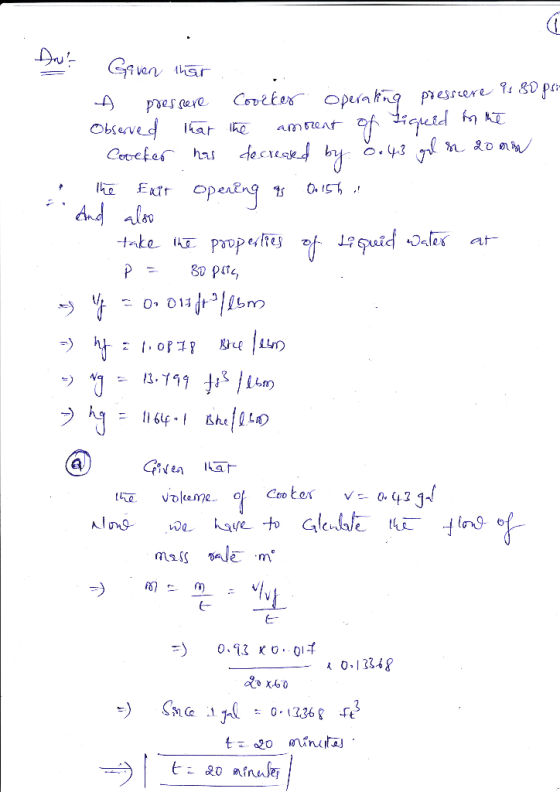
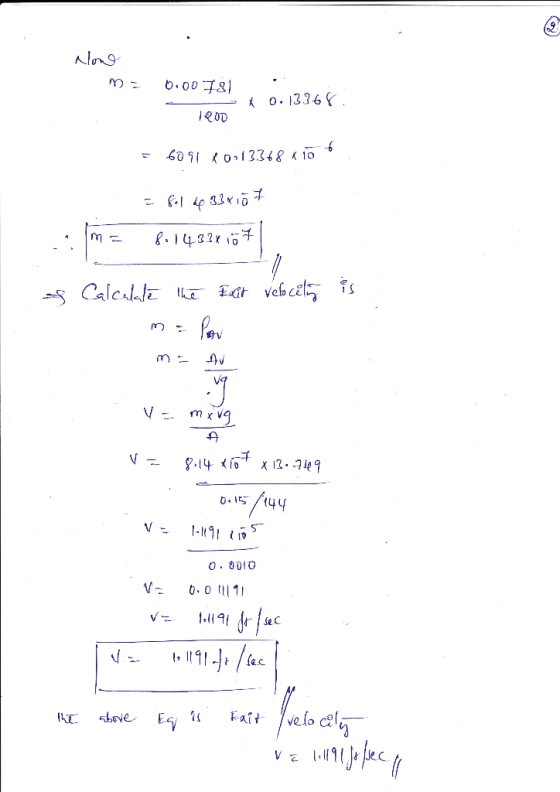
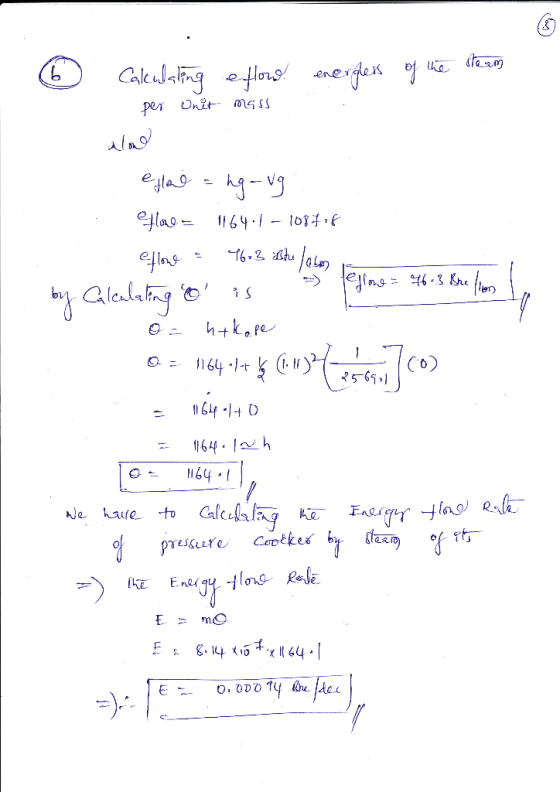
1 out of 3 attempts Steam is leaving a pressure cooker whose operating pressure is 30...
A ship's steam turbine receives 7200 lbm/min of steam at pressure of 900psia and a velocity...
A ship's steam turbine receives 7200 lbm/min of steam at pressure of 900psia and a velocity of 100ft/s. The steam leaves the turbine at 450 psia with a velocity of 800 ft/s. Specific enthalpy at the inlet and exit, respectively, are 1508.9 Btu/lbm and 1238.5 Btu/lbm. As the steam passes through turbine 12 Btu/lbm of heat is lost to the environment. a) Using the Steady Flow Energy Equation, determine the specific work generated by this turbine. (Btu/lbm) b) Determine the...
10. (25 Points) Steam enters an insulated nozzle at 140 psia, 600 F with a velocity...
 10. (25 Points) Steam enters an insulated nozzle at 140 psia, 600 F with a velocity of 100 ft/s. It leaves the nozzle at 20 psia, 360°F. The mass flow rate is 10 lbm/s. Find: Ans a) b) Ans. The actual kinetic energy of the steam at the exit, in Btu The exit velocity in ft/s for part a) The exit cross sectional area of the nozzle, in in The nozzle isentropic efficiency (%) Show the actual and the ideal...
ANSWER PLEASE PROBLEM #2 (68 pts.) Steam at 200 psia, 600°F (State 1) enters an adiabatic...
 ANSWER PLEASE
PROBLEM #2 (68 pts.) Steam at 200 psia, 600°F (State 1) enters an adiabatic turbine cperating at steady state with a mass flow rate of 16.5 lbm/min and exits at 15 psia, 240°F (State 2), Neglecting the changes in kinetic and potential energies and assuming the surroundings to be at T.- 537 R. Determine: a) the actual power output, in Btu/min. b) the reversible (or maximum) power output, in Btu/min. c) the rate of exergy destruction, in Btu/min....
ANSWER PLEASE
PROBLEM #2 (68 pts.) Steam at 200 psia, 600°F (State 1) enters an adiabatic turbine cperating at steady state with a mass flow rate of 16.5 lbm/min and exits at 15 psia, 240°F (State 2), Neglecting the changes in kinetic and potential energies and assuming the surroundings to be at T.- 537 R. Determine: a) the actual power output, in Btu/min. b) the reversible (or maximum) power output, in Btu/min. c) the rate of exergy destruction, in Btu/min....
Steam at 500 lbf/in2 , 500°F enters a well-insulated valve operating at steady state with a...
Steam at 500 lbf/in2 , 500°F enters a well-insulated valve operating at steady state with a mass flow rate of 0.11 lbm/s through a 1-in-diameter pipe. The steam expands to 200 lbf/in2 with no significant change in elevation. (a) Derive the equation by which the exit state may be fixed. Simplify. (b) Determine the exit velocity, in ft/s, and the exit temperature, in °F, if the ratio of inlet to exit pipe diameters, d1/d2, is 0.64. (c) Plot the exit...
1 out of 2 attempt Steam flows steadily through a turbine at a rate of 53,500...
 1 out of 2 attempt Steam flows steadily through a turbine at a rate of 53,500 lbm/h, entering at 1,000 psia and 900°F and leaving at 5 psia as saturated vapor. If the power generated by the turbine is 4.26 MW, determine the rate of heat loss from the steam. Btu/s (Round to one decimal place) out
Problem 6.066 Steam at 550 lbf/in.2, 700°F enters a turbine operating at steady state and exits...
 Problem 6.066 Steam at 550 lbf/in.2, 700°F enters a turbine operating at steady state and exits at 1 lbf/in. 2 The turbine produces 600 hp. For the turbine, heat transfer is negligible as are kinetic and potential energy effects. (a) Determine the quality of the steam at the turbine exit, the mass flow rate, in lb/s, and the entropy production rate, in Btu/s OR, if the turbine operates without internal irreversibilities. (b) Determine the mass flow rate, in lb/s, and...
1. Water enters the constant 130-mm inside-diameter tubes of a boiler at 7 MPa and 65°C...
 1. Water enters the constant 130-mm inside-diameter tubes of a boiler at 7 MPa and 65°C and leaves the tubes at 6 MPa and 450°C with a velocity of 80 m/s. Calculate the velocity of the water at the tube inlet and the inlet volume flow rate. [5-14] 2. Air enters a nozzle steadily at 50 psia, 140°F, and 150 ft/s and leaves at 14.7 psia and 900 ft/s. The heat loss from the nozzle is estimated to be 6.5...
Steam enters a nozzle operating at steady state at 30 bar, 320 deg C with a...
Steam enters a nozzle operating at steady state at 30 bar, 320 deg C with a velocity of 100 m/sec. The exit pressure and temperature are 10 bar and 200 deg C respectively. The mass rate of flow of steam is 2 kg/sec. Neglect heat transfer and potential energy. Determine, exit velocity in m/sec and inlet and exit flow areas in m2.
A) Steam enters a horizontal pipe operating at steady state with a specific enthalpy of 2,663 kJ/...
A) Steam enters a horizontal pipe operating at steady state with a specific enthalpy of 2,663 kJ/kg and a mass flow rate of 0.1 kg/s. At the exit, the specific enthalpy is 1,531 kJ/kg. If there is no significant change in kinetic energy from inlet to exit, determine the rate of heat transfer between the pipe and its surroundings, in kW. B) Refrigerant 134a enters a horizontal pipe operating at steady state at 40°C, 3.1 bar and a velocity of...
1. Consider the ideal steam cycle shown below that incorporates both reheat and a closed feedwater...
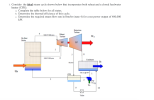 1. Consider the ideal steam cycle shown below that incorporates both reheat and a closed feedwater heater (CFH). a. Complete the table below for all states. b. Determine the thermal efficiency of this cycle. c. Determine the required steam flow rate in lbm/hr (state 4) for a net power output of 400,000 kW. Extraction Tube 1000 F/1000 pia Reheat Turbine Re-Heat Boiler HP 1000 F 200 pia SLF1 CFH 10 Valve State T°F) P (psia) h (BTU/ lbm) s (BTU/lbm...
 10. (25 Points) Steam enters an insulated nozzle at 140 psia, 600 F with a velocity of 100 ft/s. It leaves the nozzle at 20 psia, 360°F. The mass flow rate is 10 lbm/s. Find: Ans a) b) Ans. The actual kinetic energy of the steam at the exit, in Btu The exit velocity in ft/s for part a) The exit cross sectional area of the nozzle, in in The nozzle isentropic efficiency (%) Show the actual and the ideal...
 ANSWER PLEASE
PROBLEM #2 (68 pts.) Steam at 200 psia, 600°F (State 1) enters an adiabatic turbine cperating at steady state with a mass flow rate of 16.5 lbm/min and exits at 15 psia, 240°F (State 2), Neglecting the changes in kinetic and potential energies and assuming the surroundings to be at T.- 537 R. Determine: a) the actual power output, in Btu/min. b) the reversible (or maximum) power output, in Btu/min. c) the rate of exergy destruction, in Btu/min....
ANSWER PLEASE
PROBLEM #2 (68 pts.) Steam at 200 psia, 600°F (State 1) enters an adiabatic turbine cperating at steady state with a mass flow rate of 16.5 lbm/min and exits at 15 psia, 240°F (State 2), Neglecting the changes in kinetic and potential energies and assuming the surroundings to be at T.- 537 R. Determine: a) the actual power output, in Btu/min. b) the reversible (or maximum) power output, in Btu/min. c) the rate of exergy destruction, in Btu/min....
 1 out of 2 attempt Steam flows steadily through a turbine at a rate of 53,500 lbm/h, entering at 1,000 psia and 900°F and leaving at 5 psia as saturated vapor. If the power generated by the turbine is 4.26 MW, determine the rate of heat loss from the steam. Btu/s (Round to one decimal place) out
 Problem 6.066 Steam at 550 lbf/in.2, 700°F enters a turbine operating at steady state and exits at 1 lbf/in. 2 The turbine produces 600 hp. For the turbine, heat transfer is negligible as are kinetic and potential energy effects. (a) Determine the quality of the steam at the turbine exit, the mass flow rate, in lb/s, and the entropy production rate, in Btu/s OR, if the turbine operates without internal irreversibilities. (b) Determine the mass flow rate, in lb/s, and...
 1. Water enters the constant 130-mm inside-diameter tubes of a boiler at 7 MPa and 65°C and leaves the tubes at 6 MPa and 450°C with a velocity of 80 m/s. Calculate the velocity of the water at the tube inlet and the inlet volume flow rate. [5-14] 2. Air enters a nozzle steadily at 50 psia, 140°F, and 150 ft/s and leaves at 14.7 psia and 900 ft/s. The heat loss from the nozzle is estimated to be 6.5...
 1. Consider the ideal steam cycle shown below that incorporates both reheat and a closed feedwater heater (CFH). a. Complete the table below for all states. b. Determine the thermal efficiency of this cycle. c. Determine the required steam flow rate in lbm/hr (state 4) for a net power output of 400,000 kW. Extraction Tube 1000 F/1000 pia Reheat Turbine Re-Heat Boiler HP 1000 F 200 pia SLF1 CFH 10 Valve State T°F) P (psia) h (BTU/ lbm) s (BTU/lbm...
Most questions answered within 3 hours.
-
Where is the error in this code sequence?
String s1 = "Hello";
String s2 = "ello";...
asked 11 months ago -
Financial data for Joel de Paris, Inc., for last year
follow:
Joel de Paris, Inc.
Balance...
asked 11 months ago -
Consider this reaction:
Al2(SO4)3 (aq)+ BaCl3
(aq) Al2Cl6 (aq)- +
3BaSO4(s) . What is the...
asked 11 months ago -
Suppose that Savneet is considering increasing her
recent random sample from 20 car rentals to 40...
asked 11 months ago -
Trucks arrive at an unloading terminal at an average rate of 120
per hour.
Trucks arrive...
asked 11 months ago -
Why are methanol and ethanol completely soluble in water while
octanol is not very little soluble....
asked 11 months ago -
A facilities manager at a university reads in a research report
that the mean amount of...
asked 11 months ago -
When the CuSO4 is rehydrated by adding water to the anhydrous
compound, is this an endothermic...
asked 11 months ago -
A ray of sunlight is passing from diamond into crown glass; the
angle of incidence is...
asked 11 months ago -
A block of mass 0.249 kg is placed on top of a light, vertical
spring of...
asked 11 months ago -
how do the kidneys compensate in the presences of acidosis
a) trigger hyperventilate
b) reserve acid...
asked 11 months ago -
Question 501 pts
The rental rate of capital to the firm increases. Which of the
following...
asked 11 months ago