
Homework Answers
ANSWER
C.4-
- A dipeptide is formed by joining of 2 amino acid with Peptide bond. by the chemical reaction viz. Condensation Reaction
- .The bond between the two amino acids forms between the carboxyl group and the amino group.by producing water as biproduct.
C.5-
| DNA | RNA |
| DNA has deoxyribose sugar | RNA has ribose sugar |
| it has double helical structure | it is single stranted |
| it is less reactive due to presence of C-H BOND | it has larger grooves, so they are highly reactive |
| It contain nitrogen base ADENINE,GUANINE,THYMINE AND CYTOSINE | it contain nitrogen base ADENINE, GUANINE , CYTOSINE ,URACIL |
C.6-
a) Enzymes are biological molecules that are important for life.enzymes used as catalyst in a reaction.
b) The term energy of activation , in general, refers to the minimum amount of energy required to activate atoms or molecules to a condition in which they can undergo a chemical reaction or physical transport. When an enzyme binds to its substrate it lowers the activation energy of the reaction so that the reaction completes more quickly.
c)Enzymes are basically globular proteins . These globular proteins are amazing active catalysts.
d) A cofactor is basically a non protein chemical component that are considered as 'helper molecules.Enzymes require cofactors for its proper functioning of biological activity.
e) An inactive enzyme without the cofactor is called apoenzyme.
f) Proteins are sensitive to their environment. Hydrogen ions are positively charged particles that interact with negatively charged particles of protein macromolecules.These interactions disrupt the delicate balance of forces which hold the protein in its appropriate 3D shape.Once this alters the shape of the enzyme it eventually affects the active site and change the ability to interact with substrate.
g)
- A non-competitive enzyme inhibitor doesnt block the substrate binding.site (Allosteric site)
- Allosteric enzymes display a sigmoidal curve
- This is type of inhibition is reversible.and decreases the turnover rate of an enzyme rather than interfering with the amount of substrate.therefore the reaction is slowed rather than being stopped and also cannot be increased by increasing substrate.
C.7)
- The fat soluble vitamins A,D,E and K are absorbed in the intestine in the presence of fat. They are abundant in high-fat foods.
- Vitamin A is not a single compound rather is a group of fat soluble compounds called retinoids.
- The most common dietary form of vitamin A is retinol. It is
abundant in green leafy vegeatables.
It plays a vital role in maintaining vision. - Deficiency of vitamin A leads to night blindness. It also
impairs immune functions.
It may also prevent growth in children. - Since vitamin A is vital for hair growth its deficiency may
lead alopecia or hair loss.
Vitamin D or sunshine vitamin is produced in oir skin when exposed to sunlight.
Add Answer to:
C4. Amino Acids and Proteins Amino acids are organic compounds that contain amine and carboxyl functional...
1.)Carbohydrates are aldehydes or ketones that contain multiple ___________ groups. hydroxyl phosphate methyl amino 2.) The...
1.)Carbohydrates are aldehydes or ketones that contain multiple ___________ groups. hydroxyl phosphate methyl amino 2.) The type of lipid that contains a four-ring structure and does not contain fatty acids is: glycolipid. phospholipid. steroid. triglyceride. none of the above 3.)Amino acids contain a(n): "R" side chain. carboxylic acid group. amine group. all of the above none of the above 4.An alpha helix is an example of which type of structure? Primary Structure Secondary Structure Tertiary Structure Quaternary Structure Pental Structure...
THIS IS BIOCHEMISTRY A peptide has a low pI value. Which of the following amino acids...
THIS IS BIOCHEMISTRY A peptide has a low pI value. Which of the following amino acids are likely to be present? Glycine Serine Valine Aspartic aci Arginine The R-groups of which of the following pairs of amino acids could participate in the formation of salt bridge electrostatic interaction? Alanine and valine Valine and lysine Lysine and glutamate Serine and isoleucine Asparagine and glutamine Which of the following interactions does NOT contribute to stabilizing tertiary structure? Hydrophobic interactions Electrostatic interations...
1. DNA and RNA are examples of 2. Carbohydrates and lipids both contain the elements 3....
 1. DNA and RNA are examples of 2. Carbohydrates and lipids both contain the elements 3. Proteins are made of are made of nucleotides. 5. Examples of lipids include 6. Sugars and starches are examples of 7. Muscle, skin, and enzymes are examples of 8. Nucleic acids are important because they contain your are a source of long-term stored energy. 10. Organic molecules that have the same chemical formula but different structural arrangements are called 11. Carbohydrates are important because...
Lab #14 Protein Synthesis Introduction Proteins are vital for the survival of an organism. Proteins make...
 Lab #14 Protein Synthesis Introduction Proteins are vital for the survival of an organism. Proteins make enzymes and hormones which control reactions that must take place in the cell to survive.Proteins are made of basic units called amino acids. There are a total of 20 amino acids. Different proteins have different number and/or combination of amino acids. The kind of amino acid that is used when producing the protein depends on the 3-base code (codon) read from the RNA molecule...
The four main groups of biological molecules are? DNA, ATP, H20 and CO2 nucleotides, amino acids,...
 The four main groups of biological molecules are? DNA, ATP, H20 and CO2 nucleotides, amino acids, monosacharides and fatty acids 01. a. b. c. DNA, RNA, Starch and phospholipids nucleic acids, proteins, carbohydrates and fats d. 02. Large biomolecules are polymers of smaller subunits generally referred to as? a. monomers b. dimers c. monosaccharides d. bases 03. Which of the following properties apply to lipids? a. b. c. d. saturated versions are likely to be solid at room temperature some...
What are the three functional groups that comprise a nucleotide? What do nucleotides have in common...
What are the three functional groups that comprise a nucleotide? What do nucleotides have in common with amino acids or simple sugars? When the structure of DNA was first elucidated, many biologists quickly saw how this structure explained the passage of information from one generation to another. How does the structure of DNA explain generation-to-generation flow of information? In other words, give a brief description of the structure of DNA and tell how this structure allows for replication. Which of...
66. _________________________________________________________ The complete functional name for the enzyme that is commonly called RNApoly is _____....
66. _________________________________________________________ The complete functional name for the enzyme that is commonly called RNApoly is _____. 67._________________________________________________________ The enzymes associated with telomere maintenance, are responsible for producing DNA from a RNA template and are associated with retroviruses are technically called ____. 68._________________________________________________________There is a term that is used to express the fact that if a RNA molecule forms a hairpin the two portions of the nucleic acid chains that make up hairpin have 3'-5' ends arranged in opposite directions. That...
Question 1 (0.5 points) Saved Proteins are formed by joining together. carboxylic acids fatty acids amino...
 Question 1 (0.5 points) Saved Proteins are formed by joining together. carboxylic acids fatty acids amino acids none of the above Question 2 (0.5 points) Which two functional groups does an amino acid contain? amine and carboxylic acid carboxylic acid and amide amide and heterocyclic ring heterocyclic ring and amine Question 3 (0.5 points) Do amino acids commonly exist in nature as neutral molecules with all uncharged atoms? Yes No Question 1 (0.5 points) What is a protein? A polymer...
proteins are digested into amino acids by enzymes called proteas. In the experiment 5 ml of...
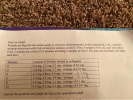 proteins are digested into amino acids by enzymes called
proteas. In the experiment 5 ml of protein solutionwas mixed with 2
ml
Data for Graph Proteins are digested into amino acids by enzymes called proteases. In this experiment, 5 mL of protein solution was mixed with 2 mL of enzyme solution at time 0. Then, 3 samples of 0.1 ml each were taken every 2 minutes for a total of 10 minutes including 3 samples at time 0. The data...
proteins are digested into amino acids by enzymes called
proteas. In the experiment 5 ml of protein solutionwas mixed with 2
ml
Data for Graph Proteins are digested into amino acids by enzymes called proteases. In this experiment, 5 mL of protein solution was mixed with 2 mL of enzyme solution at time 0. Then, 3 samples of 0.1 ml each were taken every 2 minutes for a total of 10 minutes including 3 samples at time 0. The data...
QUESTION 1 SNPs contain variable amino acid substitutions and are highly heterogeneous. various nucleotides transcribed repeatedly...
QUESTION 1 SNPs contain variable amino acid substitutions and are highly heterogeneous. various nucleotides transcribed repeatedly and are homogeneous . variable base sequences and are variable in the population. variable numbers of tandem repeats and are highly uniform in the population . small noteworthy transcribed regions and are lethal genes. QUESTION 2 Which of the following is a potential use for DNA microarrays? trap genes that are both active and inactive isolate genes from eukaryotic cell nuclei assay protein output...
 1. DNA and RNA are examples of 2. Carbohydrates and lipids both contain the elements 3. Proteins are made of are made of nucleotides. 5. Examples of lipids include 6. Sugars and starches are examples of 7. Muscle, skin, and enzymes are examples of 8. Nucleic acids are important because they contain your are a source of long-term stored energy. 10. Organic molecules that have the same chemical formula but different structural arrangements are called 11. Carbohydrates are important because...
 Lab #14 Protein Synthesis Introduction Proteins are vital for the survival of an organism. Proteins make enzymes and hormones which control reactions that must take place in the cell to survive.Proteins are made of basic units called amino acids. There are a total of 20 amino acids. Different proteins have different number and/or combination of amino acids. The kind of amino acid that is used when producing the protein depends on the 3-base code (codon) read from the RNA molecule...
 The four main groups of biological molecules are? DNA, ATP, H20 and CO2 nucleotides, amino acids, monosacharides and fatty acids 01. a. b. c. DNA, RNA, Starch and phospholipids nucleic acids, proteins, carbohydrates and fats d. 02. Large biomolecules are polymers of smaller subunits generally referred to as? a. monomers b. dimers c. monosaccharides d. bases 03. Which of the following properties apply to lipids? a. b. c. d. saturated versions are likely to be solid at room temperature some...
 Question 1 (0.5 points) Saved Proteins are formed by joining together. carboxylic acids fatty acids amino acids none of the above Question 2 (0.5 points) Which two functional groups does an amino acid contain? amine and carboxylic acid carboxylic acid and amide amide and heterocyclic ring heterocyclic ring and amine Question 3 (0.5 points) Do amino acids commonly exist in nature as neutral molecules with all uncharged atoms? Yes No Question 1 (0.5 points) What is a protein? A polymer...
 proteins are digested into amino acids by enzymes called
proteas. In the experiment 5 ml of protein solutionwas mixed with 2
ml
Data for Graph Proteins are digested into amino acids by enzymes called proteases. In this experiment, 5 mL of protein solution was mixed with 2 mL of enzyme solution at time 0. Then, 3 samples of 0.1 ml each were taken every 2 minutes for a total of 10 minutes including 3 samples at time 0. The data...
proteins are digested into amino acids by enzymes called
proteas. In the experiment 5 ml of protein solutionwas mixed with 2
ml
Data for Graph Proteins are digested into amino acids by enzymes called proteases. In this experiment, 5 mL of protein solution was mixed with 2 mL of enzyme solution at time 0. Then, 3 samples of 0.1 ml each were taken every 2 minutes for a total of 10 minutes including 3 samples at time 0. The data...
Most questions answered within 3 hours.
-
Where is the error in this code sequence?
String s1 = "Hello";
String s2 = "ello";...
asked 11 months ago -
Financial data for Joel de Paris, Inc., for last year
follow:
Joel de Paris, Inc.
Balance...
asked 11 months ago -
Consider this reaction:
Al2(SO4)3 (aq)+ BaCl3
(aq) Al2Cl6 (aq)- +
3BaSO4(s) . What is the...
asked 11 months ago -
Suppose that Savneet is considering increasing her
recent random sample from 20 car rentals to 40...
asked 11 months ago -
Trucks arrive at an unloading terminal at an average rate of 120
per hour.
Trucks arrive...
asked 11 months ago -
Why are methanol and ethanol completely soluble in water while
octanol is not very little soluble....
asked 11 months ago -
A facilities manager at a university reads in a research report
that the mean amount of...
asked 11 months ago -
When the CuSO4 is rehydrated by adding water to the anhydrous
compound, is this an endothermic...
asked 11 months ago -
A ray of sunlight is passing from diamond into crown glass; the
angle of incidence is...
asked 11 months ago -
A block of mass 0.249 kg is placed on top of a light, vertical
spring of...
asked 11 months ago -
how do the kidneys compensate in the presences of acidosis
a) trigger hyperventilate
b) reserve acid...
asked 11 months ago -
Question 501 pts
The rental rate of capital to the firm increases. Which of the
following...
asked 11 months ago