
Homework Answers
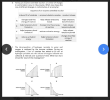
This graph is showing the reaction that is cyaylyzed by enzyme and without enzyme. This graph is showing different levels of activation energy.
1. Transition state
2. Withput Catalyst
3. With Catalyst
4. Energy yield
5. Product
6. Progress of reaction
7. Substrate
8. Free energy
9. Actvation energy
Add Answer to:
please help
Label all parts of reaction, describe energy changes in exergonic reaction, when catalyzed and...
Draw a reaction diagram for a two step exergonic reaction in which the second step has...
Draw a reaction diagram for a two step exergonic reaction in which the second step has a larger activation energy than the first step. Label the graph axes, and all relevant parts of the reaction diagram
6. All parts of this question relate to the following reaction coordinate diagram, for the reaction...
 6. All parts of this question relate to the following reaction coordinate diagram, for the reaction A + B + C -- --> D+E Free Energy B+C+X D+E A+B+C (a) Write a mechanism for the forward reaction, showing all elementary steps. (b) What intermediates (ie, not reactants or products) are present in this mechanism? (a) Write a mechanism for the forward reaction, showing all elementary steps. (b) What intermediates (i.e, not reactants or products) are present in this mechanism? (e)...
action coordinate diagram, for the reaction 0. All parts of this question relate to the following...
 action coordinate diagram, for the reaction 0. All parts of this question relate to the following reaction coordinate diagram A+B+C ....... D+ E Energy B+C+X D+E A+B+C (a) Write a mechanism for the forward reaction, showing all elementary steps. (b) What intermediates (ie, not reactants or products) are present in this mechanism? (c) Which is the rate determining step for the reaction? (d) Mark the activation energy for the rate-determining step on the diagram above. (e) What is the rate...
the activation energy di the reaction with an enzyme. the progress of the reaction. All of...
 the activation energy di the reaction with an enzyme. the progress of the reaction. All of the following statements regarding the figure are correct EXCEPT? Figure 2. Energy profile of a chemical reaction with and without an enzyme Free Energy Progress of reaction - Even with the addition of an enzyme, an input of energy is needed for the reaction to progress. Energy is released from the reaction with or without an enzyme Even with the addition of an enzyme,...
please help with #20 and 21. showing all work 20. (6pts) Consider the exothermic (left to right) reaction: 2X60)...
 please help with #20 and 21. showing all work
20. (6pts) Consider the exothermic (left to right) reaction: 2X60) - 3Y9) +Zg) State in which direction the equilibrium will shift, if either, when each of the following happens. Explain why: a. increase in volume b. decrease in T c. increase in [X ] 21. (12prs) Sketch the curve for Energy versus Reaction Progress, on the axes provided below. On the same graph, sketch the curve for Energy versus Reaction Progress...
please help with #20 and 21. showing all work
20. (6pts) Consider the exothermic (left to right) reaction: 2X60) - 3Y9) +Zg) State in which direction the equilibrium will shift, if either, when each of the following happens. Explain why: a. increase in volume b. decrease in T c. increase in [X ] 21. (12prs) Sketch the curve for Energy versus Reaction Progress, on the axes provided below. On the same graph, sketch the curve for Energy versus Reaction Progress...
Reset Help complexEnzymes catalyze reaction by stabilizing the If the enzyme binds to the substrate too...
 Reset Help complexEnzymes catalyze reaction by stabilizing the If the enzyme binds to the substrate too Thus, the enzyme binds best to induced fit lock and key transition state well, the activation energy for the catalyzed reaction the and the activation energy In the model, the enzyme binds to the most efficiently decreases In the model, both the enzyme and change their structure upon remains about the same binding in a way that favors the formation of the increases Thus,...
please help 8. (9 points) Draw the energy diagram for a spontaneous, exothermic reaction. Label the free energy of a...
 please help
8. (9 points) Draw the energy diagram for a spontaneous, exothermic reaction. Label the free energy of activations, the free energy of reaction, the transition states, the intermediate and the correct axis. (8 points) Sketch the mechanism of either: a). The polar addition of HBr to ethylene or b). The three steps of a radical reaction between Cl, and CH
please help
8. (9 points) Draw the energy diagram for a spontaneous, exothermic reaction. Label the free energy of activations, the free energy of reaction, the transition states, the intermediate and the correct axis. (8 points) Sketch the mechanism of either: a). The polar addition of HBr to ethylene or b). The three steps of a radical reaction between Cl, and CH
2. The hydrolysis of ATP is the cell’s most commonly used exergonic reaction when performing energy...
2. The hydrolysis of ATP is the cell’s most commonly used exergonic reaction when performing energy coupling. Explain energy coupling, why it is necessary, and how the hydrolysis of ATP fits into the process. Use vocabulary words such as “endergonic,” “exergonic,” “spontaneous,” and “nonspontaneous.” (8 points) BIOLOGY CELLULAR RESPIRATION/PHOTOSYNTHESIS Please answer in one-two paragraphs
A 6. During an enzyme controlled reaction a number of changes in conformation occur in the...
 A 6. During an enzyme controlled reaction a number of changes in conformation occur in the erzyme. Which row shows the role of different changes in contormation of an enzyme ? sequence of an enzyme controlled reaction induced fit of substrate enzyme/substrate complex product release changes total free helps release temporary helps temporary energy of reaction bonds bond formation helps temporary bond changes total free energy helps release formation of reaction tempcrary bonds helps temporary bond helps release formation reduces...
Calculate the change in Gibbs Free Energy (AG) for the following system. Is this reaction endergonic...
 Calculate the change in Gibbs Free Energy (AG) for the following system. Is this reaction endergonic or exergonic? For the following reaction (synthesis of aspirin. C_5H_3O_4), it was experimentally determined that Ea = 50 kJ under standard conditions. After the addition of an enzyme, it was experimentally determined that E_aa = 20 kJ: Complete the following graph showing the reaction before (solid line) and after (dashed line) the addition of the enzyme. Label the horizontal lines for the products and...
 6. All parts of this question relate to the following reaction coordinate diagram, for the reaction A + B + C -- --> D+E Free Energy B+C+X D+E A+B+C (a) Write a mechanism for the forward reaction, showing all elementary steps. (b) What intermediates (ie, not reactants or products) are present in this mechanism? (a) Write a mechanism for the forward reaction, showing all elementary steps. (b) What intermediates (i.e, not reactants or products) are present in this mechanism? (e)...
 action coordinate diagram, for the reaction 0. All parts of this question relate to the following reaction coordinate diagram A+B+C ....... D+ E Energy B+C+X D+E A+B+C (a) Write a mechanism for the forward reaction, showing all elementary steps. (b) What intermediates (ie, not reactants or products) are present in this mechanism? (c) Which is the rate determining step for the reaction? (d) Mark the activation energy for the rate-determining step on the diagram above. (e) What is the rate...
 the activation energy di the reaction with an enzyme. the progress of the reaction. All of the following statements regarding the figure are correct EXCEPT? Figure 2. Energy profile of a chemical reaction with and without an enzyme Free Energy Progress of reaction - Even with the addition of an enzyme, an input of energy is needed for the reaction to progress. Energy is released from the reaction with or without an enzyme Even with the addition of an enzyme,...
 please help with #20 and 21. showing all work
20. (6pts) Consider the exothermic (left to right) reaction: 2X60) - 3Y9) +Zg) State in which direction the equilibrium will shift, if either, when each of the following happens. Explain why: a. increase in volume b. decrease in T c. increase in [X ] 21. (12prs) Sketch the curve for Energy versus Reaction Progress, on the axes provided below. On the same graph, sketch the curve for Energy versus Reaction Progress...
please help with #20 and 21. showing all work
20. (6pts) Consider the exothermic (left to right) reaction: 2X60) - 3Y9) +Zg) State in which direction the equilibrium will shift, if either, when each of the following happens. Explain why: a. increase in volume b. decrease in T c. increase in [X ] 21. (12prs) Sketch the curve for Energy versus Reaction Progress, on the axes provided below. On the same graph, sketch the curve for Energy versus Reaction Progress...
 Reset Help complexEnzymes catalyze reaction by stabilizing the If the enzyme binds to the substrate too Thus, the enzyme binds best to induced fit lock and key transition state well, the activation energy for the catalyzed reaction the and the activation energy In the model, the enzyme binds to the most efficiently decreases In the model, both the enzyme and change their structure upon remains about the same binding in a way that favors the formation of the increases Thus,...
 please help
8. (9 points) Draw the energy diagram for a spontaneous, exothermic reaction. Label the free energy of activations, the free energy of reaction, the transition states, the intermediate and the correct axis. (8 points) Sketch the mechanism of either: a). The polar addition of HBr to ethylene or b). The three steps of a radical reaction between Cl, and CH
please help
8. (9 points) Draw the energy diagram for a spontaneous, exothermic reaction. Label the free energy of activations, the free energy of reaction, the transition states, the intermediate and the correct axis. (8 points) Sketch the mechanism of either: a). The polar addition of HBr to ethylene or b). The three steps of a radical reaction between Cl, and CH
 A 6. During an enzyme controlled reaction a number of changes in conformation occur in the erzyme. Which row shows the role of different changes in contormation of an enzyme ? sequence of an enzyme controlled reaction induced fit of substrate enzyme/substrate complex product release changes total free helps release temporary helps temporary energy of reaction bonds bond formation helps temporary bond changes total free energy helps release formation of reaction tempcrary bonds helps temporary bond helps release formation reduces...
 Calculate the change in Gibbs Free Energy (AG) for the following system. Is this reaction endergonic or exergonic? For the following reaction (synthesis of aspirin. C_5H_3O_4), it was experimentally determined that Ea = 50 kJ under standard conditions. After the addition of an enzyme, it was experimentally determined that E_aa = 20 kJ: Complete the following graph showing the reaction before (solid line) and after (dashed line) the addition of the enzyme. Label the horizontal lines for the products and...
Most questions answered within 3 hours.
-
Where is the error in this code sequence?
String s1 = "Hello";
String s2 = "ello";...
asked 11 months ago -
Financial data for Joel de Paris, Inc., for last year
follow:
Joel de Paris, Inc.
Balance...
asked 11 months ago -
Consider this reaction:
Al2(SO4)3 (aq)+ BaCl3
(aq) Al2Cl6 (aq)- +
3BaSO4(s) . What is the...
asked 11 months ago -
Suppose that Savneet is considering increasing her
recent random sample from 20 car rentals to 40...
asked 11 months ago -
Trucks arrive at an unloading terminal at an average rate of 120
per hour.
Trucks arrive...
asked 11 months ago -
Why are methanol and ethanol completely soluble in water while
octanol is not very little soluble....
asked 11 months ago -
A facilities manager at a university reads in a research report
that the mean amount of...
asked 11 months ago -
When the CuSO4 is rehydrated by adding water to the anhydrous
compound, is this an endothermic...
asked 11 months ago -
A ray of sunlight is passing from diamond into crown glass; the
angle of incidence is...
asked 11 months ago -
A block of mass 0.249 kg is placed on top of a light, vertical
spring of...
asked 11 months ago -
how do the kidneys compensate in the presences of acidosis
a) trigger hyperventilate
b) reserve acid...
asked 11 months ago -
Question 501 pts
The rental rate of capital to the firm increases. Which of the
following...
asked 11 months ago