
Homework Answers
Answer:
a) The breakdown of ATP releases energy, ATP is broken down to give ADP and Pi, energy is liberated. so, this reaction is an exergonic reaction, due to release of high amount of energy.
b)
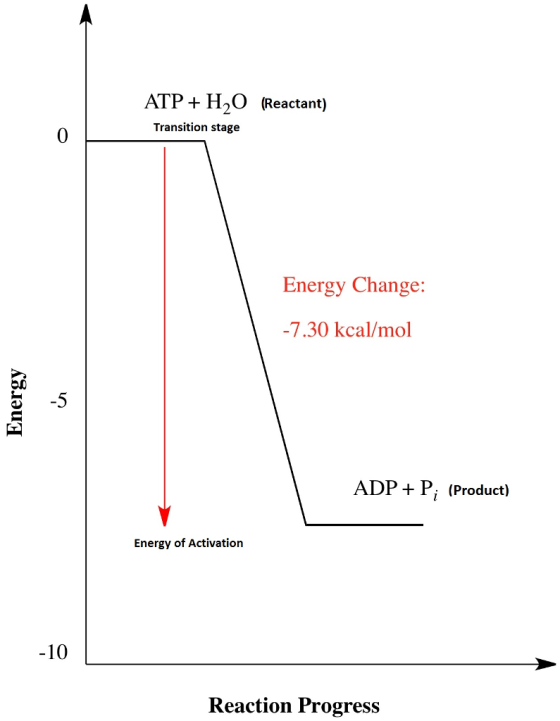
c)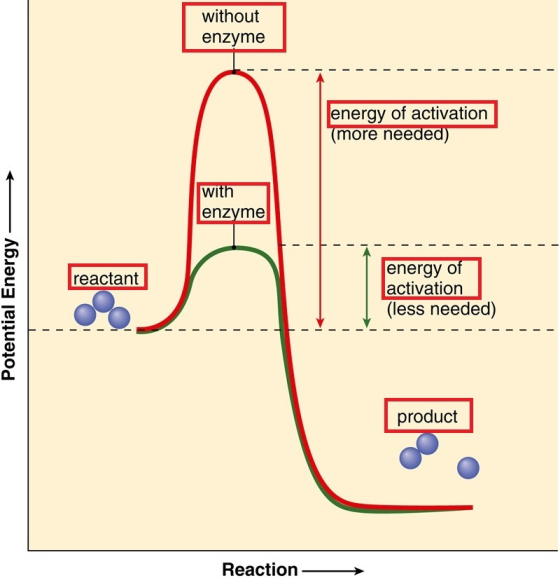
Add Answer to:
The reaction for the hydrolysis of ATP is: ATP rightarrow ADP + Pi + 7.3kcal Is...
Consider the hydrolysis of ATP: ATP(aq) + H2O(l) → ADP(aq) + Pi(aq). This reaction has ΔH°=...
Consider the hydrolysis of ATP: ATP(aq) + H2O(l) → ADP(aq) + Pi(aq). This reaction has ΔH°= −24.3 kJ/mol and ΔS°= +21.6 J/mol-K. The actual concentrations of ATP, ADP, and Pi are not 1 M in a biological cell. How much energy can the conversion of ATP to ADP supply when it occurs at physiological conditions in E. coli where the temperature is 37°C and the approximate concentrations are ATP = 11.2 mM, ADP = 1.52 mM, Pi = 20.0 mM?...
The value of the standard free energy (∆G°’) for the hydrolysis of ATP (ATP + H2O -> ADP + Pi)...
The value of the standard free energy (∆G°’) for the hydrolysis of ATP (ATP + H2O -> ADP + Pi) is relatively difficult to determine because of the small concentration of ATP remaining at equilibrium. The value can be determined from the equilibrium constant of two related chemical reactions. Glucose-6-phosphate + H2O -> glucose + Pi ; k’eq = 270 ATP + glucose -> ADP + glucose-6-phosphate ; K’eq = 890 From this information, calculate the standard free energy of...
ATP hydrolysis and the endergonic reaction that is coupled to it are usually represented as two...
ATP hydrolysis and the endergonic reaction that is coupled to it are usually represented as two separate equations. Explain why, if these where indeed two separate reactions, ATP hydrolysis will not be able to power the endergonic reaction? Does the answer have anything to do with the fact that ATP, although exergonic, is an incredibly stable molecule and will react slowly without the presence of an enzyme?
2. For the following reaction: ATP+ creatine + H2O creatine phosphate + ADP + P, The...
 2. For the following reaction: ATP+ creatine + H2O creatine phosphate + ADP + P, The relevant half reactions are: ATP → ADP + Pi Creatine phosphate + H2O-> creatine AG-30.5 kJ/mol ΔG°,--43.1 kJ/mol a. (2 pts.) Calculate the ΔG°, for the overall reaction. b. (2 pts.) Is the reaction spontaneous or non-spontaneous? Endergonic or exergonic?
answer correctly and explain for credit please 1. reaction ADP + Pi -> ATP is highly...
answer correctly and explain for credit please 1. reaction ADP + Pi -> ATP is highly endergonic. In substrate-level phosphorylation, where does the energy required for ATP synthesis come from? 2. reaction ADP + Pi -> ATP is highly endergonic. In oxidative phosphorylation, where does the energy required for ATP synthesis come from? Define oxidative phosphorylation 3 In terms of the energy that drives ATP synthesis, what is the difference between oxidative phosphorylation and photophosphorylation? 4 In animal cells, such...
Thinking Through the Concepts Multiple Choice 1. Which of the following is True? a. Enzymes increase...
 Thinking Through the Concepts Multiple Choice 1. Which of the following is True? a. Enzymes increase activation energy requirements. b. Activation energy is required to initiate exergonic reactions. Heat cannot supply activation energy. c. d. Stomach acid inactivates pepsin. 2. Which is not an example of an exergonic reaction? a. photosynthesis b. a nuclear reaction in the sun c. ATP → ADP + Pi d. glucose breakdown .3, which of the following is True? a. ATP is a long-term energy...
2. The hydrolysis of ATP is the cell’s most commonly used exergonic reaction when performing energy...
2. The hydrolysis of ATP is the cell’s most commonly used exergonic reaction when performing energy coupling. Explain energy coupling, why it is necessary, and how the hydrolysis of ATP fits into the process. Use vocabulary words such as “endergonic,” “exergonic,” “spontaneous,” and “nonspontaneous.” (8 points) BIOLOGY CELLULAR RESPIRATION/PHOTOSYNTHESIS Please answer in one-two paragraphs
5.a. Complete this diagram by showing where "energy" both leaves and enters this cycle АТР The...
 5.a. Complete this diagram by showing where "energy" both leaves and enters this cycle АТР The ATP-ADP Cycle ADP + + b. Label the arrow that represents an endergonic reaction. Where does this energy come from? C. Label the arrow that represents an exergonic reaction. What is the energy liberated used for? Give several specific examples
the enzyme hexokinase can catalyze the following reaction: fructose + ATP -> fructose 6 phosphate +...
 the enzyme hexokinase can catalyze the following
reaction:
fructose + ATP -> fructose 6 phosphate + adp
if the deltaG of hydrolysis of fructose 6 phosphate to
fructose + Pi is -13.8 kj/mol and hydrolysis of atp to adp + pi is
-30kj/mol, calculate Keq for the reaction above (R = 8.31 j mol-1
K-1, T = 298 k
3a. The enzyme hexokinase can catalyze the following reaction: Fructose + ATP → Fructose-6-phosphate + ADP If the ΔGo of hydrolysis...
the enzyme hexokinase can catalyze the following
reaction:
fructose + ATP -> fructose 6 phosphate + adp
if the deltaG of hydrolysis of fructose 6 phosphate to
fructose + Pi is -13.8 kj/mol and hydrolysis of atp to adp + pi is
-30kj/mol, calculate Keq for the reaction above (R = 8.31 j mol-1
K-1, T = 298 k
3a. The enzyme hexokinase can catalyze the following reaction: Fructose + ATP → Fructose-6-phosphate + ADP If the ΔGo of hydrolysis...
QUESTION 1 AGº for the hydrolysis of ATP is considered to be: O highly endergonic O...
 QUESTION 1 AGº for the hydrolysis of ATP is considered to be: O highly endergonic O highly exergonic O slightly endergonic O slightly exergonic QUESTION 2 Which of the following most closely approximates a second messenger? An odorant receptor on the surface of a mouse olfactory epithelium cell that undergoes a o conformational change upon binding of metabolites (breakdown products) of thyroid hormones, activating an intracellular G-protein. Ca=ions flowing into the cytoplasm and there binding to a protein on the...
 2. For the following reaction: ATP+ creatine + H2O creatine phosphate + ADP + P, The relevant half reactions are: ATP → ADP + Pi Creatine phosphate + H2O-> creatine AG-30.5 kJ/mol ΔG°,--43.1 kJ/mol a. (2 pts.) Calculate the ΔG°, for the overall reaction. b. (2 pts.) Is the reaction spontaneous or non-spontaneous? Endergonic or exergonic?
 Thinking Through the Concepts Multiple Choice 1. Which of the following is True? a. Enzymes increase activation energy requirements. b. Activation energy is required to initiate exergonic reactions. Heat cannot supply activation energy. c. d. Stomach acid inactivates pepsin. 2. Which is not an example of an exergonic reaction? a. photosynthesis b. a nuclear reaction in the sun c. ATP → ADP + Pi d. glucose breakdown .3, which of the following is True? a. ATP is a long-term energy...
 5.a. Complete this diagram by showing where "energy" both leaves and enters this cycle АТР The ATP-ADP Cycle ADP + + b. Label the arrow that represents an endergonic reaction. Where does this energy come from? C. Label the arrow that represents an exergonic reaction. What is the energy liberated used for? Give several specific examples
 the enzyme hexokinase can catalyze the following
reaction:
fructose + ATP -> fructose 6 phosphate + adp
if the deltaG of hydrolysis of fructose 6 phosphate to
fructose + Pi is -13.8 kj/mol and hydrolysis of atp to adp + pi is
-30kj/mol, calculate Keq for the reaction above (R = 8.31 j mol-1
K-1, T = 298 k
3a. The enzyme hexokinase can catalyze the following reaction: Fructose + ATP → Fructose-6-phosphate + ADP If the ΔGo of hydrolysis...
the enzyme hexokinase can catalyze the following
reaction:
fructose + ATP -> fructose 6 phosphate + adp
if the deltaG of hydrolysis of fructose 6 phosphate to
fructose + Pi is -13.8 kj/mol and hydrolysis of atp to adp + pi is
-30kj/mol, calculate Keq for the reaction above (R = 8.31 j mol-1
K-1, T = 298 k
3a. The enzyme hexokinase can catalyze the following reaction: Fructose + ATP → Fructose-6-phosphate + ADP If the ΔGo of hydrolysis...
 QUESTION 1 AGº for the hydrolysis of ATP is considered to be: O highly endergonic O highly exergonic O slightly endergonic O slightly exergonic QUESTION 2 Which of the following most closely approximates a second messenger? An odorant receptor on the surface of a mouse olfactory epithelium cell that undergoes a o conformational change upon binding of metabolites (breakdown products) of thyroid hormones, activating an intracellular G-protein. Ca=ions flowing into the cytoplasm and there binding to a protein on the...
Most questions answered within 3 hours.
-
Where is the error in this code sequence?
String s1 = "Hello";
String s2 = "ello";...
asked 11 months ago -
Financial data for Joel de Paris, Inc., for last year
follow:
Joel de Paris, Inc.
Balance...
asked 11 months ago -
Consider this reaction:
Al2(SO4)3 (aq)+ BaCl3
(aq) Al2Cl6 (aq)- +
3BaSO4(s) . What is the...
asked 11 months ago -
Suppose that Savneet is considering increasing her
recent random sample from 20 car rentals to 40...
asked 11 months ago -
Trucks arrive at an unloading terminal at an average rate of 120
per hour.
Trucks arrive...
asked 11 months ago -
Why are methanol and ethanol completely soluble in water while
octanol is not very little soluble....
asked 11 months ago -
A facilities manager at a university reads in a research report
that the mean amount of...
asked 11 months ago -
When the CuSO4 is rehydrated by adding water to the anhydrous
compound, is this an endothermic...
asked 11 months ago -
A ray of sunlight is passing from diamond into crown glass; the
angle of incidence is...
asked 11 months ago -
A block of mass 0.249 kg is placed on top of a light, vertical
spring of...
asked 11 months ago -
how do the kidneys compensate in the presences of acidosis
a) trigger hyperventilate
b) reserve acid...
asked 11 months ago -
Question 501 pts
The rental rate of capital to the firm increases. Which of the
following...
asked 11 months ago