
Homework Answers
1. a) Catabolism can be defined as a certain set of pathways in our metabolism which are involved in breaking of molecules into smaller parts. This is done either to extract energy from them or to use them in other anabolic reactions to build other required molecules.
b) Anabolism is the opposite of the above. It involves formation of larger molecules from smaller one's and this is done to ensure energy storage.
c) Metabolism is defined as chemical reactions that occur in organisms or a set of these reactions that occur inside a cell of organisms in order to maintain life.
2. In context of biology, enzymes are molecules, mostly proteins (except ribozyme - nucleic acid) that increase the rate of a chemical reaction and helps it to proceed faster without getting themselves consumed during the process. There are different classes and types of enzymes.
3. Apoenzyme - Some enzymes are in an inactive state and require binding of an organic or inorganic molecule to them (cofactor) to cause activation. In this case, the incomplete and inactivated part of the enzyme without cofactor is called apoenzyme.
Holoenzyme - when apoenzyme associates with its corresponding cofactor, then this complete and active structure is called holoenzyme.
4. a) Enzyme perform different functions in various processes such as digestion, cell division etc. on the basis of their type such as oxidation-reduction, ligation, group transfer, hydrolyses, isomerization, removal of groups, polymerization.
b) Enzymes can be involved in various reactions in body such as oxidation-reduction, DNA/RNA replication, cell division, release of energy, storing of energy, etc.
Add Answer to:
1. What is the difference between catabolism, anabolism, and metabolism? 2. What is an enzyme? 3....
What is the difference between catabolism and anabolism? You can choose more than one answer. 2...
What is the difference between catabolism and anabolism? You can choose more than one answer. 2 point. Catabolism generates energy. Catabolism expends energy. Anabolism generates energy. Anabolism expends energy.
Label the image to test your understanding of the cellular reactions involved in metabolism. Anabolism Catabolism...
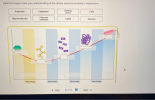 Label the image to test your understanding of the cellular reactions involved in metabolism. Anabolism Catabolism Building blocks Cells Macromolecules Precursor molecules Lipids Glucose Yields energy Uses energy Uses energy Uus energy < Prev 2 of 5 !! Next >
How do Catabolism and Anabolism differ between the Organic Soup Hypothesis and the Surface Metabolism Hypothesis?
How do Catabolism and Anabolism differ between the Organic Soup Hypothesis and the Surface Metabolism Hypothesis?
What term describes the simultaneous occurrence of anabolism and catabolism in glucose metabolism? Please name one...
What term describes the simultaneous occurrence of anabolism and catabolism in glucose metabolism? Please name one cellular building block produced through anabolic pathways.
NAME 1. (2 Puints) Anabolism & Catabolism of Nitrogenous Bases. de bio synthesis. What are the Di...
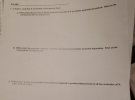 NAME 1. (2 Puints) Anabolism & Catabolism of Nitrogenous Bases. de bio synthesis. What are the Diflercatiate the processes of purine nucleotide biosynthesis & pyrimidine a starting materials for each process? b) Differentiate the processes of parine nackeutide degradation & pyrimidine nucleotide degradation. What a end products of each process? c) Explsia how gurine & pyrimidiue biosyathesis is regulated to produce balanced levels of all four nucleotides (ATP, GTP, UTP & CT)
NAME 1. (2 Puints) Anabolism & Catabolism of...
NAME 1. (2 Puints) Anabolism & Catabolism of Nitrogenous Bases. de bio synthesis. What are the Diflercatiate the processes of purine nucleotide biosynthesis & pyrimidine a starting materials for each process? b) Differentiate the processes of parine nackeutide degradation & pyrimidine nucleotide degradation. What a end products of each process? c) Explsia how gurine & pyrimidiue biosyathesis is regulated to produce balanced levels of all four nucleotides (ATP, GTP, UTP & CT)
NAME 1. (2 Puints) Anabolism & Catabolism of...
please help! 1.Explain the ADP-ATP cycle and its relationship with catabolism and anabolism. And determine what...
please help! 1.Explain the ADP-ATP cycle and its relationship with catabolism and anabolism. And determine what is source of energy for adding phosphate group to ADP? 2. Determine whether the following involves catabolic or anabolic reactions ( you will have to do some research to figure out what these processes are): i. Glycolysis ii. Kreb cycle iii. Replication of DNA iv. Conversion of glucose to glycogen v. Glucose produced in photosynthesis vi. ATP hydrolysis to ADP and Pi vii. Production...
sidering how cellular metabolism (catabolism and anabolism) works, explain why a bacteria. faster on this complex...
 sidering how cellular metabolism (catabolism and anabolism) works, explain why a bacteria. faster on this complex medium (glucose, beef extract, yeast extract, peptone, and water) vs. this fined/synthetic medium (sucrose, KzHPO., KH PO, (NH), HPO4, MgSO4, FeSO4, MnSO4, and water 6. Explain why Conside 4. Complement proteins, which are part of your immune system, can for large pores in the cytoplasmic 5. Escherichia coli is a facultative acrobe. Imagine a culture of E coli growing at 37°C in a complex...
Chapter 7 1. What is the main source of energy for most living organisms? 2. What...
 Chapter 7 1. What is the main source of energy for most living organisms? 2. What are the laws that gover the life and death of cells called? 3. Why is an organism's ability to exchange energy with its environment referred to as an open system? 4. What is entropy? 5. What is the second law of thermodynamics? Does the conversion of energy require the use of energy? 6. Define: a. Catabolism b. Anabolism c. Metabolism d. Exergonic e. Endergonic...
#1: Microorganism Metabolism Concepts: match the concepts with the description. Anabolism Anaerobic respiration Anaerobic fermentation a....
 #1: Microorganism Metabolism Concepts: match the concepts with the description. Anabolism Anaerobic respiration Anaerobic fermentation a. Breakdown of carbohydrates leading to oxidized carbon molecule and energy production b. The process of forming the primary cell energy compound in the electron transport chain when molecular oxygen is available C. Breakdown of carbohydrates leading to formation of required monomer compounds for cell growth d. The production of low MW alcohols or carboxylic acids when the absence of any electron acceptors precludes operation...
Q1: What are catabolism and anabolism (4 marks)? Q2: Under aerobic respiration, a molecule glucose is...
Q1: What are catabolism and anabolism (4 marks)? Q2: Under aerobic respiration, a molecule glucose is oxidized to generate 36 ATPs in eukaryote cell while 38 ATPs in prokaryote cell. Explain how this difference occurred (6 marks). Q3: Why aerobic respiration could produce more energy (ATP molecules) than anaerobic respiration and fermentation? By using glucose as the substrate, illustrate how ATP molecules are being produced in each case (15 marks). Q4: "Most microbes use carbohydrate (glucose) as the energy sources...
 Label the image to test your understanding of the cellular reactions involved in metabolism. Anabolism Catabolism Building blocks Cells Macromolecules Precursor molecules Lipids Glucose Yields energy Uses energy Uses energy Uus energy < Prev 2 of 5 !! Next >
 NAME 1. (2 Puints) Anabolism & Catabolism of Nitrogenous Bases. de bio synthesis. What are the Diflercatiate the processes of purine nucleotide biosynthesis & pyrimidine a starting materials for each process? b) Differentiate the processes of parine nackeutide degradation & pyrimidine nucleotide degradation. What a end products of each process? c) Explsia how gurine & pyrimidiue biosyathesis is regulated to produce balanced levels of all four nucleotides (ATP, GTP, UTP & CT)
NAME 1. (2 Puints) Anabolism & Catabolism of...
NAME 1. (2 Puints) Anabolism & Catabolism of Nitrogenous Bases. de bio synthesis. What are the Diflercatiate the processes of purine nucleotide biosynthesis & pyrimidine a starting materials for each process? b) Differentiate the processes of parine nackeutide degradation & pyrimidine nucleotide degradation. What a end products of each process? c) Explsia how gurine & pyrimidiue biosyathesis is regulated to produce balanced levels of all four nucleotides (ATP, GTP, UTP & CT)
NAME 1. (2 Puints) Anabolism & Catabolism of...
 sidering how cellular metabolism (catabolism and anabolism) works, explain why a bacteria. faster on this complex medium (glucose, beef extract, yeast extract, peptone, and water) vs. this fined/synthetic medium (sucrose, KzHPO., KH PO, (NH), HPO4, MgSO4, FeSO4, MnSO4, and water 6. Explain why Conside 4. Complement proteins, which are part of your immune system, can for large pores in the cytoplasmic 5. Escherichia coli is a facultative acrobe. Imagine a culture of E coli growing at 37°C in a complex...
 Chapter 7 1. What is the main source of energy for most living organisms? 2. What are the laws that gover the life and death of cells called? 3. Why is an organism's ability to exchange energy with its environment referred to as an open system? 4. What is entropy? 5. What is the second law of thermodynamics? Does the conversion of energy require the use of energy? 6. Define: a. Catabolism b. Anabolism c. Metabolism d. Exergonic e. Endergonic...
 #1: Microorganism Metabolism Concepts: match the concepts with the description. Anabolism Anaerobic respiration Anaerobic fermentation a. Breakdown of carbohydrates leading to oxidized carbon molecule and energy production b. The process of forming the primary cell energy compound in the electron transport chain when molecular oxygen is available C. Breakdown of carbohydrates leading to formation of required monomer compounds for cell growth d. The production of low MW alcohols or carboxylic acids when the absence of any electron acceptors precludes operation...
Most questions answered within 3 hours.
-
Where is the error in this code sequence?
String s1 = "Hello";
String s2 = "ello";...
asked 11 months ago -
Financial data for Joel de Paris, Inc., for last year
follow:
Joel de Paris, Inc.
Balance...
asked 11 months ago -
Consider this reaction:
Al2(SO4)3 (aq)+ BaCl3
(aq) Al2Cl6 (aq)- +
3BaSO4(s) . What is the...
asked 11 months ago -
Suppose that Savneet is considering increasing her
recent random sample from 20 car rentals to 40...
asked 11 months ago -
Trucks arrive at an unloading terminal at an average rate of 120
per hour.
Trucks arrive...
asked 11 months ago -
Why are methanol and ethanol completely soluble in water while
octanol is not very little soluble....
asked 11 months ago -
A facilities manager at a university reads in a research report
that the mean amount of...
asked 11 months ago -
When the CuSO4 is rehydrated by adding water to the anhydrous
compound, is this an endothermic...
asked 11 months ago -
A ray of sunlight is passing from diamond into crown glass; the
angle of incidence is...
asked 11 months ago -
A block of mass 0.249 kg is placed on top of a light, vertical
spring of...
asked 11 months ago -
how do the kidneys compensate in the presences of acidosis
a) trigger hyperventilate
b) reserve acid...
asked 11 months ago -
Question 501 pts
The rental rate of capital to the firm increases. Which of the
following...
asked 11 months ago