
Homework Answers
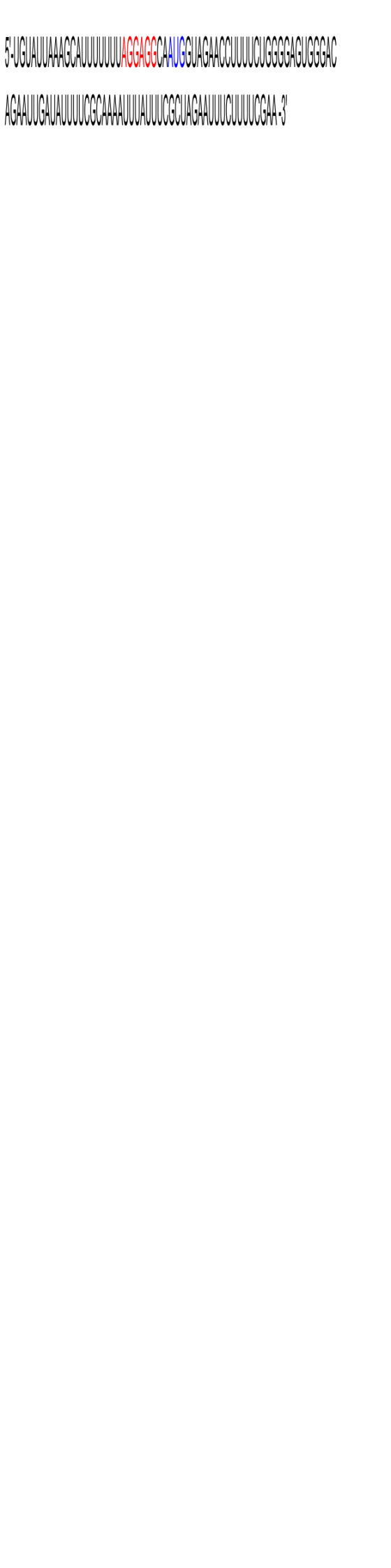
Q1. The shine dalgarno sequence AGGAGG is marked in red below and the start codon AUG is marked in blue:
Q2. Small RNAs are non-coding short RNA sequences that can be classified in to micro RNAs (miRNA), small-interfering RNAs (siRNA) and Piwi RNAs (piRNA).
miRNAs usually bind to the 3' UTR regions of mRNA and prevents translation of proteins.
siRNAs are double-stranded RNAs that target a specific mRNA and cleaves it by forming what is called an RNA induced silencing complex. This leads to post transcriptional gene silencing.
piRNAs are molecules that associate with what are known as Piwi proteins that together inhibit transposons involved in spermatogenesis.
single stranded sRNAs such as the miRNAs that have sequences complementary to that of an mRNA would base pair with the mRNA thereby disrupting the expression of the gene, much like the anti-sense RNA.
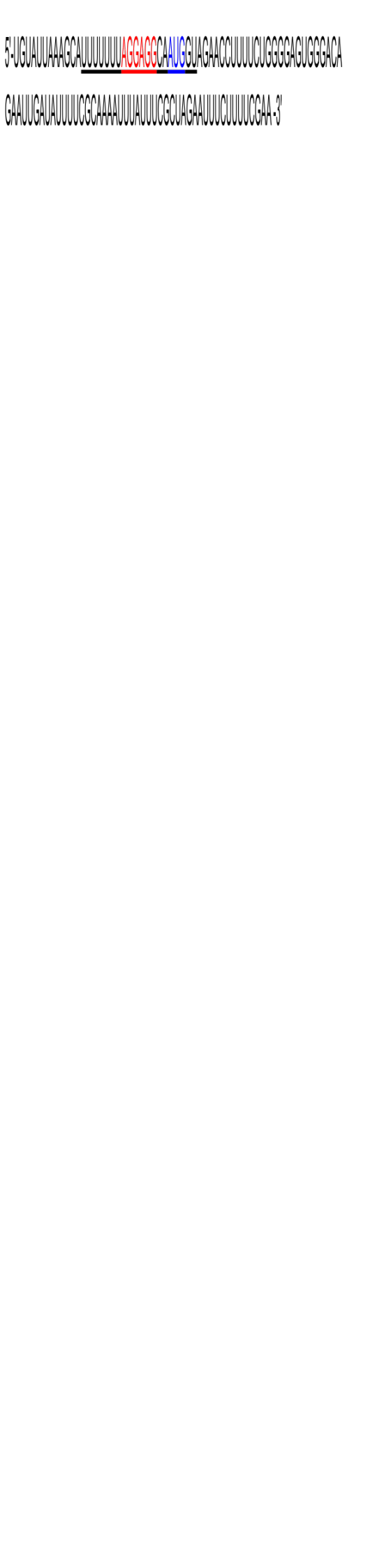
Q3. The region the given sRNAs bind to the sequence is shown below. Let us first write down the complementary sequences of sRNAs A and B:
Given sequence:
A. 5'- ACCAUUGCCUCCUAAAAAAA -3'
B. 5'- UUCGAAAAGAAAU -3'
Complementary sequence:
A. 5'- UUUUUUUAGGAGGCAAUGGU -3'
B. 5'- AUUUCUUUUCGAA -3'
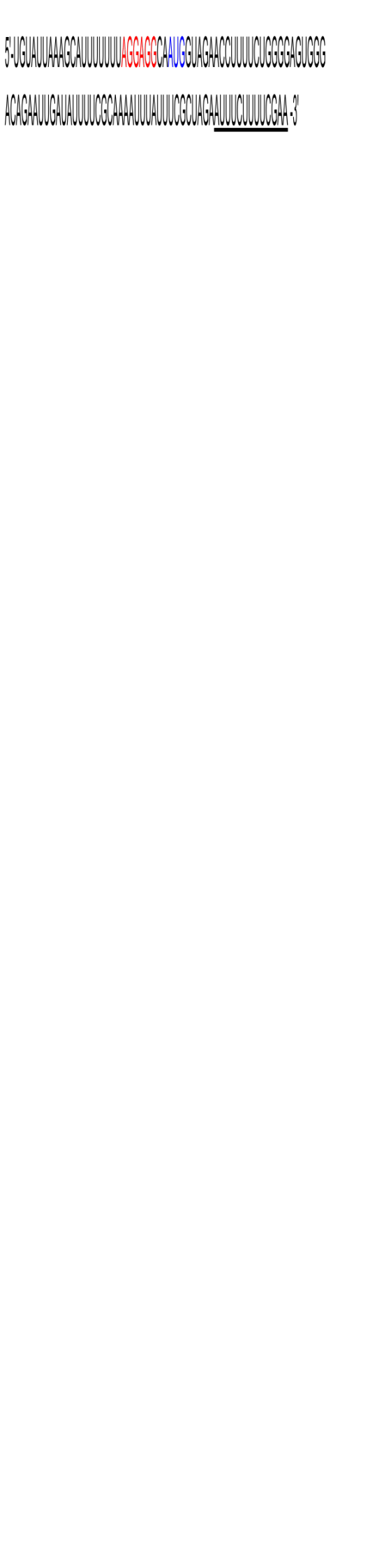
Now we could locate these complementary regions in the given sequence below (underlined):
sRNA A:
sRNA B:
Q4. Both the sRNAs would block protein synthesis. sRNA A in the underlined region below actually is blocking the star codon here as well as the ribosome binding site. Hence translation would not take place.
sRNA B actually is bound to the 3' UTR region of the mRNA (see highlighted stop codon below) and is characteristic of miRNA that prevents translation of proteins once they bind to the 3' UTR , destabilizes the mRNA and causes translational silencing by a hitherto unknown mechanism .

Add Answer to:
5- UGUAUUAAAG CAUUUUUUUA GGAGGCAAUG GUAGAACCUU UUCUGGGGAG UGGGACAGAA UUGAUAUUUU CGCAAAAUUU AUUUCGCUAG AAUUUCUUUU CGAA-3 There is one open...
6. In the drawings below note and label all important elements (incl.consensus sequences) discussed in lectures...
 6. In the drawings below note and label all important elements (incl.consensus sequences) discussed in lectures and tutorial manual and listed below. Prokaryotis operon promoter (-10 and -35 elements), operator, multiple structural renes (for example 3), start site of transcription, start sites of translations, transcription termination sequence Prokaryotic mRNA (polycistronie): transcription start site, multiple ribosome binding sites The Shine-Dalgamo sequence in Ecoli), multiple ORFs (including start and stop codons). transcription termination sequence Eukaryotic genes promoter (TATA box), consensus sequence CAAT,...
Below is the partial coding strand of DNA for a gene containing an ORF, shown 5'...
 Below is the partial coding strand of DNA for a gene containing
an ORF, shown 5' to 3'. Identify the regions, shown 1 to 9,
associated with the following genetic elements. Some elements may
have more than one associated region.
(a) The promoter region
(b) The ribosome binding site
(c) The ribosome binding site consensus
sequence
(d) The start codon
(f) The expected region for the +1
transcription (where the transcript
begins to be made)
(g) Is this a prokaryotic...
Below is the partial coding strand of DNA for a gene containing
an ORF, shown 5' to 3'. Identify the regions, shown 1 to 9,
associated with the following genetic elements. Some elements may
have more than one associated region.
(a) The promoter region
(b) The ribosome binding site
(c) The ribosome binding site consensus
sequence
(d) The start codon
(f) The expected region for the +1
transcription (where the transcript
begins to be made)
(g) Is this a prokaryotic...
QUESTION 1 QUESTION 5 QUESTION 11 Identify the components required for translation initiation in bacteria What...
 QUESTION 1 QUESTION 5 QUESTION 11 Identify the components required for translation initiation in bacteria What is the enzymatic component of the ribosome? A Protein Identify the TRANS components of the transcription initiation complex in bacteria ATFIE Bir RNA C. TATA BOX D-10 and 35 sequences E Signa factor B. Carbohydrates C.RNA CATFIE B. 5methyl guanosine cap C. Shine-Dalgamo Sequence D. Sigma factor CETFIID (TBP and TAFS) FTFIIB G. Initiator RNA H.10 and 35 sequences EL Smal ribosomal subunit J....
5.1 the underlined bold TAC is an ATG on the other strand. Is this a start codon? why?
 5.1 the underlined bold TAC is an ATG on the other strand. Is this a start codon? why? 5.2. does the underlined bold ATG open an ORF? why? 5.3 which ATG seems to be a valid start codon? Copy the sequence into the answer box and make the start codon bold and underlined. Split the ORF portion into codons fone blank between codons, like this ATG CCC GGG.... Keep the font Courier to keep all symbols equal width. If the copying process...
Given the template DNA sequence below: 3'-CCACCTTCTATACTTCGCGGAATGCCGGTCCATGTAGGTTCACATTAGCGT-5' 6. An error occurred in DNA replication, A was...
 Given the template DNA sequence below: 3'-CCACCTTCTATACTTCGCGGAATGCCGGTCCATGTAGGTTCACATTAGCGT-5' 6. An error occurred in DNA replication, A was incorporated in the place of T (indicated in yellow color in the aforementioned sequence) from the gene. Write the corresponding DNA template strand and transcribe the mutated mRNA strand, then determine the amino acid sequence of the mutant protein. If a stop codon is not present, create one by adding sequences to the gene and mRNA.
Please solve each item in a detailed and descriptive way. Q5. Total 35 pts. Below given...
 Please solve each item in a detailed and descriptive way.
Q5. Total 35 pts. Below given single stranded DNA sequence was retrieved from a prokaryote; Promoter region is shown with yellow color Transcription start site is shown with green color Ribosome binding site is shown with blue color 5'ATAGTCGTCGATCGATGGCTTAGCTAGCTTCGATTTCGTAGCTCTGATTAAACGCGCGCATATATCGAT ATCTAGCTAGCTATATTCGCTGATCGCTAGTGTGCGTGATGCTGCTAGGATCAGGTATCGGTCTGATCTA GTATTAGTGCCCGTAGCTGATGCTTCGTCGTAGATCGCTGATTCGCTAATAGGCTGCTAGTCGATGCTGT A3' A) Write the sequnce of double stranded DNA from given single stranded DNA sequence. (5 pts) B) Show template DNA strand used in transcription. (5 pts) C) Write...
Please solve each item in a detailed and descriptive way.
Q5. Total 35 pts. Below given single stranded DNA sequence was retrieved from a prokaryote; Promoter region is shown with yellow color Transcription start site is shown with green color Ribosome binding site is shown with blue color 5'ATAGTCGTCGATCGATGGCTTAGCTAGCTTCGATTTCGTAGCTCTGATTAAACGCGCGCATATATCGAT ATCTAGCTAGCTATATTCGCTGATCGCTAGTGTGCGTGATGCTGCTAGGATCAGGTATCGGTCTGATCTA GTATTAGTGCCCGTAGCTGATGCTTCGTCGTAGATCGCTGATTCGCTAATAGGCTGCTAGTCGATGCTGT A3' A) Write the sequnce of double stranded DNA from given single stranded DNA sequence. (5 pts) B) Show template DNA strand used in transcription. (5 pts) C) Write...
1. EORA BACTERIAL GENE, writing left-to-right, show the relative positions of each of these genetic elements...
 1. EORA BACTERIAL GENE, writing left-to-right, show the relative positions of each of these genetic elements as they would appear in the DNA from upstream on the left to downstream on the right. Of course, some of these genetic elements will only be active once they are in mRNA (e.g., the translational start codon), but they are still found encoded in the sequence of DNA onthe left the translational start colon . but they are s RBS ribosome binding site...
Question 2. FOR A BACTERIAL GENE, writing left-to-right, show the relative positions of each of these...
 Question 2. FOR A BACTERIAL GENE, writing left-to-right, show the relative positions of each of these genetic elements as they would appear in the DNA from upstream on the left to downstream on the right. Of course, some of these genetic elements will only be active once they are in mRNA (e.g., the translational start codon), but they are still found encoded in the sequence of DNA. RBS ribosome binding site UAA translational stop site (UAA) TSS transcriptional start site...
Hello! I am working on this genetics problem and was wondering if these two answers would...
 Hello! I am working on this genetics problem and was wondering if
these two answers would make sense. Thank you for the help!
Question 1 (1 point) Saved Why can bacteria have poly-cistronic genes? Because they need multiple cistron organelles so they segregate evenly during cell division. Because they have many exons that are joined together before translation Because ribosomes can be loaded at multiple Shine Delgano/AUG sequences. Because ribosomes are loaded at the single CAP site. Because the stability...
Hello! I am working on this genetics problem and was wondering if
these two answers would make sense. Thank you for the help!
Question 1 (1 point) Saved Why can bacteria have poly-cistronic genes? Because they need multiple cistron organelles so they segregate evenly during cell division. Because they have many exons that are joined together before translation Because ribosomes can be loaded at multiple Shine Delgano/AUG sequences. Because ribosomes are loaded at the single CAP site. Because the stability...
Which of the following is not an RNA sequence that is recognized by the spliceosome during...
 Which of the following is not an RNA sequence that is recognized by the spliceosome during the process of splicing? O A. The 5' splice site OB. The 3' splice site o C. The promoter OD. The branch point O E. All of the above are recognized by the spliceosome What is the role of the Shine-Dalgarno sequence near the 5' end of prokaryotic mRNAS? O A. It is the sequence recognized by IF-2 OB. It establishes the position of...
 6. In the drawings below note and label all important elements (incl.consensus sequences) discussed in lectures and tutorial manual and listed below. Prokaryotis operon promoter (-10 and -35 elements), operator, multiple structural renes (for example 3), start site of transcription, start sites of translations, transcription termination sequence Prokaryotic mRNA (polycistronie): transcription start site, multiple ribosome binding sites The Shine-Dalgamo sequence in Ecoli), multiple ORFs (including start and stop codons). transcription termination sequence Eukaryotic genes promoter (TATA box), consensus sequence CAAT,...
 Below is the partial coding strand of DNA for a gene containing
an ORF, shown 5' to 3'. Identify the regions, shown 1 to 9,
associated with the following genetic elements. Some elements may
have more than one associated region.
(a) The promoter region
(b) The ribosome binding site
(c) The ribosome binding site consensus
sequence
(d) The start codon
(f) The expected region for the +1
transcription (where the transcript
begins to be made)
(g) Is this a prokaryotic...
Below is the partial coding strand of DNA for a gene containing
an ORF, shown 5' to 3'. Identify the regions, shown 1 to 9,
associated with the following genetic elements. Some elements may
have more than one associated region.
(a) The promoter region
(b) The ribosome binding site
(c) The ribosome binding site consensus
sequence
(d) The start codon
(f) The expected region for the +1
transcription (where the transcript
begins to be made)
(g) Is this a prokaryotic...
 QUESTION 1 QUESTION 5 QUESTION 11 Identify the components required for translation initiation in bacteria What is the enzymatic component of the ribosome? A Protein Identify the TRANS components of the transcription initiation complex in bacteria ATFIE Bir RNA C. TATA BOX D-10 and 35 sequences E Signa factor B. Carbohydrates C.RNA CATFIE B. 5methyl guanosine cap C. Shine-Dalgamo Sequence D. Sigma factor CETFIID (TBP and TAFS) FTFIIB G. Initiator RNA H.10 and 35 sequences EL Smal ribosomal subunit J....
 5.1 the underlined bold TAC is an ATG on the other strand. Is this a start codon? why? 5.2. does the underlined bold ATG open an ORF? why? 5.3 which ATG seems to be a valid start codon? Copy the sequence into the answer box and make the start codon bold and underlined. Split the ORF portion into codons fone blank between codons, like this ATG CCC GGG.... Keep the font Courier to keep all symbols equal width. If the copying process...
 Given the template DNA sequence below: 3'-CCACCTTCTATACTTCGCGGAATGCCGGTCCATGTAGGTTCACATTAGCGT-5' 6. An error occurred in DNA replication, A was incorporated in the place of T (indicated in yellow color in the aforementioned sequence) from the gene. Write the corresponding DNA template strand and transcribe the mutated mRNA strand, then determine the amino acid sequence of the mutant protein. If a stop codon is not present, create one by adding sequences to the gene and mRNA.
 Please solve each item in a detailed and descriptive way.
Q5. Total 35 pts. Below given single stranded DNA sequence was retrieved from a prokaryote; Promoter region is shown with yellow color Transcription start site is shown with green color Ribosome binding site is shown with blue color 5'ATAGTCGTCGATCGATGGCTTAGCTAGCTTCGATTTCGTAGCTCTGATTAAACGCGCGCATATATCGAT ATCTAGCTAGCTATATTCGCTGATCGCTAGTGTGCGTGATGCTGCTAGGATCAGGTATCGGTCTGATCTA GTATTAGTGCCCGTAGCTGATGCTTCGTCGTAGATCGCTGATTCGCTAATAGGCTGCTAGTCGATGCTGT A3' A) Write the sequnce of double stranded DNA from given single stranded DNA sequence. (5 pts) B) Show template DNA strand used in transcription. (5 pts) C) Write...
Please solve each item in a detailed and descriptive way.
Q5. Total 35 pts. Below given single stranded DNA sequence was retrieved from a prokaryote; Promoter region is shown with yellow color Transcription start site is shown with green color Ribosome binding site is shown with blue color 5'ATAGTCGTCGATCGATGGCTTAGCTAGCTTCGATTTCGTAGCTCTGATTAAACGCGCGCATATATCGAT ATCTAGCTAGCTATATTCGCTGATCGCTAGTGTGCGTGATGCTGCTAGGATCAGGTATCGGTCTGATCTA GTATTAGTGCCCGTAGCTGATGCTTCGTCGTAGATCGCTGATTCGCTAATAGGCTGCTAGTCGATGCTGT A3' A) Write the sequnce of double stranded DNA from given single stranded DNA sequence. (5 pts) B) Show template DNA strand used in transcription. (5 pts) C) Write...
 1. EORA BACTERIAL GENE, writing left-to-right, show the relative positions of each of these genetic elements as they would appear in the DNA from upstream on the left to downstream on the right. Of course, some of these genetic elements will only be active once they are in mRNA (e.g., the translational start codon), but they are still found encoded in the sequence of DNA onthe left the translational start colon . but they are s RBS ribosome binding site...
 Question 2. FOR A BACTERIAL GENE, writing left-to-right, show the relative positions of each of these genetic elements as they would appear in the DNA from upstream on the left to downstream on the right. Of course, some of these genetic elements will only be active once they are in mRNA (e.g., the translational start codon), but they are still found encoded in the sequence of DNA. RBS ribosome binding site UAA translational stop site (UAA) TSS transcriptional start site...
 Hello! I am working on this genetics problem and was wondering if
these two answers would make sense. Thank you for the help!
Question 1 (1 point) Saved Why can bacteria have poly-cistronic genes? Because they need multiple cistron organelles so they segregate evenly during cell division. Because they have many exons that are joined together before translation Because ribosomes can be loaded at multiple Shine Delgano/AUG sequences. Because ribosomes are loaded at the single CAP site. Because the stability...
Hello! I am working on this genetics problem and was wondering if
these two answers would make sense. Thank you for the help!
Question 1 (1 point) Saved Why can bacteria have poly-cistronic genes? Because they need multiple cistron organelles so they segregate evenly during cell division. Because they have many exons that are joined together before translation Because ribosomes can be loaded at multiple Shine Delgano/AUG sequences. Because ribosomes are loaded at the single CAP site. Because the stability...
 Which of the following is not an RNA sequence that is recognized by the spliceosome during the process of splicing? O A. The 5' splice site OB. The 3' splice site o C. The promoter OD. The branch point O E. All of the above are recognized by the spliceosome What is the role of the Shine-Dalgarno sequence near the 5' end of prokaryotic mRNAS? O A. It is the sequence recognized by IF-2 OB. It establishes the position of...
Most questions answered within 3 hours.
-
Where is the error in this code sequence?
String s1 = "Hello";
String s2 = "ello";...
asked 11 months ago -
Financial data for Joel de Paris, Inc., for last year
follow:
Joel de Paris, Inc.
Balance...
asked 11 months ago -
Consider this reaction:
Al2(SO4)3 (aq)+ BaCl3
(aq) Al2Cl6 (aq)- +
3BaSO4(s) . What is the...
asked 11 months ago -
Suppose that Savneet is considering increasing her
recent random sample from 20 car rentals to 40...
asked 11 months ago -
Trucks arrive at an unloading terminal at an average rate of 120
per hour.
Trucks arrive...
asked 11 months ago -
Why are methanol and ethanol completely soluble in water while
octanol is not very little soluble....
asked 11 months ago -
A facilities manager at a university reads in a research report
that the mean amount of...
asked 11 months ago -
When the CuSO4 is rehydrated by adding water to the anhydrous
compound, is this an endothermic...
asked 11 months ago -
A ray of sunlight is passing from diamond into crown glass; the
angle of incidence is...
asked 11 months ago -
A block of mass 0.249 kg is placed on top of a light, vertical
spring of...
asked 11 months ago -
how do the kidneys compensate in the presences of acidosis
a) trigger hyperventilate
b) reserve acid...
asked 11 months ago -
Question 501 pts
The rental rate of capital to the firm increases. Which of the
following...
asked 11 months ago