
Homework Answers
(10) PH expected to be basic 11.0 because in cation exchange chromatography positively charged proteins(cations) are attracted to the negatively charged solid media. (11)Ala-Met-Lys-Cys-Phe-Trp. because according to 2nd statement treatment with carboxypeptidase result in C-terminal lysine which is a basic compound.
Add Answer to:
D 8.5-10.5. 10.5 -12.5. 12.5. If you were trying to separate histidine with values of I...
15,16,17 15 Thermodynamic parameters (entropy, enthalpy free energy, and internal energy) are given for an unknown...
 15,16,17
15 Thermodynamic parameters (entropy, enthalpy free energy, and internal energy) are given for an unknown chryme Explain which results would be expected for the breaking of hydrogen bonds and the exposure of hydrophobie groups from the interior during the unfolding process of a protein. B1 A B. C. D. E. Entropy change, AS, is zero. Enthalpy change, AH, is positive. The reaction is spontaneous. Enthalpy change, AH, is negative. Entropy change, AS, is positive. Insulin is a polypeptide hormone...
15,16,17
15 Thermodynamic parameters (entropy, enthalpy free energy, and internal energy) are given for an unknown chryme Explain which results would be expected for the breaking of hydrogen bonds and the exposure of hydrophobie groups from the interior during the unfolding process of a protein. B1 A B. C. D. E. Entropy change, AS, is zero. Enthalpy change, AH, is positive. The reaction is spontaneous. Enthalpy change, AH, is negative. Entropy change, AS, is positive. Insulin is a polypeptide hormone...
1. Partial hydrolysis of lysozyme yielded an octapeptide that was later identified as the N-terminal segment of...
1. Partial hydrolysis of lysozyme yielded an octapeptide that was later identified as the N-terminal segment of the protein. From the following information, determine the sequence of this octapeptide. a. The following amino acids were identified after complete hydrolysis of the octapeptide: Arginine (Arg) Glycine (Gly) Phenylalanine (Phe) Cysteine (Cys) Leucine (Leu) Valine (Val) Glutamic Acid (Glu) Lysine (Lys) b. Treatment of the octapeptide with dinitroflurobenzene (Sanger reagent) followed by complete hydrolysis gave lysine (Lys) labeled with two dinitrophenyl (DNP) groups. c. Treatment of the octapeptide with trypsin gave lysine...
1. Partial hydrolysis of lysozyme yielded an octapeptide that was later identified as the N-terminal segment of...
1. Partial hydrolysis of lysozyme yielded an octapeptide that was later identified as the N-terminal segment of the protein. From the following information, determine the sequence of this octapeptide. a. The following amino acids were identified after complete hydrolysis of the octapeptide: Arginine (Arg) Glycine (Gly) Phenylalanine (Phe) Cysteine (Cys) Leucine (Leu) Valine (Val) Glutamic Acid (Glu) Lysine (Lys) b. Treatment of the octapeptide with dinitroflurobenzene (Sanger reagent) followed by complete hydrolysis gave lysine (Lys) labeled with two dinitrophenyl (DNP) groups. c. Treatment of the octapeptide with trypsin gave lysine...
The following data were obtained from partial cleavage and analysis of a pentadecapeptide. Determine the sequence of the...
 The following data were obtained from partial cleavage and
analysis of a pentadecapeptide. Determine the sequence of the
pentadecapeptide. Use three-letter abbreviations in your answer.
Please explain thoroughly, step by step.
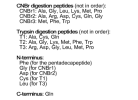
CNBr digestion peptides (not in order) CNBr1: Ala, Gly, Leu, Lys, Met, Pro CNBr2: Ala, Arg, Asp, Cys, Gln, Gly CNBr3: Met, Phe, Trp Trypsin digestion peptides (not in order) T1: Ala, Cys, GIn T2: Ala, Gly, Lys, Met, Phe, Trp T3: Arg, Asp, Gly, Leu, Met, Pro N-terminus:...
The following data were obtained from partial cleavage and
analysis of a pentadecapeptide. Determine the sequence of the
pentadecapeptide. Use three-letter abbreviations in your answer.
Please explain thoroughly, step by step.
CNBr digestion peptides (not in order) CNBr1: Ala, Gly, Leu, Lys, Met, Pro CNBr2: Ala, Arg, Asp, Cys, Gln, Gly CNBr3: Met, Phe, Trp Trypsin digestion peptides (not in order) T1: Ala, Cys, GIn T2: Ala, Gly, Lys, Met, Phe, Trp T3: Arg, Asp, Gly, Leu, Met, Pro N-terminus:...
Based on where CNBR and trypsin cut, evaluate the following experimental data and predict the N-...
Based on where CNBR and trypsin cut, evaluate the following experimental data and predict the N- and C-terminal amino acids of the parent peptide (peptide before cutting). Enter your answer using the three letter amino acid abbreviations, with a comma in between. For example, if the N-terminal residue is alanine and C-terminal residue is glycine you would write: Ala, Gly. Cleavage with CNBR produced the following peptides: Gly-Ala-Lys-Leu-Pro-Met Phe-Trp-Met Asp-Gly-Arg-Cys-Ala-Gln Cleavage with trypsin: Cys-Ala-Gln Phe-Trp-Met-Gly-Ala-Lys Leu-Pro-Met-Asp-Gly-Arg
Styles A decapeptide has the following amina acid composition: Arg. Asp, Gly, Leu, Lys, Met, Phe,...
 Styles A decapeptide has the following amina acid composition: Arg. Asp, Gly, Leu, Lys, Met, Phe, Ser. Trp, and Val Reacting the native peptide with FDNB and then hydrolyzing released 2.4- dinitrophenylvaline. Brief incubation of the native peptide with carboxypeptidase yielded free Leu. Incubation with cyanogen bromide yielded two fragments: a tetrapeptide with composition Met, Phe, Ser, and Val, and a hexapeptide. The hexapeptide yielded 2.4- dinitrophenylglycine. Proteolytic cleavage by trypsin of the native peptide gave free Leu, a tripeptide,...
biochemistry please show your work 2. A mutant form of polypeptide hormone angiotensin II has the...
 biochemistry please show your work
2. A mutant form of polypeptide hormone angiotensin II has the amino acid composition: Ile, Arg, Met, Leu, Phe, Asp, Tyr, and Val. The following observations are made: 1) Treatment with trypsin yields a dipeptide containing Asp and Arg, and a hexapeptide with all the rest. 2) Cyanogen bromide yields a dipeptide containing Phe and Leu and a hexapeptide containing all the rest. 3) Chymotrypsin cleaves the hormone into two tetrapeptides of composition: Val, Tyr,...
biochemistry please show your work
2. A mutant form of polypeptide hormone angiotensin II has the amino acid composition: Ile, Arg, Met, Leu, Phe, Asp, Tyr, and Val. The following observations are made: 1) Treatment with trypsin yields a dipeptide containing Asp and Arg, and a hexapeptide with all the rest. 2) Cyanogen bromide yields a dipeptide containing Phe and Leu and a hexapeptide containing all the rest. 3) Chymotrypsin cleaves the hormone into two tetrapeptides of composition: Val, Tyr,...
7. A peptide was isolated from sheep hypothalamus and subjected to sequence analysis. The experimental data...
 7. A peptide was isolated from sheep hypothalamus and subjected to sequence analysis. The experimental data are as follows. Deduce the amino acid sequence from this data. a. Composition (2Ala, 2Gly, Thr, Phe, Lys, His, Ser, Trp, Arg, Val) b. Reaction of dinitrofluorobenzene with the intact peptide yielded DNP-Thr. A brief treatment with carboxypeptidase a yielded glycine. c. Trypsin digestion yielded three fragments: i. Phe, Thr, Ala, Lys ii. Gly, Val iii. Trp, His, Ser, Gly, Arg, Ala Treatment of...
What fragments will be obtained by a trypsin hydrolysis of the following octapeptide? Ala-Val-Trp-Lys-Phe-Gly-Arg-Met A) Ala-Val-Trp-Lys-Phe...
 What fragments will be obtained by a trypsin hydrolysis of the following octapeptide? Ala-Val-Trp-Lys-Phe-Gly-Arg-Met A) Ala-Val-Trp-Lys-Phe and Gly-Arg-Met 3) Ala-Val-Trp-Lys-Phe-Gly and Arg-Met - Ala-Val-Trp-Lys and Phe-Gly-Arg and Met ) Ala-Val-Trp-Lys and Phe and Gly-Arg and Met ) Ala-Val-Trp and Lys-Phe-Gly and Arg-Met Bradykinin is a nonapeptide, Arg-Pro-Pro-Gly-Phe-Ser-Pro-Phe-Arg. In addition to one mole of Arg, what peptides are present after hydrolysis of bradykinin with chymotrypsin? A) Arg-Pro-Pro and Gly-Phe and Ser-Pro-Phe B) Pro-Pro-Gly and Phe-Ser-Pro-Phe-Arg C) Arg-Pro-Pro-Gly-Phe and Ser-Pro-Phe ?) Arg-Pro-Pro-Gly-Phe-Ser...
5. (15 pts) You have been given a peptide for analysis. (1) Write out the six...
 5. (15 pts) You have been given a peptide for analysis. (1) Write out the six key steps to determine the sequence of a protein as discussed in the lecture. (2) What is the sequence of a peptide based on the following experimental results: (indicate your logic by placing a letter corresponding to the data set in parentheses above the amino acid in the sequence. This is required for full credit) a) Its amino acid composition is M+L+Y+C+S+2K. b) Treatment...
 15,16,17
15 Thermodynamic parameters (entropy, enthalpy free energy, and internal energy) are given for an unknown chryme Explain which results would be expected for the breaking of hydrogen bonds and the exposure of hydrophobie groups from the interior during the unfolding process of a protein. B1 A B. C. D. E. Entropy change, AS, is zero. Enthalpy change, AH, is positive. The reaction is spontaneous. Enthalpy change, AH, is negative. Entropy change, AS, is positive. Insulin is a polypeptide hormone...
15,16,17
15 Thermodynamic parameters (entropy, enthalpy free energy, and internal energy) are given for an unknown chryme Explain which results would be expected for the breaking of hydrogen bonds and the exposure of hydrophobie groups from the interior during the unfolding process of a protein. B1 A B. C. D. E. Entropy change, AS, is zero. Enthalpy change, AH, is positive. The reaction is spontaneous. Enthalpy change, AH, is negative. Entropy change, AS, is positive. Insulin is a polypeptide hormone...
 The following data were obtained from partial cleavage and
analysis of a pentadecapeptide. Determine the sequence of the
pentadecapeptide. Use three-letter abbreviations in your answer.
Please explain thoroughly, step by step.
CNBr digestion peptides (not in order) CNBr1: Ala, Gly, Leu, Lys, Met, Pro CNBr2: Ala, Arg, Asp, Cys, Gln, Gly CNBr3: Met, Phe, Trp Trypsin digestion peptides (not in order) T1: Ala, Cys, GIn T2: Ala, Gly, Lys, Met, Phe, Trp T3: Arg, Asp, Gly, Leu, Met, Pro N-terminus:...
The following data were obtained from partial cleavage and
analysis of a pentadecapeptide. Determine the sequence of the
pentadecapeptide. Use three-letter abbreviations in your answer.
Please explain thoroughly, step by step.
CNBr digestion peptides (not in order) CNBr1: Ala, Gly, Leu, Lys, Met, Pro CNBr2: Ala, Arg, Asp, Cys, Gln, Gly CNBr3: Met, Phe, Trp Trypsin digestion peptides (not in order) T1: Ala, Cys, GIn T2: Ala, Gly, Lys, Met, Phe, Trp T3: Arg, Asp, Gly, Leu, Met, Pro N-terminus:...
 Styles A decapeptide has the following amina acid composition: Arg. Asp, Gly, Leu, Lys, Met, Phe, Ser. Trp, and Val Reacting the native peptide with FDNB and then hydrolyzing released 2.4- dinitrophenylvaline. Brief incubation of the native peptide with carboxypeptidase yielded free Leu. Incubation with cyanogen bromide yielded two fragments: a tetrapeptide with composition Met, Phe, Ser, and Val, and a hexapeptide. The hexapeptide yielded 2.4- dinitrophenylglycine. Proteolytic cleavage by trypsin of the native peptide gave free Leu, a tripeptide,...
 biochemistry please show your work
2. A mutant form of polypeptide hormone angiotensin II has the amino acid composition: Ile, Arg, Met, Leu, Phe, Asp, Tyr, and Val. The following observations are made: 1) Treatment with trypsin yields a dipeptide containing Asp and Arg, and a hexapeptide with all the rest. 2) Cyanogen bromide yields a dipeptide containing Phe and Leu and a hexapeptide containing all the rest. 3) Chymotrypsin cleaves the hormone into two tetrapeptides of composition: Val, Tyr,...
biochemistry please show your work
2. A mutant form of polypeptide hormone angiotensin II has the amino acid composition: Ile, Arg, Met, Leu, Phe, Asp, Tyr, and Val. The following observations are made: 1) Treatment with trypsin yields a dipeptide containing Asp and Arg, and a hexapeptide with all the rest. 2) Cyanogen bromide yields a dipeptide containing Phe and Leu and a hexapeptide containing all the rest. 3) Chymotrypsin cleaves the hormone into two tetrapeptides of composition: Val, Tyr,...
 7. A peptide was isolated from sheep hypothalamus and subjected to sequence analysis. The experimental data are as follows. Deduce the amino acid sequence from this data. a. Composition (2Ala, 2Gly, Thr, Phe, Lys, His, Ser, Trp, Arg, Val) b. Reaction of dinitrofluorobenzene with the intact peptide yielded DNP-Thr. A brief treatment with carboxypeptidase a yielded glycine. c. Trypsin digestion yielded three fragments: i. Phe, Thr, Ala, Lys ii. Gly, Val iii. Trp, His, Ser, Gly, Arg, Ala Treatment of...
 What fragments will be obtained by a trypsin hydrolysis of the following octapeptide? Ala-Val-Trp-Lys-Phe-Gly-Arg-Met A) Ala-Val-Trp-Lys-Phe and Gly-Arg-Met 3) Ala-Val-Trp-Lys-Phe-Gly and Arg-Met - Ala-Val-Trp-Lys and Phe-Gly-Arg and Met ) Ala-Val-Trp-Lys and Phe and Gly-Arg and Met ) Ala-Val-Trp and Lys-Phe-Gly and Arg-Met Bradykinin is a nonapeptide, Arg-Pro-Pro-Gly-Phe-Ser-Pro-Phe-Arg. In addition to one mole of Arg, what peptides are present after hydrolysis of bradykinin with chymotrypsin? A) Arg-Pro-Pro and Gly-Phe and Ser-Pro-Phe B) Pro-Pro-Gly and Phe-Ser-Pro-Phe-Arg C) Arg-Pro-Pro-Gly-Phe and Ser-Pro-Phe ?) Arg-Pro-Pro-Gly-Phe-Ser...
 5. (15 pts) You have been given a peptide for analysis. (1) Write out the six key steps to determine the sequence of a protein as discussed in the lecture. (2) What is the sequence of a peptide based on the following experimental results: (indicate your logic by placing a letter corresponding to the data set in parentheses above the amino acid in the sequence. This is required for full credit) a) Its amino acid composition is M+L+Y+C+S+2K. b) Treatment...
Most questions answered within 3 hours.
-
Where is the error in this code sequence?
String s1 = "Hello";
String s2 = "ello";...
asked 11 months ago -
Financial data for Joel de Paris, Inc., for last year
follow:
Joel de Paris, Inc.
Balance...
asked 11 months ago -
Consider this reaction:
Al2(SO4)3 (aq)+ BaCl3
(aq) Al2Cl6 (aq)- +
3BaSO4(s) . What is the...
asked 11 months ago -
Suppose that Savneet is considering increasing her
recent random sample from 20 car rentals to 40...
asked 11 months ago -
Trucks arrive at an unloading terminal at an average rate of 120
per hour.
Trucks arrive...
asked 11 months ago -
Why are methanol and ethanol completely soluble in water while
octanol is not very little soluble....
asked 11 months ago -
A facilities manager at a university reads in a research report
that the mean amount of...
asked 11 months ago -
When the CuSO4 is rehydrated by adding water to the anhydrous
compound, is this an endothermic...
asked 11 months ago -
A ray of sunlight is passing from diamond into crown glass; the
angle of incidence is...
asked 11 months ago -
A block of mass 0.249 kg is placed on top of a light, vertical
spring of...
asked 11 months ago -
how do the kidneys compensate in the presences of acidosis
a) trigger hyperventilate
b) reserve acid...
asked 11 months ago -
Question 501 pts
The rental rate of capital to the firm increases. Which of the
following...
asked 11 months ago