Please, write out the balanced chemical reactions used to sequentially extract the carboxylic acid and the...
Please, write out the balanced chemical reactions used to sequentially extract the carboxylic acid and the phenol from the organic phase into aqueous phases, and then precipitate them upon acidification of the aqueous phases, using the information below.
1st) You will prepare an ether solution (the organic phase) of
the two compounds; any minor impurities are non-acidic and will
remain dissolved in the organic phase throughout the extraction
process.
2nd) You will extract benzoic acid from the organic (ether) phase
into an aqueous phase by vigorously mixing the ether phase with an
aqueous solution of NaHCO3 (a 10% solution of NaHCO3 (aq) has
already been prepared for you).
3rd) You will then extract 2-napththol from the organic (ether)
phase into an aqueous phase by vigorously mixing the ether phase
with an aqueous solution of NaOH (a 5% solution of NaOH (aq) has
already been prepared for you).
4th) You will precipitate benzoic acid from its aqueous phase by
addition of conc. HCl, and then collect the solid by vacuum
filtration.
5th) You will precipitate 2-naphthol from its aqueous phase by
addition of conc. HCl, and then collect the solid by vacuum
filtration.
6th) You will purify benzoic acid by recrystallization and
determine the mp ranges of both compounds.
Homework Answers

Add Answer to:
Please, write out the balanced chemical reactions used to
sequentially extract the carboxylic acid and the...
fill this in please! NH2 biphenyl 2-napthol benzoic acid 4-chloroaniline extraction with HCI acid extract (neutral)...
 fill this in please!
NH2 biphenyl 2-napthol benzoic acid 4-chloroaniline extraction with HCI acid extract (neutral) acid extract (salt) organic basity extraction with NaHCO3 bicarbonate extract (neutral) bicarbonate extract (salt) organic acidify extraction with NaOH ether extract (solution) NaOH extract (neutral) NaOH extract (salt) acidify evaporate ether ether extract (solid)
fill this in please!
NH2 biphenyl 2-napthol benzoic acid 4-chloroaniline extraction with HCI acid extract (neutral) acid extract (salt) organic basity extraction with NaHCO3 bicarbonate extract (neutral) bicarbonate extract (salt) organic acidify extraction with NaOH ether extract (solution) NaOH extract (neutral) NaOH extract (salt) acidify evaporate ether ether extract (solid)
The Separation of Three Organic Compounds by Acid, Base Reactions and Liquid, Liquid Extraction. Okay, so...
The Separation of Three Organic Compounds by Acid, Base Reactions and Liquid, Liquid Extraction. Okay, so we had solid benzoic acid, ethyl 4- aminobenzoate, and 9-fluorenone all dissolved in diethyl ether. We separated the basic component by adding 3M HCl, we separated the acidic component by adding 3M NaOH. I don't understand what happens here. To isolate the acidic solution, we added 6 M NaOH and used the vacuum to recover the solid. To isolate the basic solution we added...
The Separation of Three Organic Compounds by Acid, Base Reactions and Liquid, Liquid Extraction. Okay, so...
The Separation of Three Organic Compounds by Acid, Base Reactions and Liquid, Liquid Extraction. Okay, so we had solid benzoic acid, ethyl 4- aminobenzoate, and 9-fluorenone all dissolved in methyleene chloride. We separated the basic component by adding 3M HCl, we separated the acidic component by adding 3M NaOH. I don't understand what happens here. To isolate the acidic solution, we added 6 M NaOH and used the vacuum to recover the solid. To isolate the basic solution we added...
QUESTION: Write a flow scheme for the work-up. THE WORK UP:
 QUESTION:
Write a flow scheme for the work-up.
THE WORK UP:
C. Work-up (save all layers) and Isolation of Product MgBrCl Benzoic acid Transfer the mixture into a test tube. Rinse the beaker with about 3 mL of regular (not anhydrous) diethyl ether and pour the washings into the test tube. There should be two distinct layers in the test tube Remove the aqueous layer (to be discarded) and shake the ether layer with about 2 mL of 3 M...
QUESTION:
Write a flow scheme for the work-up.
THE WORK UP:
C. Work-up (save all layers) and Isolation of Product MgBrCl Benzoic acid Transfer the mixture into a test tube. Rinse the beaker with about 3 mL of regular (not anhydrous) diethyl ether and pour the washings into the test tube. There should be two distinct layers in the test tube Remove the aqueous layer (to be discarded) and shake the ether layer with about 2 mL of 3 M...
As it says in question 2 could you please help me make a flow chart like...
 As it says in question 2 could you please help me make a flow
chart like the provided example below?
2) For the portion of the procedure shown below, create a flow chart for the acid-base extraction at the end of the Grignard Reaction in a similar manner to the one on Canvas for the extraction lab. Start your flow chart with the crude reaction mixture before addition of HCl and continue it until the product is recovered. Depict the...
As it says in question 2 could you please help me make a flow
chart like the provided example below?
2) For the portion of the procedure shown below, create a flow chart for the acid-base extraction at the end of the Grignard Reaction in a similar manner to the one on Canvas for the extraction lab. Start your flow chart with the crude reaction mixture before addition of HCl and continue it until the product is recovered. Depict the...
Draw an extraction flow chart for the Extraction experiment you completed. experiment below Separation of a...
Draw an extraction flow chart for the Extraction experiment you completed. experiment below Separation of a Benzoic Acid/Biphenyl Mixture by Acid-Base Extraction Prepare the solution to be extracted by dissolving 2.5 g of a 1:1 mixture of benzoic acid/ biphenyl in 25 mL of tert-butyl methyl ether (MTBE) . Using a 125 mL separatory funnel extract the ether solution with a mixture containing 10 mL of distilled water and 15 mL of saturated NaHCO3 . Repeat After removing the aqueous...
Started dissolving mixture with diethyl ether. And shook 3M HCL in sep funnel. Collected. Now: 1)...
 Started dissolving mixture with diethyl ether. And shook 3M
HCL in sep funnel. Collected.
Now:
1) You added NaOH to organic phase collected in problem 2 to
extract another compound,
Which compound was extracted in NaOH solution? Justify with
chemical equation
2) to the aqueous phase you added HCL solution until it’s ph
was less than 7. What happens if it’s ph is 7 or above?
3) when you acidified the solution by adding HCL, a white
precipitate was produced....
Started dissolving mixture with diethyl ether. And shook 3M
HCL in sep funnel. Collected.
Now:
1) You added NaOH to organic phase collected in problem 2 to
extract another compound,
Which compound was extracted in NaOH solution? Justify with
chemical equation
2) to the aqueous phase you added HCL solution until it’s ph
was less than 7. What happens if it’s ph is 7 or above?
3) when you acidified the solution by adding HCL, a white
precipitate was produced....
For the portion of the procedure shown below, create a flow chart for the acid-base extraction...
 For the portion of the procedure shown below, create a
flow chart for the acid-base extraction at the end of the Grignard
Reaction. Start your flow chart with the crude reaction (see below)
mixture before addition of HCl and continue it until the product is
recovered. Depict the desired organic product, in its correct form
at each step of the procedure.
Crude reaction mixture procedure for reference: To
the flask add Mg turnings (120 mg, 4.94 mmol) to the flask...
For the portion of the procedure shown below, create a
flow chart for the acid-base extraction at the end of the Grignard
Reaction. Start your flow chart with the crude reaction (see below)
mixture before addition of HCl and continue it until the product is
recovered. Depict the desired organic product, in its correct form
at each step of the procedure.
Crude reaction mixture procedure for reference: To
the flask add Mg turnings (120 mg, 4.94 mmol) to the flask...
we have 1.5 g final product for following experiment. how can I draw acid- base curve...
we have 1.5 g final product for following experiment. how can I draw acid- base curve for following experiment? Experimental procedure Weigh approximately 2.5 gof benzoic acid contaminated withtable salt (NaCl) as precisely as possible (record the exact quantity). Transfer the solid to a 100 mL separatory funnel and add 30 mL of ethyl acetate. In a 50 mL beaker, add 20 mL of water and 1.0 mL of 3 M hydrochloric acid. Transferthe mixtureto the separatory funnel. The solid...
please fill in the correct compounds in the flow chart. NH2 он он biphenyl benzoic acid...
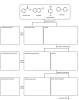 please fill in the correct compounds in the flow chart.
NH2 он он biphenyl benzoic acid 2-napthol 4-chloroaniline extraction with HCI acid extract (salt) organic acid extract (neutral) basify extraction with NaHCO bicarbonate extract (salt) bicarbonate extract (neutral) organic acidify extraction with NaOH NaOH extract (neutral) ether extract (solution) NaOH extract (salt) acidity evaporate ether
please fill in the correct compounds in the flow chart.
NH2 он он biphenyl benzoic acid 2-napthol 4-chloroaniline extraction with HCI acid extract (salt) organic acid extract (neutral) basify extraction with NaHCO bicarbonate extract (salt) bicarbonate extract (neutral) organic acidify extraction with NaOH NaOH extract (neutral) ether extract (solution) NaOH extract (salt) acidity evaporate ether
 fill this in please!
NH2 biphenyl 2-napthol benzoic acid 4-chloroaniline extraction with HCI acid extract (neutral) acid extract (salt) organic basity extraction with NaHCO3 bicarbonate extract (neutral) bicarbonate extract (salt) organic acidify extraction with NaOH ether extract (solution) NaOH extract (neutral) NaOH extract (salt) acidify evaporate ether ether extract (solid)
fill this in please!
NH2 biphenyl 2-napthol benzoic acid 4-chloroaniline extraction with HCI acid extract (neutral) acid extract (salt) organic basity extraction with NaHCO3 bicarbonate extract (neutral) bicarbonate extract (salt) organic acidify extraction with NaOH ether extract (solution) NaOH extract (neutral) NaOH extract (salt) acidify evaporate ether ether extract (solid)
 QUESTION:
Write a flow scheme for the work-up.
THE WORK UP:
C. Work-up (save all layers) and Isolation of Product MgBrCl Benzoic acid Transfer the mixture into a test tube. Rinse the beaker with about 3 mL of regular (not anhydrous) diethyl ether and pour the washings into the test tube. There should be two distinct layers in the test tube Remove the aqueous layer (to be discarded) and shake the ether layer with about 2 mL of 3 M...
QUESTION:
Write a flow scheme for the work-up.
THE WORK UP:
C. Work-up (save all layers) and Isolation of Product MgBrCl Benzoic acid Transfer the mixture into a test tube. Rinse the beaker with about 3 mL of regular (not anhydrous) diethyl ether and pour the washings into the test tube. There should be two distinct layers in the test tube Remove the aqueous layer (to be discarded) and shake the ether layer with about 2 mL of 3 M...
 As it says in question 2 could you please help me make a flow
chart like the provided example below?
2) For the portion of the procedure shown below, create a flow chart for the acid-base extraction at the end of the Grignard Reaction in a similar manner to the one on Canvas for the extraction lab. Start your flow chart with the crude reaction mixture before addition of HCl and continue it until the product is recovered. Depict the...
As it says in question 2 could you please help me make a flow
chart like the provided example below?
2) For the portion of the procedure shown below, create a flow chart for the acid-base extraction at the end of the Grignard Reaction in a similar manner to the one on Canvas for the extraction lab. Start your flow chart with the crude reaction mixture before addition of HCl and continue it until the product is recovered. Depict the...
 Started dissolving mixture with diethyl ether. And shook 3M
HCL in sep funnel. Collected.
Now:
1) You added NaOH to organic phase collected in problem 2 to
extract another compound,
Which compound was extracted in NaOH solution? Justify with
chemical equation
2) to the aqueous phase you added HCL solution until it’s ph
was less than 7. What happens if it’s ph is 7 or above?
3) when you acidified the solution by adding HCL, a white
precipitate was produced....
Started dissolving mixture with diethyl ether. And shook 3M
HCL in sep funnel. Collected.
Now:
1) You added NaOH to organic phase collected in problem 2 to
extract another compound,
Which compound was extracted in NaOH solution? Justify with
chemical equation
2) to the aqueous phase you added HCL solution until it’s ph
was less than 7. What happens if it’s ph is 7 or above?
3) when you acidified the solution by adding HCL, a white
precipitate was produced....
 For the portion of the procedure shown below, create a
flow chart for the acid-base extraction at the end of the Grignard
Reaction. Start your flow chart with the crude reaction (see below)
mixture before addition of HCl and continue it until the product is
recovered. Depict the desired organic product, in its correct form
at each step of the procedure.
Crude reaction mixture procedure for reference: To
the flask add Mg turnings (120 mg, 4.94 mmol) to the flask...
For the portion of the procedure shown below, create a
flow chart for the acid-base extraction at the end of the Grignard
Reaction. Start your flow chart with the crude reaction (see below)
mixture before addition of HCl and continue it until the product is
recovered. Depict the desired organic product, in its correct form
at each step of the procedure.
Crude reaction mixture procedure for reference: To
the flask add Mg turnings (120 mg, 4.94 mmol) to the flask...
 please fill in the correct compounds in the flow chart.
NH2 он он biphenyl benzoic acid 2-napthol 4-chloroaniline extraction with HCI acid extract (salt) organic acid extract (neutral) basify extraction with NaHCO bicarbonate extract (salt) bicarbonate extract (neutral) organic acidify extraction with NaOH NaOH extract (neutral) ether extract (solution) NaOH extract (salt) acidity evaporate ether
please fill in the correct compounds in the flow chart.
NH2 он он biphenyl benzoic acid 2-napthol 4-chloroaniline extraction with HCI acid extract (salt) organic acid extract (neutral) basify extraction with NaHCO bicarbonate extract (salt) bicarbonate extract (neutral) organic acidify extraction with NaOH NaOH extract (neutral) ether extract (solution) NaOH extract (salt) acidity evaporate ether
Most questions answered within 3 hours.
-
Where is the error in this code sequence?
String s1 = "Hello";
String s2 = "ello";...
asked 10 months ago -
Financial data for Joel de Paris, Inc., for last year
follow:
Joel de Paris, Inc.
Balance...
asked 10 months ago -
Consider this reaction:
Al2(SO4)3 (aq)+ BaCl3
(aq) Al2Cl6 (aq)- +
3BaSO4(s) . What is the...
asked 10 months ago -
Suppose that Savneet is considering increasing her
recent random sample from 20 car rentals to 40...
asked 10 months ago -
Trucks arrive at an unloading terminal at an average rate of 120
per hour.
Trucks arrive...
asked 10 months ago -
Why are methanol and ethanol completely soluble in water while
octanol is not very little soluble....
asked 10 months ago -
A facilities manager at a university reads in a research report
that the mean amount of...
asked 10 months ago -
When the CuSO4 is rehydrated by adding water to the anhydrous
compound, is this an endothermic...
asked 10 months ago -
A ray of sunlight is passing from diamond into crown glass; the
angle of incidence is...
asked 10 months ago -
A block of mass 0.249 kg is placed on top of a light, vertical
spring of...
asked 10 months ago -
how do the kidneys compensate in the presences of acidosis
a) trigger hyperventilate
b) reserve acid...
asked 10 months ago -
Question 501 pts
The rental rate of capital to the firm increases. Which of the
following...
asked 10 months ago