During DNA replication in humans (eukaryotes), what polymerases (1,2,3?) are involved?
During DNA replication in humans (eukaryotes), what polymerases (1,2,3?) are involved?
Homework Answers
In eukaryotes for the replication process three main polymerases are necessary, they are DNA polymerase alpha also known as Pol α, DNA polymerase delta also known as Pol δ and DNA polymerase epsilon also known as Pol ε.
Pol α helps in the initiation of the DNA replication process. After the primer is created it helps in the formation of DNA/RNA primer and it elongates DNA up to 20 nucleotides. It acts on both lagging and leading strands.
Pol δ and Pol ε they help in further elongation, they extend the newly formed daughter DNA strand.
Pol ε also participates at the origins of DNA replication when the replication fork is established.
Add Answer to:
During DNA replication in humans (eukaryotes), what polymerases
(1,2,3?) are involved?
What other DNA polymerases are involved in DNA replication and when are they active? Although Dpb3...
What other DNA polymerases are involved in DNA replication and when are they active? Although Dpb3 and Dpb4 are considered non-essential, DNA polymerase ? dissociates more frequently from the template when Dpb3 and Dpb4 are deleted. What are the explanations for this result? What do you think would happen if, in addition to Dpb3 and Dpb4 deletion, the exonuclease activity of Pol2 was also mutated in such a way that it did not function? How might replication fork progression and...
7. When biologists worked out the details of DNA replication in bacteria and eukaryotes, many researchers...
7. When biologists worked out the details of DNA replication in bacteria and eukaryotes, many researchers were surprised to discover that there are several different DNA polymerases, each with a different role. The machinery of replication seems enormously complex, and every piece seemed essential if the whole system was to function at all. Many people found it hard to imagine how such a complex system of interdependent parts could have evolved by natural selection. How does the discovery of organisms...
What DNA/RNA/protein(s) is/are involved in the following processes in... DNA Replication Transcription - Prokaryotes Transcription -...
 What DNA/RNA/protein(s) is/are involved in the following processes in... DNA Replication Transcription - Prokaryotes Transcription - Eukaryotes What serves as the template? Unwinding of DNA Initiation Elongation What direction does elongation occur? Termination What is the end product of this process? How many strands? Processing after?
For DNA replication, primases: A) Create short pieces of DNA to provide 3'ends for DNA polymerases...
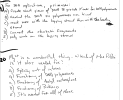 For DNA replication, primases: A) Create short pieces of DNA to provide 3'ends for DNA polymerases Unwind the DNA so polymerases can bind react more with the lagging strand than with the leading strand connect the okazaki fragments E) only work on the lagging strand is a wonderful thing, which michal is it not needed for? 20 Mg at the follow B) Functioning of splicing out of introns DNA polymerases Functioning of Acetyl carboxylase Functioning of Rubisco E) It's needed...
Describe the steps and the functions of the enzymes involved in the generation of DNA replication...
Describe the steps and the functions of the enzymes involved in the generation of DNA replication fork and in the synthesis of leading and lagging strands in eukaryotes. (12 marks)
Which statement is correct for biological DNA replication? Select one: a. DNA polymerases always require a...
Which statement is correct for biological DNA replication? Select one: a. DNA polymerases always require a primer. b. It needs the single strand binding proteins. c. DNA replication starts at the Ori sequence. d. DnaA is a protein which steadily accumulates to trigger DNA replication in E.coli. e. All of these
32. Which statement is correct for biological DNA replication? Select one: O a. DNA polymerases always...
 32. Which statement is correct for biological DNA replication? Select one: O a. DNA polymerases always require a primer. b. It needs the single strand binding proteins. c. DNA replication starts at the Ori sequence. d. DnaA is a protein which steadily accumulates to trigger DNA replication i ee. All of these
Describe the various steps involved in the initiation of replication in eukaryotes. What proteins are involved...
Describe the various steps involved in the initiation of replication in eukaryotes. What proteins are involved in each of the steps, and when in the cell cycle does each of them occur? How does their temporal segregation contribute to the limitation of origin firing to at most once per cell cycle?
What are the sequences found in the origin of replication in a bacterial DNA? Explain briefly...
What are the sequences found in the origin of replication in a bacterial DNA? Explain briefly how DNA polymerases lessen errors in DNA replication. Why are there Okazaki fragments in the lagging strand during replication?
1. DNA is coiled around what type of proteins to form nucleosomes A. Polymerases DNA replication...
 1. DNA is coiled around what type of proteins to form nucleosomes A. Polymerases DNA replication of the lagging strand is discontinuous B. Transcription factors DNA replication of the lagging strand is continuous C. Helicases D. Histones E. DICER 2. Which of the following statements is true? A. DNA replication of the leading strand is discontinuous B. DNA replication of the lagging strand is discontinuous C. DNA replication of the leading strand is dispersive D. DNA replication of the lagging...
 What DNA/RNA/protein(s) is/are involved in the following processes in... DNA Replication Transcription - Prokaryotes Transcription - Eukaryotes What serves as the template? Unwinding of DNA Initiation Elongation What direction does elongation occur? Termination What is the end product of this process? How many strands? Processing after?
 For DNA replication, primases: A) Create short pieces of DNA to provide 3'ends for DNA polymerases Unwind the DNA so polymerases can bind react more with the lagging strand than with the leading strand connect the okazaki fragments E) only work on the lagging strand is a wonderful thing, which michal is it not needed for? 20 Mg at the follow B) Functioning of splicing out of introns DNA polymerases Functioning of Acetyl carboxylase Functioning of Rubisco E) It's needed...
 32. Which statement is correct for biological DNA replication? Select one: O a. DNA polymerases always require a primer. b. It needs the single strand binding proteins. c. DNA replication starts at the Ori sequence. d. DnaA is a protein which steadily accumulates to trigger DNA replication i ee. All of these
 1. DNA is coiled around what type of proteins to form nucleosomes A. Polymerases DNA replication of the lagging strand is discontinuous B. Transcription factors DNA replication of the lagging strand is continuous C. Helicases D. Histones E. DICER 2. Which of the following statements is true? A. DNA replication of the leading strand is discontinuous B. DNA replication of the lagging strand is discontinuous C. DNA replication of the leading strand is dispersive D. DNA replication of the lagging...
Most questions answered within 3 hours.
-
Where is the error in this code sequence?
String s1 = "Hello";
String s2 = "ello";...
asked 10 months ago -
Financial data for Joel de Paris, Inc., for last year
follow:
Joel de Paris, Inc.
Balance...
asked 10 months ago -
Consider this reaction:
Al2(SO4)3 (aq)+ BaCl3
(aq) Al2Cl6 (aq)- +
3BaSO4(s) . What is the...
asked 10 months ago -
Suppose that Savneet is considering increasing her
recent random sample from 20 car rentals to 40...
asked 10 months ago -
Trucks arrive at an unloading terminal at an average rate of 120
per hour.
Trucks arrive...
asked 10 months ago -
Why are methanol and ethanol completely soluble in water while
octanol is not very little soluble....
asked 10 months ago -
A facilities manager at a university reads in a research report
that the mean amount of...
asked 10 months ago -
When the CuSO4 is rehydrated by adding water to the anhydrous
compound, is this an endothermic...
asked 10 months ago -
A ray of sunlight is passing from diamond into crown glass; the
angle of incidence is...
asked 10 months ago -
A block of mass 0.249 kg is placed on top of a light, vertical
spring of...
asked 10 months ago -
how do the kidneys compensate in the presences of acidosis
a) trigger hyperventilate
b) reserve acid...
asked 10 months ago -
Question 501 pts
The rental rate of capital to the firm increases. Which of the
following...
asked 10 months ago