Please explain a genetic pedigree to diagnose: recessive disorder, dominant disorder, x-linked disorder(recessive and dominant) or...
Please explain a genetic pedigree to diagnose: recessive disorder, dominant disorder, x-linked disorder(recessive and dominant) or mitochondrial disorder.
Homework Answers
Answer : The pedigree chart generally displays a family chart where it we can easily find the members of the family who are genetically affected by a genetic trait.
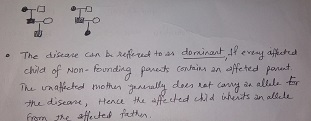
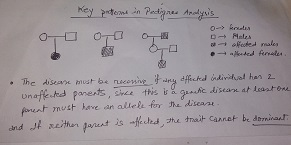
They can be used to simplify and detect mode of transmission and often used to study the genetics of inherited diseases. For example, pedigrees can be analyzed to determine the mode of transmission of various genetic diseases like Hemophilia. In pedigree analysis, we need to look for any clues that will allow us to decide if the trait which are present are dominant or recessive or whether it is linked to an autosomal chromosome, or to a X chroomsome.
Dominant traits
Recessive traits
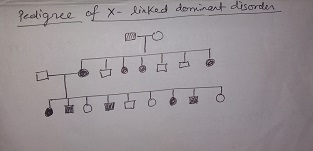
Pedigree of x-linked dominant disorder
In this condition, The affected males pass the condition on to all their daughters but to none of their sons
while the females married to unaffected males pass the condition on to half their sons and daughters.
Pedigree of X-linked recessive disorder
In this condition, a female showing the phenotype can show some result only from a mating if both the mother and the father bears the allele.while, a male with the phenotype can be produced only when the mother itself carries the allele. The offspring of the affected male are also affected, but all his daughters must be carriers because females must also receive one of their X chromosomes from their fathers too and Half the sons who are born to these carrier daughters are affected as well. for example , Hemophilia.
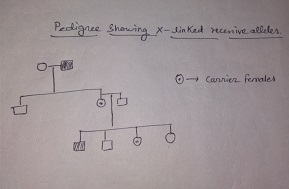
It is important to remember that an unaffected individual can never have any alleles of a dominant trait and the unaffected individual can be a carrier with one allele of a recessive trait where if the trait is X-linked, a single recessive allele is more than enough for a male to be affected.
A father always transmits his allele of X-linked genes further to his daughter, but not his sons. While a mother transmits an allele of X-linked genes to both of her daughters and her sons.
Add Answer to:
Please explain a genetic pedigree to diagnose: recessive
disorder, dominant disorder, x-linked disorder(recessive and
dominant) or...
다。 This pedigree is an example of Y-linked inheritance X-linked recessive inheritance X-linked dominant inheritance none...
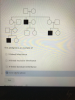 다。 This pedigree is an example of Y-linked inheritance X-linked recessive inheritance X-linked dominant inheritance none ofthe above Save
QUESTION 12 10 points Save Answer What is the likely mode of inheritance for the genetic...
 QUESTION 12 10 points Save Answer What is the likely mode of inheritance for the genetic disorder shown in the pedigree below? MItochondrial Autosomal recessive X-linked recessive X-linked dominant
QUESTION 19 Identify the pattern of inheritance in this pedigree: 10 autosomal dominant autosomal recessive X-linked...
 QUESTION 19 Identify the pattern of inheritance in this pedigree: 10 autosomal dominant autosomal recessive X-linked dominant O X-linked recessive
The pedigree below is most compatible with: sex-linked dominant sex-linked recessive autosomal dominant autosomal recessive The...
 The pedigree below is most compatible with: sex-linked dominant sex-linked recessive autosomal dominant autosomal recessive The F factor is about 100 kb in length, and contains genes involved in the formation of which structure that connects donor and recipient cells? R plasmid Conjugation Pilus Transduction pilus Coupling factor
5. Using the pedigree below, identity whether the trois autosomal dominant autosomal recessive, X-lined, or Y-linked....
 5. Using the pedigree below, identity whether the trois autosomal dominant autosomal recessive, X-lined, or Y-linked. Fil in the genotypes for each individual
QUESTION 18 Identify the pattern of inheritance in this pedigree: autosomal dominant O autosomal recessive O...
 QUESTION 18 Identify the pattern of inheritance in this pedigree: autosomal dominant O autosomal recessive O X-linked dominant O X-linked recessive
12 Examine the following X-linked recessive pedigree: X-linked recessive a How many females in the pedigree are heterozygous for the trait being followed? b. What is the probability that a male c...
 12 Examine the following X-linked recessive pedigree: X-linked recessive a How many females in the pedigree are heterozygous for the trait being followed? b. What is the probability that a male child of III-5 and III-6 will exhibited the recessive phenotype?
12 Examine the following X-linked recessive pedigree: X-linked recessive a How many females in the pedigree are heterozygous for the trait being followed? b. What is the probability that a male child of III-5 and III-6 will exhibited the...
12 Examine the following X-linked recessive pedigree: X-linked recessive a How many females in the pedigree are heterozygous for the trait being followed? b. What is the probability that a male child of III-5 and III-6 will exhibited the recessive phenotype?
12 Examine the following X-linked recessive pedigree: X-linked recessive a How many females in the pedigree are heterozygous for the trait being followed? b. What is the probability that a male child of III-5 and III-6 will exhibited the...
PEDIGREE ANALYSIS Examine the following pedigrees. 1. Examine the pedigree of achondroplasia (a form of dwarfism)....
 PEDIGREE ANALYSIS
Examine the following pedigrees.
1. Examine the pedigree of achondroplasia (a form of
dwarfism).
a) Is this trait dominant or recesive?_____
b) How do you know?_______
c) Label all genotypes on the pedigree chart:
2. Examine the pedigree of an X-linked recessive disorder
(red-green color deficiency).
1) Label all of the genotypes on the pedigree chart:____
3. Examine the following pedigree.
a) Is it autosomal dominant or recessive, or X-linked
recessive? _______
b) How do you know?______
c)...
PEDIGREE ANALYSIS
Examine the following pedigrees.
1. Examine the pedigree of achondroplasia (a form of
dwarfism).
a) Is this trait dominant or recesive?_____
b) How do you know?_______
c) Label all genotypes on the pedigree chart:
2. Examine the pedigree of an X-linked recessive disorder
(red-green color deficiency).
1) Label all of the genotypes on the pedigree chart:____
3. Examine the following pedigree.
a) Is it autosomal dominant or recessive, or X-linked
recessive? _______
b) How do you know?______
c)...
A married couple discovers that there was a case of the X-linked recessive disorder Duchenne Muscular...
 A married couple discovers that there was a case of the X-linked
recessive disorder Duchenne Muscular Dystrophy (DMD) in the
grandparental generation on both sides of their family. the
prdigree is as follows:
i) should the DMD case on the man's side affect the anxiety
level of the couple at all? Explain.
ii)What is the probanility that their first child will be a boy
with DMD?
8. A married couple discovers that there was a case of the X-linked recessive...
A married couple discovers that there was a case of the X-linked
recessive disorder Duchenne Muscular Dystrophy (DMD) in the
grandparental generation on both sides of their family. the
prdigree is as follows:
i) should the DMD case on the man's side affect the anxiety
level of the couple at all? Explain.
ii)What is the probanility that their first child will be a boy
with DMD?
8. A married couple discovers that there was a case of the X-linked recessive...
모모모 < 모 2 1 | 미모 모 오 or lo III = - - genetic...
 모모모 < 모 2 1 | 미모 모 오 or lo III = - - genetic disorder is segregating. 3. Each of the pedigrees shown represents a human family within which a genetic disorder is se Assume the two traits are extremely rare in the population and completely penetrant. Part 1. For the first pedigree. lisorder: autosomal recessive, autosomal a. Determine the most probable inheritance pattern of the disorder: autosomal recessive dominant, X-linked recessive or X-linked dominant. b. Indicate the...
 다。 This pedigree is an example of Y-linked inheritance X-linked recessive inheritance X-linked dominant inheritance none ofthe above Save
 QUESTION 12 10 points Save Answer What is the likely mode of inheritance for the genetic disorder shown in the pedigree below? MItochondrial Autosomal recessive X-linked recessive X-linked dominant
 QUESTION 19 Identify the pattern of inheritance in this pedigree: 10 autosomal dominant autosomal recessive X-linked dominant O X-linked recessive
 The pedigree below is most compatible with: sex-linked dominant sex-linked recessive autosomal dominant autosomal recessive The F factor is about 100 kb in length, and contains genes involved in the formation of which structure that connects donor and recipient cells? R plasmid Conjugation Pilus Transduction pilus Coupling factor
 5. Using the pedigree below, identity whether the trois autosomal dominant autosomal recessive, X-lined, or Y-linked. Fil in the genotypes for each individual
 QUESTION 18 Identify the pattern of inheritance in this pedigree: autosomal dominant O autosomal recessive O X-linked dominant O X-linked recessive
 12 Examine the following X-linked recessive pedigree: X-linked recessive a How many females in the pedigree are heterozygous for the trait being followed? b. What is the probability that a male child of III-5 and III-6 will exhibited the recessive phenotype?
12 Examine the following X-linked recessive pedigree: X-linked recessive a How many females in the pedigree are heterozygous for the trait being followed? b. What is the probability that a male child of III-5 and III-6 will exhibited the...
12 Examine the following X-linked recessive pedigree: X-linked recessive a How many females in the pedigree are heterozygous for the trait being followed? b. What is the probability that a male child of III-5 and III-6 will exhibited the recessive phenotype?
12 Examine the following X-linked recessive pedigree: X-linked recessive a How many females in the pedigree are heterozygous for the trait being followed? b. What is the probability that a male child of III-5 and III-6 will exhibited the...
 PEDIGREE ANALYSIS
Examine the following pedigrees.
1. Examine the pedigree of achondroplasia (a form of
dwarfism).
a) Is this trait dominant or recesive?_____
b) How do you know?_______
c) Label all genotypes on the pedigree chart:
2. Examine the pedigree of an X-linked recessive disorder
(red-green color deficiency).
1) Label all of the genotypes on the pedigree chart:____
3. Examine the following pedigree.
a) Is it autosomal dominant or recessive, or X-linked
recessive? _______
b) How do you know?______
c)...
PEDIGREE ANALYSIS
Examine the following pedigrees.
1. Examine the pedigree of achondroplasia (a form of
dwarfism).
a) Is this trait dominant or recesive?_____
b) How do you know?_______
c) Label all genotypes on the pedigree chart:
2. Examine the pedigree of an X-linked recessive disorder
(red-green color deficiency).
1) Label all of the genotypes on the pedigree chart:____
3. Examine the following pedigree.
a) Is it autosomal dominant or recessive, or X-linked
recessive? _______
b) How do you know?______
c)...
 A married couple discovers that there was a case of the X-linked
recessive disorder Duchenne Muscular Dystrophy (DMD) in the
grandparental generation on both sides of their family. the
prdigree is as follows:
i) should the DMD case on the man's side affect the anxiety
level of the couple at all? Explain.
ii)What is the probanility that their first child will be a boy
with DMD?
8. A married couple discovers that there was a case of the X-linked recessive...
A married couple discovers that there was a case of the X-linked
recessive disorder Duchenne Muscular Dystrophy (DMD) in the
grandparental generation on both sides of their family. the
prdigree is as follows:
i) should the DMD case on the man's side affect the anxiety
level of the couple at all? Explain.
ii)What is the probanility that their first child will be a boy
with DMD?
8. A married couple discovers that there was a case of the X-linked recessive...
 모모모 < 모 2 1 | 미모 모 오 or lo III = - - genetic disorder is segregating. 3. Each of the pedigrees shown represents a human family within which a genetic disorder is se Assume the two traits are extremely rare in the population and completely penetrant. Part 1. For the first pedigree. lisorder: autosomal recessive, autosomal a. Determine the most probable inheritance pattern of the disorder: autosomal recessive dominant, X-linked recessive or X-linked dominant. b. Indicate the...
Most questions answered within 3 hours.
-
Where is the error in this code sequence?
String s1 = "Hello";
String s2 = "ello";...
asked 10 months ago -
Financial data for Joel de Paris, Inc., for last year
follow:
Joel de Paris, Inc.
Balance...
asked 10 months ago -
Consider this reaction:
Al2(SO4)3 (aq)+ BaCl3
(aq) Al2Cl6 (aq)- +
3BaSO4(s) . What is the...
asked 10 months ago -
Suppose that Savneet is considering increasing her
recent random sample from 20 car rentals to 40...
asked 10 months ago -
Trucks arrive at an unloading terminal at an average rate of 120
per hour.
Trucks arrive...
asked 10 months ago -
Why are methanol and ethanol completely soluble in water while
octanol is not very little soluble....
asked 10 months ago -
A facilities manager at a university reads in a research report
that the mean amount of...
asked 10 months ago -
When the CuSO4 is rehydrated by adding water to the anhydrous
compound, is this an endothermic...
asked 10 months ago -
A ray of sunlight is passing from diamond into crown glass; the
angle of incidence is...
asked 10 months ago -
A block of mass 0.249 kg is placed on top of a light, vertical
spring of...
asked 10 months ago -
how do the kidneys compensate in the presences of acidosis
a) trigger hyperventilate
b) reserve acid...
asked 10 months ago -
Question 501 pts
The rental rate of capital to the firm increases. Which of the
following...
asked 10 months ago