An individual has the chromosomes below where the dot represents the centromere: EFGH.IJKL EFGKJI.HL If a...
An individual has the chromosomes below where the dot represents the centromere:
EFGH.IJKL EFGKJI.HL
If a crossover event occurs between the H and I loci, what is the longest chromosome formed?
Enter your answer with no spaces between the loci and use a period as the centromere.
Homework Answers
Longest chromosome that can be formed is:
EFGH.IJKLEFGKJI.IJKGFELKJI.EFGH
Here the crossover occur between EFGH.IJKLEFGHKGI & HL
Add Answer to:
An individual has the chromosomes below where the dot represents
the centromere:
EFGH.IJKL EFGKJI.HL
If a...
ion 22 ered An individual has the chromosomes below where the dot represents the centromere: ABCDEFG.H...
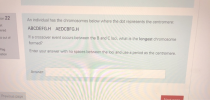 ion 22 ered An individual has the chromosomes below where the dot represents the centromere: ABCDEFG.H AEDCBFG.H If a crossover event occurs between the B and C loci, what is the longest chromosome formed? s out of Fag Enter your answer with no spaces between the loci and use a period as the centromere. stion Answer: Previous page
3. A phenotypically abnormal individual has a phenotypically normal father with an inversion on one copy of chromosome 7 and a normal mother without any changes in chromosome structure. The order of...
 3. A phenotypically abnormal individual has a phenotypically normal father with an inversion on one copy of chromosome 7 and a normal mother without any changes in chromosome structure. The order of genes along chromosome 7 in the father is as follows: normal chromosome 7) RTDM centromere P UXZC RTDUP centromere MXZC (inverted chromosome 7) The phenotypically abnormal offspring has a chromosome 7 with the following order of genes R TDM centromere P U D TR With a sketch (complete),...
Genetics DEFGHIJKL 1. A normal chromosome has the following gene sequence: ABC centromere An inversion heterozygote...
 Genetics
DEFGHIJKL 1. A normal chromosome has the following gene sequence: ABC centromere An inversion heterozygote has the following inverted gene sequence: ABJIHGFED-centromere CKL What would be the product if a crossover occurred between genes H and I on one inverted and one normal chromosome? (1 point) 2. A normal chromosome has the following gene sequence: AB centromere CDEFGHIJKL An inversion heterozygote has the following inverted gene sequence: AB-centromere CDJIHGFEKL What would be the product if a crossover occurred between...
Genetics
DEFGHIJKL 1. A normal chromosome has the following gene sequence: ABC centromere An inversion heterozygote has the following inverted gene sequence: ABJIHGFED-centromere CKL What would be the product if a crossover occurred between genes H and I on one inverted and one normal chromosome? (1 point) 2. A normal chromosome has the following gene sequence: AB centromere CDEFGHIJKL An inversion heterozygote has the following inverted gene sequence: AB-centromere CDJIHGFEKL What would be the product if a crossover occurred between...
#1 Mutation 1. A chromosomes has the following segments, where represents the centromere: MNOPQRST Give the...
 #1
Mutation 1. A chromosomes has the following segments, where represents the centromere: MNOPQRST Give the chromosome sequences that would result from the following mutations: Deletion of MN Pericentric inversion of NOP Inversion of RS, followed by tandem duplication of QRSC 2. Which type(s) of chromosomal mutations: a. Increase the amount of genetic material in a particular chromosome? b. Increase the amount of genetic material in the entire genome? c. Decrease the amount of genetic material in a particular chromosome?...
#1
Mutation 1. A chromosomes has the following segments, where represents the centromere: MNOPQRST Give the chromosome sequences that would result from the following mutations: Deletion of MN Pericentric inversion of NOP Inversion of RS, followed by tandem duplication of QRSC 2. Which type(s) of chromosomal mutations: a. Increase the amount of genetic material in a particular chromosome? b. Increase the amount of genetic material in the entire genome? c. Decrease the amount of genetic material in a particular chromosome?...
#1 Mutation 1. A chromosomes has the following segments, where represents the centromere: MNOPQRST Give the...
 #1
Mutation 1. A chromosomes has the following segments, where represents the centromere: MNOPQRST Give the chromosome sequences that would result from the following mutations: a. Deletion of MN Pericentric inversion of NOP C. Inversion of RS, followed by tandem duplication of QRST b. 2. Which type(s) of chromosomal mutations: a. Increase the amount of genetic material in a particular chromosome? b. Increase the amount of genetic material in the entire genome? c. Decrease the amount of genetic material in...
#1
Mutation 1. A chromosomes has the following segments, where represents the centromere: MNOPQRST Give the chromosome sequences that would result from the following mutations: a. Deletion of MN Pericentric inversion of NOP C. Inversion of RS, followed by tandem duplication of QRST b. 2. Which type(s) of chromosomal mutations: a. Increase the amount of genetic material in a particular chromosome? b. Increase the amount of genetic material in the entire genome? c. Decrease the amount of genetic material in...
The normal sequence of nine genes on a certain Drosophila chromosome is 123456789, where the dot...
 The normal sequence of nine genes on a certain Drosophila chromosome is 123456789, where the dot represents the centromere. Some fruit flies were found to have aberrant chromosomes. For each of the aberrant chromosomes below, determine the type of chromosomal rearrangement and how the aberrant chromosome would synapse (align) with a normal chromosome during meiosis. 123.458769 is a . During meiosis 123 . 46789 is an . During meiosis 1654 • 32789 is a . During meiosis 123.4566789 is a...
A chromosome with genetic markers A, B, C, D, E, F, G, H, I and J...
A chromosome with genetic markers A, B, C, D, E, F, G, H, I and J ( “*” represents the centromere ) is shown below: A B C D E * F G H I J Another chromosome is found to contain a b c d i h g f * e j If these two chromosomes are paired during meiosis, a single crossover takes place between F and G, and another single crossover takes place between H and I....
Look at structure R. It represents _____ DNA molecules and ______ chromosomes. a. four; two b....
 Look at structure R. It
represents _____ DNA molecules and ______ chromosomes.
a. four; two
b. one; one
c. four; four
d. two; two
e. three; six
f. two; one
g. three; three
The figure shows three different structures that represent chromosomes at metaphase of meiosis I. Each line represents a pair of sister chromatids and the dot is a centromere. Use this figure to answer the following six questions below. OK? NR
Look at structure R. It
represents _____ DNA molecules and ______ chromosomes.
a. four; two
b. one; one
c. four; four
d. two; two
e. three; six
f. two; one
g. three; three
The figure shows three different structures that represent chromosomes at metaphase of meiosis I. Each line represents a pair of sister chromatids and the dot is a centromere. Use this figure to answer the following six questions below. OK? NR
Consider two non-homologous chromosomes whose normal sequence of segments and centromere locations are shown here. What...
 Consider two non-homologous chromosomes whose normal sequence of
segments and centromere locations are shown here. What kind of
changes are these? I think it's a translocation and i cannot tell
what the second one is.
Question 7: (2 points) Consider two non-homologous chromosomes whose normal sequences of segments and centromere locations are shown here. Chromosome 1 A B C D E F G H Chromosome 2 O R . S T U V Determine the type (or types) of chromosomal...
Consider two non-homologous chromosomes whose normal sequence of
segments and centromere locations are shown here. What kind of
changes are these? I think it's a translocation and i cannot tell
what the second one is.
Question 7: (2 points) Consider two non-homologous chromosomes whose normal sequences of segments and centromere locations are shown here. Chromosome 1 A B C D E F G H Chromosome 2 O R . S T U V Determine the type (or types) of chromosomal...
A normal chromosome and its homolog carrying an inversion are given below (* Y= centromere): Normal:...
 A normal chromosome and its homolog carrying an inversion are given below (* Y= centromere): Normal: ABCD * EFGH Inversion:a fe* dcbgh Answer the following questions about these homologs (8 points total) What gamete genotypes are produced if there is a crossover between B & C? Be sure to use a * to indicate the position of the centromere. Put each gamete on a separate line, and write (V) or (I) beside each one to indicate whether it is viable...
 ion 22 ered An individual has the chromosomes below where the dot represents the centromere: ABCDEFG.H AEDCBFG.H If a crossover event occurs between the B and C loci, what is the longest chromosome formed? s out of Fag Enter your answer with no spaces between the loci and use a period as the centromere. stion Answer: Previous page
 3. A phenotypically abnormal individual has a phenotypically normal father with an inversion on one copy of chromosome 7 and a normal mother without any changes in chromosome structure. The order of genes along chromosome 7 in the father is as follows: normal chromosome 7) RTDM centromere P UXZC RTDUP centromere MXZC (inverted chromosome 7) The phenotypically abnormal offspring has a chromosome 7 with the following order of genes R TDM centromere P U D TR With a sketch (complete),...
 Genetics
DEFGHIJKL 1. A normal chromosome has the following gene sequence: ABC centromere An inversion heterozygote has the following inverted gene sequence: ABJIHGFED-centromere CKL What would be the product if a crossover occurred between genes H and I on one inverted and one normal chromosome? (1 point) 2. A normal chromosome has the following gene sequence: AB centromere CDEFGHIJKL An inversion heterozygote has the following inverted gene sequence: AB-centromere CDJIHGFEKL What would be the product if a crossover occurred between...
Genetics
DEFGHIJKL 1. A normal chromosome has the following gene sequence: ABC centromere An inversion heterozygote has the following inverted gene sequence: ABJIHGFED-centromere CKL What would be the product if a crossover occurred between genes H and I on one inverted and one normal chromosome? (1 point) 2. A normal chromosome has the following gene sequence: AB centromere CDEFGHIJKL An inversion heterozygote has the following inverted gene sequence: AB-centromere CDJIHGFEKL What would be the product if a crossover occurred between...
 #1
Mutation 1. A chromosomes has the following segments, where represents the centromere: MNOPQRST Give the chromosome sequences that would result from the following mutations: Deletion of MN Pericentric inversion of NOP Inversion of RS, followed by tandem duplication of QRSC 2. Which type(s) of chromosomal mutations: a. Increase the amount of genetic material in a particular chromosome? b. Increase the amount of genetic material in the entire genome? c. Decrease the amount of genetic material in a particular chromosome?...
#1
Mutation 1. A chromosomes has the following segments, where represents the centromere: MNOPQRST Give the chromosome sequences that would result from the following mutations: Deletion of MN Pericentric inversion of NOP Inversion of RS, followed by tandem duplication of QRSC 2. Which type(s) of chromosomal mutations: a. Increase the amount of genetic material in a particular chromosome? b. Increase the amount of genetic material in the entire genome? c. Decrease the amount of genetic material in a particular chromosome?...
 #1
Mutation 1. A chromosomes has the following segments, where represents the centromere: MNOPQRST Give the chromosome sequences that would result from the following mutations: a. Deletion of MN Pericentric inversion of NOP C. Inversion of RS, followed by tandem duplication of QRST b. 2. Which type(s) of chromosomal mutations: a. Increase the amount of genetic material in a particular chromosome? b. Increase the amount of genetic material in the entire genome? c. Decrease the amount of genetic material in...
#1
Mutation 1. A chromosomes has the following segments, where represents the centromere: MNOPQRST Give the chromosome sequences that would result from the following mutations: a. Deletion of MN Pericentric inversion of NOP C. Inversion of RS, followed by tandem duplication of QRST b. 2. Which type(s) of chromosomal mutations: a. Increase the amount of genetic material in a particular chromosome? b. Increase the amount of genetic material in the entire genome? c. Decrease the amount of genetic material in...
 The normal sequence of nine genes on a certain Drosophila chromosome is 123456789, where the dot represents the centromere. Some fruit flies were found to have aberrant chromosomes. For each of the aberrant chromosomes below, determine the type of chromosomal rearrangement and how the aberrant chromosome would synapse (align) with a normal chromosome during meiosis. 123.458769 is a . During meiosis 123 . 46789 is an . During meiosis 1654 • 32789 is a . During meiosis 123.4566789 is a...
 Look at structure R. It
represents _____ DNA molecules and ______ chromosomes.
a. four; two
b. one; one
c. four; four
d. two; two
e. three; six
f. two; one
g. three; three
The figure shows three different structures that represent chromosomes at metaphase of meiosis I. Each line represents a pair of sister chromatids and the dot is a centromere. Use this figure to answer the following six questions below. OK? NR
Look at structure R. It
represents _____ DNA molecules and ______ chromosomes.
a. four; two
b. one; one
c. four; four
d. two; two
e. three; six
f. two; one
g. three; three
The figure shows three different structures that represent chromosomes at metaphase of meiosis I. Each line represents a pair of sister chromatids and the dot is a centromere. Use this figure to answer the following six questions below. OK? NR
 Consider two non-homologous chromosomes whose normal sequence of
segments and centromere locations are shown here. What kind of
changes are these? I think it's a translocation and i cannot tell
what the second one is.
Question 7: (2 points) Consider two non-homologous chromosomes whose normal sequences of segments and centromere locations are shown here. Chromosome 1 A B C D E F G H Chromosome 2 O R . S T U V Determine the type (or types) of chromosomal...
Consider two non-homologous chromosomes whose normal sequence of
segments and centromere locations are shown here. What kind of
changes are these? I think it's a translocation and i cannot tell
what the second one is.
Question 7: (2 points) Consider two non-homologous chromosomes whose normal sequences of segments and centromere locations are shown here. Chromosome 1 A B C D E F G H Chromosome 2 O R . S T U V Determine the type (or types) of chromosomal...
 A normal chromosome and its homolog carrying an inversion are given below (* Y= centromere): Normal: ABCD * EFGH Inversion:a fe* dcbgh Answer the following questions about these homologs (8 points total) What gamete genotypes are produced if there is a crossover between B & C? Be sure to use a * to indicate the position of the centromere. Put each gamete on a separate line, and write (V) or (I) beside each one to indicate whether it is viable...
Most questions answered within 3 hours.
-
Where is the error in this code sequence?
String s1 = "Hello";
String s2 = "ello";...
asked 10 months ago -
Financial data for Joel de Paris, Inc., for last year
follow:
Joel de Paris, Inc.
Balance...
asked 10 months ago -
Consider this reaction:
Al2(SO4)3 (aq)+ BaCl3
(aq) Al2Cl6 (aq)- +
3BaSO4(s) . What is the...
asked 10 months ago -
Suppose that Savneet is considering increasing her
recent random sample from 20 car rentals to 40...
asked 10 months ago -
Trucks arrive at an unloading terminal at an average rate of 120
per hour.
Trucks arrive...
asked 10 months ago -
Why are methanol and ethanol completely soluble in water while
octanol is not very little soluble....
asked 10 months ago -
A facilities manager at a university reads in a research report
that the mean amount of...
asked 10 months ago -
When the CuSO4 is rehydrated by adding water to the anhydrous
compound, is this an endothermic...
asked 10 months ago -
A ray of sunlight is passing from diamond into crown glass; the
angle of incidence is...
asked 10 months ago -
A block of mass 0.249 kg is placed on top of a light, vertical
spring of...
asked 10 months ago -
how do the kidneys compensate in the presences of acidosis
a) trigger hyperventilate
b) reserve acid...
asked 10 months ago -
Question 501 pts
The rental rate of capital to the firm increases. Which of the
following...
asked 10 months ago