Which group of organisms is most closely related to plants? A. green algae B. brown algae C....
Which group of organisms is most closely related to plants?
A. green algae
B. brown algae
C. red algae
D.slime mold
Which group of plants lacks vascular tissue?
A. mosses
B. ferns
C. cone-bearing plants
D. grasses
Homework Answers
- Group of organisms is most closely related to plants: A. green algae
Green algae are the algae most firmly identified with plants. They have similar colors (chlorophyll a and b and carotenoids), similar synthetic substances in their cell dividers (cellulose), and a similar stockpiling item (starch) as plants.
- Group of plants lacks vascular tissue: A. mosses
Non-vascular plants incorporate two very various gatherings: The Bryophyta (mosses), the Anthocerotophyta (hornworts) and the Marchantiophyta (liverworts). Since these plants have no water-leading tissues, they don't have the auxiliary multifaceted nature and size of most vascular plants. Green growth - particularly the green growth or simply we can say algae.
Add Answer to:
Which group of organisms is most closely related to plants?
A. green algae
B. brown algae
C....
Which type of algae consists of only multicellular organisms? A. Brown algae B. Euglenoids C. Dinoflagellates...
Which type of algae consists of only multicellular organisms? A. Brown algae B. Euglenoids C. Dinoflagellates D. Red algae E. Green algae
Draw a phylogeny of the plants that includes the following taxa: Green algae Liverworts Mosses Hornworts...
Draw a phylogeny of the plants that includes the following taxa: Green algae Liverworts Mosses Hornworts Lycophytes Ferns & horsetails Gymnosperm Angiosperm And the following adaptations: Sporophyte Cuticle Stem cells Xylem & phloem Lignin Seeds Flowers Lastly, indicate which of the taxa are classified as, non-vascular, vascular, bryophytes, seed, and flowering plants.
Which of the following are not a monophyletic group? angiosperms ferns gymnosperms lycophytes bryophytes ferns/horsetails and...
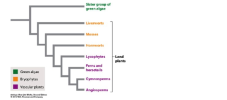 Which of the following are not a monophyletic group?
angiosperms
ferns
gymnosperms
lycophytes
bryophytes
ferns/horsetails and bryophytes
ferns/horsetails
Sister group of green algae Liverworts Mosses Hornworts Lycophytes Land plants Ferns and horsetails Green algae Bryophytes Gymnosperms Vascular plants Angiosperms De How We Seed Cation HO
Which of the following are not a monophyletic group?
angiosperms
ferns
gymnosperms
lycophytes
bryophytes
ferns/horsetails and bryophytes
ferns/horsetails
Sister group of green algae Liverworts Mosses Hornworts Lycophytes Land plants Ferns and horsetails Green algae Bryophytes Gymnosperms Vascular plants Angiosperms De How We Seed Cation HO
The ancestors of plants were probably algae. True/False 2) What do plants and the green algae...
The ancestors of plants were probably algae. True/False 2) What do plants and the green algae charophytes have in common? 3) What advantages did life in land provide for plants? 4) What were the disadvantages for life on land for plants? 5) What are some differences between plants and algae? 6) How do land plants maintain moisture in their cells? 7) What structures do land plants use to obtain resources such as water, minerals, and CO2? 8) List the two...
1. Red algae are A B. C. protists plants fungi animals prokaryotes D. Brown algae area...
 1. Red algae are A B. C. protists plants fungi animals prokaryotes D. Brown algae area A. B. C. protists plants fungi animals prokaryotes E. gave rise to the entire terrestrial plant A single species of freshwater lineage. A. B. C. red algae brown algae green algae fungus prokaryote D. E. Green algae split into 2 clades: A. B. c. D. chromalveolata and stramenopila rhizaria and cercozoa alveolata and stramenopila excavata and opisthokonta chlorophytes and charophytes 5. The green algae...
Which of the following are not a monophyletic group? Other options include angiosperms bryophytes ferns/horsetails and...
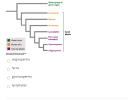 Which of the following are not a monophyletic group?
Other options include
angiosperms
bryophytes
ferns/horsetails and bryophytes
ferns/horsetails
gymnosperms
Please select all of them
Sister group of green algae Liverworts Mosses Hornworts Lycophytes Land plants Ferns and horsetails Green algae Bryophytes Gymnosperms Vascular plants Angiosperms Dirbour How LoneWres Sound MENNO angiosperms o ferns O gymnosperms olycophytes
Which of the following are not a monophyletic group?
Other options include
angiosperms
bryophytes
ferns/horsetails and bryophytes
ferns/horsetails
gymnosperms
Please select all of them
Sister group of green algae Liverworts Mosses Hornworts Lycophytes Land plants Ferns and horsetails Green algae Bryophytes Gymnosperms Vascular plants Angiosperms Dirbour How LoneWres Sound MENNO angiosperms o ferns O gymnosperms olycophytes
5. Refer to the image. Phylogenetic relatianships based on chloroplast genes Brown algae Diatoms Most photosynthetic...
 5. Refer to the image. Phylogenetic relatianships based on chloroplast genes Brown algae Diatoms Most photosynthetic dinoflagellates Cryptophyte algae Red algae Red algae Phylogenetic relationships based on nuclear genes Opisthokonts Amoebozoans GlaucocystophytesArchaeplastids Red algae Green algae Diatoms Brown algae -Stramenopiles Green algae Euglenids Green algae Chlorarachniophyte algae Dinoflagellates -Alveolates Chlorarachniophyte algae Green algae Green algae Green algae Green algae Land plants Glaucocystophytes Rhizarians Cryptophyte algae Euglenids - Excavates Cyanobacteria ologye How Life Work, Third Edition o 2019 Macmlan Learning Phylogenies...
Question 41 2 pts The supergroup that contains red and green algae, along with land plants...
 Question 41 2 pts The supergroup that contains red and green algae, along with land plants is Chromalveolates. O Unikonta. Opisthokonta O Archaeplastida. O Excavata. Which of the following organisms would NOT be considered a protist? O amoeba O algae O slime mold O water molds O yeast
Question 45 (2 points) Which type of algae would have pigments most similar to land plants?...
 Question 45 (2 points) Which type of algae would have pigments most similar to land plants? O green brown O red
Genes of a plant chloroplast genome are most closely related to genes of: a) the green...
Genes of a plant chloroplast genome are most closely related to genes of: a) the green algae. b) the chlorarachniophyte nucleus. c)cyanobacteria. d)a plant nucleus.
 Which of the following are not a monophyletic group?
angiosperms
ferns
gymnosperms
lycophytes
bryophytes
ferns/horsetails and bryophytes
ferns/horsetails
Sister group of green algae Liverworts Mosses Hornworts Lycophytes Land plants Ferns and horsetails Green algae Bryophytes Gymnosperms Vascular plants Angiosperms De How We Seed Cation HO
Which of the following are not a monophyletic group?
angiosperms
ferns
gymnosperms
lycophytes
bryophytes
ferns/horsetails and bryophytes
ferns/horsetails
Sister group of green algae Liverworts Mosses Hornworts Lycophytes Land plants Ferns and horsetails Green algae Bryophytes Gymnosperms Vascular plants Angiosperms De How We Seed Cation HO
 1. Red algae are A B. C. protists plants fungi animals prokaryotes D. Brown algae area A. B. C. protists plants fungi animals prokaryotes E. gave rise to the entire terrestrial plant A single species of freshwater lineage. A. B. C. red algae brown algae green algae fungus prokaryote D. E. Green algae split into 2 clades: A. B. c. D. chromalveolata and stramenopila rhizaria and cercozoa alveolata and stramenopila excavata and opisthokonta chlorophytes and charophytes 5. The green algae...
 Which of the following are not a monophyletic group?
Other options include
angiosperms
bryophytes
ferns/horsetails and bryophytes
ferns/horsetails
gymnosperms
Please select all of them
Sister group of green algae Liverworts Mosses Hornworts Lycophytes Land plants Ferns and horsetails Green algae Bryophytes Gymnosperms Vascular plants Angiosperms Dirbour How LoneWres Sound MENNO angiosperms o ferns O gymnosperms olycophytes
Which of the following are not a monophyletic group?
Other options include
angiosperms
bryophytes
ferns/horsetails and bryophytes
ferns/horsetails
gymnosperms
Please select all of them
Sister group of green algae Liverworts Mosses Hornworts Lycophytes Land plants Ferns and horsetails Green algae Bryophytes Gymnosperms Vascular plants Angiosperms Dirbour How LoneWres Sound MENNO angiosperms o ferns O gymnosperms olycophytes
 5. Refer to the image. Phylogenetic relatianships based on chloroplast genes Brown algae Diatoms Most photosynthetic dinoflagellates Cryptophyte algae Red algae Red algae Phylogenetic relationships based on nuclear genes Opisthokonts Amoebozoans GlaucocystophytesArchaeplastids Red algae Green algae Diatoms Brown algae -Stramenopiles Green algae Euglenids Green algae Chlorarachniophyte algae Dinoflagellates -Alveolates Chlorarachniophyte algae Green algae Green algae Green algae Green algae Land plants Glaucocystophytes Rhizarians Cryptophyte algae Euglenids - Excavates Cyanobacteria ologye How Life Work, Third Edition o 2019 Macmlan Learning Phylogenies...
 Question 41 2 pts The supergroup that contains red and green algae, along with land plants is Chromalveolates. O Unikonta. Opisthokonta O Archaeplastida. O Excavata. Which of the following organisms would NOT be considered a protist? O amoeba O algae O slime mold O water molds O yeast
 Question 45 (2 points) Which type of algae would have pigments most similar to land plants? O green brown O red
Most questions answered within 3 hours.
-
Where is the error in this code sequence?
String s1 = "Hello";
String s2 = "ello";...
asked 11 months ago -
Financial data for Joel de Paris, Inc., for last year
follow:
Joel de Paris, Inc.
Balance...
asked 11 months ago -
Consider this reaction:
Al2(SO4)3 (aq)+ BaCl3
(aq) Al2Cl6 (aq)- +
3BaSO4(s) . What is the...
asked 11 months ago -
Suppose that Savneet is considering increasing her
recent random sample from 20 car rentals to 40...
asked 11 months ago -
Trucks arrive at an unloading terminal at an average rate of 120
per hour.
Trucks arrive...
asked 11 months ago -
Why are methanol and ethanol completely soluble in water while
octanol is not very little soluble....
asked 11 months ago -
A facilities manager at a university reads in a research report
that the mean amount of...
asked 11 months ago -
When the CuSO4 is rehydrated by adding water to the anhydrous
compound, is this an endothermic...
asked 11 months ago -
A ray of sunlight is passing from diamond into crown glass; the
angle of incidence is...
asked 11 months ago -
A block of mass 0.249 kg is placed on top of a light, vertical
spring of...
asked 11 months ago -
how do the kidneys compensate in the presences of acidosis
a) trigger hyperventilate
b) reserve acid...
asked 11 months ago -
Question 501 pts
The rental rate of capital to the firm increases. Which of the
following...
asked 11 months ago