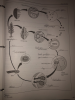
From the Life cycle Allomyces sp., indicate which structure is the sporangium, the male gametangium, and...
From the Life cycle Allomyces sp., indicate which structure is the sporangium, the male gametangium, and when meiosis occurs. (3 marks) Also indicate which structure is the zoosporangium, the female gametangium, and when karyogamy occurs. (3 marks)
Homework Answers

Add Answer to:
From the Life cycle Allomyces sp., indicate which
structure is the sporangium, the male gametangium, and...
1. Look at digure 6 and label the arrows that indicate where mitosis, meiosis and fertilization...
 1.
Look at digure 6 and label the arrows that indicate where mitosis,
meiosis and fertilization occur
2. Identify the following structures where needed to be labeled.
-sporophyte -male gametophyte (pollen)
-female spores - sperm nucles
-female gametophyte - zygote
-egg - embryo
-male spores
DON Female sporangium Female cong 06 fonly one develops) (only one develops) Germinating pollen Seed Female gametangium (in) Figure 6. Pine life cycle
1.
Look at digure 6 and label the arrows that indicate where mitosis,
meiosis and fertilization occur
2. Identify the following structures where needed to be labeled.
-sporophyte -male gametophyte (pollen)
-female spores - sperm nucles
-female gametophyte - zygote
-egg - embryo
-male spores
DON Female sporangium Female cong 06 fonly one develops) (only one develops) Germinating pollen Seed Female gametangium (in) Figure 6. Pine life cycle
Plant Diversity The scales of the female cones bear ovules, which enclose the female sporangia. Cells...
 Plant Diversity The scales of the female cones bear ovules, which enclose the female sporangia. Cells in the female sporangia also undergo meiosis to produce spores. One of the spores from each meiotic division develops into a female gametophyte by mitosis. As the pollen germinates and produces sperm nuclei by mitosis, the female gametophyte produces an egg. One sperm nucleus reaches the egg through the pollen tube and fertilizes it. Notice in Figure 6 that the male gametangium has been...
With a colored pencil, color all of the haploid structures in Figure 6. Plant Diversity Male...
 With a colored pencil, color all of the haploid structures in
Figure 6.
Plant Diversity Male sprangum SON pollen nule gameplate NNN Female sporangium POLLINATION ABORE Messes sporophyte Female Cone ME temsies (only one develops) (only one develops) female gnetophyte Sperm Deus Germinating pollen- Egg Female gametangium (in) Seed Zyad miłosis Figure 6. Pine life cycle.
With a colored pencil, color all of the haploid structures in
Figure 6.
Plant Diversity Male sprangum SON pollen nule gameplate NNN Female sporangium POLLINATION ABORE Messes sporophyte Female Cone ME temsies (only one develops) (only one develops) female gnetophyte Sperm Deus Germinating pollen- Egg Female gametangium (in) Seed Zyad miłosis Figure 6. Pine life cycle.
7. Draw a sexual life cycle. Explain how a typical plant life cycle is different from...
 7. Draw a sexual life cycle. Explain how a typical plant life cycle is different from an animal life cycle. [4 marks) 8. Explain what happens when a molecule becomes phosphorylated. Give two examples of this process that we have discussed in class. [2 marks] 9. If a cell has 2 picograms of DNA at G1, then how much DNA will each of the daughter cells contain in metaphase Il of meiosis? Explain how you arrived at your answer. [2...
Using the information you have gathered, address the Focus Question: What is the life cycle of...
Using the information you have gathered, address the Focus Question: What is the life cycle of a flowering plant? Draw a circular diagram of the life cycle of a flowering plant. Be sure to include the five structures, listed in Table 1, in the proper order (gametophyte, sporophyte, zygote, spore, gamete). Indicate whether each structure is haploid or diploid and the process by which each structure is produced by the previous structure. You should draw male and female gametophytes and...
explain how the male and female gametophytes fit into the life cycle of pines.
explain how the male and female gametophytes fit into the life cycle of pines.
arrange the following structures or prosses into a diagram showing the life cycle of a moss...
 arrange the following structures or prosses into a
diagram showing the life cycle of a moss plant
1 What is meant by alternation of generations? alternation of generations between haploid and diploid the grocess their life that life Cycle cycle in alternate 2 What type of nuclear division is involved in the development of a sporophyte plant? Of the spores? meiosis ; Mitosis REVIEW QUESTIONS 3 Arrange the following structures or processes into a diagram showing the life cycle of...
arrange the following structures or prosses into a
diagram showing the life cycle of a moss plant
1 What is meant by alternation of generations? alternation of generations between haploid and diploid the grocess their life that life Cycle cycle in alternate 2 What type of nuclear division is involved in the development of a sporophyte plant? Of the spores? meiosis ; Mitosis REVIEW QUESTIONS 3 Arrange the following structures or processes into a diagram showing the life cycle of...
IV. Fill In The Blanks (2 pts each). The answers are among the terms listed at...
 IV. Fill In The Blanks (2 pts each). The answers are among the terms listed at the bottom of the page. [Total = 30 points There are three different life cycle patterns known as Gametic Meiosis, Zygotic Melosis and Sporic Meiosis. All animals undergo 39. Meiosis, whereas all terrestrial plants undergo 40. Meiosis. In lily seeds, the tissue that provides nutrition for the developing embryo is called the , whereas in pine seeds, the tissue that provides nutrition for developing...
During the life cycle of animals, gametes are produced when meiosis occurs. Why must gametes be...
During the life cycle of animals, gametes are produced when meiosis occurs. Why must gametes be produced by mitosis during the plant life cycle?
Describe (in words), the life cycle of an Angiosperm starting with a seed that is germinating...
Describe (in words), the life cycle of an Angiosperm starting with a seed that is germinating right now, following that seedling though its life until it produces a seed of its own that will complete one full generation. Be sure to explain the steps involved in this plant’s life cycle related to its alternation of generations. Describe the reproductive structures produced along the way, using proper terminology that we have repeatedly discussed in the context of plant life cycles. Be...
 1.
Look at digure 6 and label the arrows that indicate where mitosis,
meiosis and fertilization occur
2. Identify the following structures where needed to be labeled.
-sporophyte -male gametophyte (pollen)
-female spores - sperm nucles
-female gametophyte - zygote
-egg - embryo
-male spores
DON Female sporangium Female cong 06 fonly one develops) (only one develops) Germinating pollen Seed Female gametangium (in) Figure 6. Pine life cycle
1.
Look at digure 6 and label the arrows that indicate where mitosis,
meiosis and fertilization occur
2. Identify the following structures where needed to be labeled.
-sporophyte -male gametophyte (pollen)
-female spores - sperm nucles
-female gametophyte - zygote
-egg - embryo
-male spores
DON Female sporangium Female cong 06 fonly one develops) (only one develops) Germinating pollen Seed Female gametangium (in) Figure 6. Pine life cycle
 Plant Diversity The scales of the female cones bear ovules, which enclose the female sporangia. Cells in the female sporangia also undergo meiosis to produce spores. One of the spores from each meiotic division develops into a female gametophyte by mitosis. As the pollen germinates and produces sperm nuclei by mitosis, the female gametophyte produces an egg. One sperm nucleus reaches the egg through the pollen tube and fertilizes it. Notice in Figure 6 that the male gametangium has been...
 With a colored pencil, color all of the haploid structures in
Figure 6.
Plant Diversity Male sprangum SON pollen nule gameplate NNN Female sporangium POLLINATION ABORE Messes sporophyte Female Cone ME temsies (only one develops) (only one develops) female gnetophyte Sperm Deus Germinating pollen- Egg Female gametangium (in) Seed Zyad miłosis Figure 6. Pine life cycle.
With a colored pencil, color all of the haploid structures in
Figure 6.
Plant Diversity Male sprangum SON pollen nule gameplate NNN Female sporangium POLLINATION ABORE Messes sporophyte Female Cone ME temsies (only one develops) (only one develops) female gnetophyte Sperm Deus Germinating pollen- Egg Female gametangium (in) Seed Zyad miłosis Figure 6. Pine life cycle.
 7. Draw a sexual life cycle. Explain how a typical plant life cycle is different from an animal life cycle. [4 marks) 8. Explain what happens when a molecule becomes phosphorylated. Give two examples of this process that we have discussed in class. [2 marks] 9. If a cell has 2 picograms of DNA at G1, then how much DNA will each of the daughter cells contain in metaphase Il of meiosis? Explain how you arrived at your answer. [2...
 arrange the following structures or prosses into a
diagram showing the life cycle of a moss plant
1 What is meant by alternation of generations? alternation of generations between haploid and diploid the grocess their life that life Cycle cycle in alternate 2 What type of nuclear division is involved in the development of a sporophyte plant? Of the spores? meiosis ; Mitosis REVIEW QUESTIONS 3 Arrange the following structures or processes into a diagram showing the life cycle of...
arrange the following structures or prosses into a
diagram showing the life cycle of a moss plant
1 What is meant by alternation of generations? alternation of generations between haploid and diploid the grocess their life that life Cycle cycle in alternate 2 What type of nuclear division is involved in the development of a sporophyte plant? Of the spores? meiosis ; Mitosis REVIEW QUESTIONS 3 Arrange the following structures or processes into a diagram showing the life cycle of...
 IV. Fill In The Blanks (2 pts each). The answers are among the terms listed at the bottom of the page. [Total = 30 points There are three different life cycle patterns known as Gametic Meiosis, Zygotic Melosis and Sporic Meiosis. All animals undergo 39. Meiosis, whereas all terrestrial plants undergo 40. Meiosis. In lily seeds, the tissue that provides nutrition for the developing embryo is called the , whereas in pine seeds, the tissue that provides nutrition for developing...
Most questions answered within 3 hours.
-
Where is the error in this code sequence?
String s1 = "Hello";
String s2 = "ello";...
asked 10 months ago -
Financial data for Joel de Paris, Inc., for last year
follow:
Joel de Paris, Inc.
Balance...
asked 10 months ago -
Consider this reaction:
Al2(SO4)3 (aq)+ BaCl3
(aq) Al2Cl6 (aq)- +
3BaSO4(s) . What is the...
asked 10 months ago -
Suppose that Savneet is considering increasing her
recent random sample from 20 car rentals to 40...
asked 10 months ago -
Trucks arrive at an unloading terminal at an average rate of 120
per hour.
Trucks arrive...
asked 10 months ago -
Why are methanol and ethanol completely soluble in water while
octanol is not very little soluble....
asked 10 months ago -
A facilities manager at a university reads in a research report
that the mean amount of...
asked 10 months ago -
When the CuSO4 is rehydrated by adding water to the anhydrous
compound, is this an endothermic...
asked 10 months ago -
A ray of sunlight is passing from diamond into crown glass; the
angle of incidence is...
asked 10 months ago -
A block of mass 0.249 kg is placed on top of a light, vertical
spring of...
asked 10 months ago -
how do the kidneys compensate in the presences of acidosis
a) trigger hyperventilate
b) reserve acid...
asked 10 months ago -
Question 501 pts
The rental rate of capital to the firm increases. Which of the
following...
asked 10 months ago