Explain how marketing managers allocate resources.With this knowledge what makes an effective marketing plan and how...
Explain how marketing managers allocate resources.With this knowledge what makes an effective marketing plan and how is ROI, metrics, and dashboards used in measuring and evaluating marketing programs?
Homework Answers
Since resources refer to quite an extensive list of things and aspects of project management, it may be confusing when trying to properly allocate them all. But it’s not difficult and requires certain dedication and involvement. Here’s what you can do to allocate resources in the right way when managing a project:
- know the scope – to know what is your project about, what you will need to achieve it, and to be able to properly allocate resources;
- identify resources – to know which tools, equipment, etc. you will need it completing the project;
- track time – to have a deep analysis of the progress and current situation as well as be able to control it in the real-time;
- don’t look only at the big picture – the process of working on a project is not done with task allocation. Once you allocate resources you have to keep track of all of them. If you lose at least one tiny detail, your project may fail;
- don’t over-allocate – because your team will experience burnout and their productivity will significantly drop.
As a time tracking software, TimeCamp knows the importance of proper time and budget allocation (among others). That’s why extensive features provided by our software enhance resource allocation. But resource allocation is also about controlling reports and invoices. Without it, you will lose track of your and your team’s work.
Here are the major components needed to make any marketing plan effective:
1. Set your company apart from your competitors.
Define your strengths and opportunities against your competitors. How do your products and services stand out? Are your competitors’ brand images stronger than yours? In what ways can you increase your brand value? Are there multiple channels leading to your products and services?
2. Set clear goals and objectives.
Do you have the resources for success? An effective plan means knowing how to measure success and target growth. Are you prepared to hire new employees, ramp up production, fine-tune customer service, or provide better distribution methods?
3. Use market segmentation to find your target audience.
Your target customers are those who will invest their time and money into your products and services. Your marketing plan will be much more efficient when you trim the fat. Determine who your products and services will serve based on lifestyle, social class, activities, geographic region, hobbies, values, attitudes, and personality traits.
4. Develop an appropriate, multi-channel marketing strategy.
Connecting with your customers has never been more complicated. Today’s customers value convenience, reliability, and choice—and they want to be able to connect to your brand from anywhere. Digital marketing strategies include emails, websites, social media, SMS messaging, apps, SEO content, and more to engage your customers across multiple touchpoints.
5. Plan your budget.
A well-organized plan will draw investors. A wise strategy includes planning for success as well as setbacks.
6. Measure and collect data.
From social media followers to open rates on emails, the details can help guide you to a more effective campaign. Setting up weekly, monthly, and quarterly goals can help you keep track of important landmarks along the way. Consider using an agile mindset and methodology that helps you measure your marketing effectiveness through team-oriented initiatives and innovative approaches. Use data to your advantage and change your company culture at the same time.
Marketing Performance Metrics
As companies seek to run leaner and more efficient businesses, more marketing professionals are tasked to demonstrate how marketing generates revenue and contributes to companies’ business goals. Marketing metrics provide frameworks that public relations specialists, brand managers and marketing directors can use to evaluate marketing performance, as well as back their marketing plans and strategies.
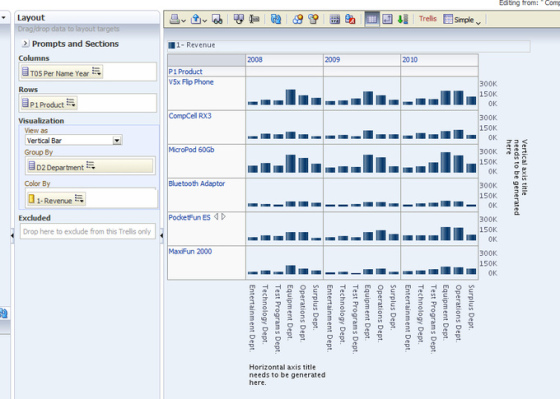
Analytical Tools: Quantitative metrics and analysis help marketers make more accurate decisions and predict risks associated with decisions.
The numeric data allow marketers to not only justify their efforts, but also highlight the direct relationship between marketing and larger organizational goals. Marketing metrics have different elements of measurement, including net sales billed, number of product or design registrations, and brand surveys to measure brand awareness. By collecting and analyzing marketing metrics, brands can build their marketing performance in the following ways:
- Increasing competitive intelligence and anticipating competitor reactions to new marketing strategies
- More accurately assessing company marketing assets such as brand equity and its level of effectiveness among target audiences
- Building a knowledge base of current and historic data that help drive marketing mix decisions and steer the company through rapidly changing market conditions
Entities such as the Marketing Accountability Standards Board have developed formal processes for connecting marketing activities to the financial performance of organizations. Moreover, industry experts have developed various metrics – notably, return on marketing investment (ROMI) – to help marketers measure the performance of activities across the marketing mix. The purpose of metrics such as ROMI is to measure the degree to which marketing spending contributes to profits.
How ROMI Works
Return on marketing investment is one of the most difficult organizational aspects to measure. ROMI, a relatively new metric, is marketing contribution attributable to marketing (net of marketing spending), divided by the marketing “invested” or risked. ROMI is based on the calculation:
[Incremental Revenue Attributable to Marketing * Contribution Margin (%) – Marketing Spending] / Marketing Spending ($)
There are two forms of the ROMI metric: short-term ROMI and long-term ROMI. Short-term ROMI measures revenue such as market share, contribution margin or other desired outputs for every marketing dollar spent. This metric is best used to determine marketing effectiveness and steer investments from less productive to more productive activities.
In a similar way, long-term ROMI can be used to determine other less tangible aspects of marketing effectiveness such as increased brand awareness or consumer motives. However, long-term ROMI is often criticized as a “silo-in-the-making”. Long-term ROMI creates a challenge for brands unfamiliar with using business analytics together with marketing analytics to determine resource allocation decisions. Despite this challenge, long-term ROMI can be a sophisticated measure for prioritizing investments and allocating marketing and other resources within an established framework.
HOW DO MARKETING PROS USE DASHBOARDS?
To dig deeper into who, why, and how marketers use dashboards every day, we asked Fiona Remley, VP of PMO for Wunderman Seattle to give us the low down on the upside of using dashboards. Wunderman is a network of advertising, marketing and consulting companies with offices in 60 countries. Why does she use marketing dashboards? “A good dashboard is a decision-making tool,” said Fiona, “not just a report.”
It’s an essential tool to improve and prove what you’re doing right with your marketing strategy and tactics – and a way to ensure that senior management (or clients) will understand the positive contribution marketing is making to the overall organization. “We use marketing dashboards to track, share, and collaborate in house,” Fiona shared, “and to do the same with our clients. We started creating marketing dashboards for multi-channel campaign—for clients who wanted data results on their marketing, and using them around the same time for internal data reporting.”
The way she and other marketing pros use dashboards varies, but it is reflective of the ways dashboards can be used to:
- Get the real story. When it’s all on a dashboard, you can get to the heart of how well your marketing efforts are performing – or underperforming. You can also see the ‘why’ around how well your planning worked when put into action, from lead generation to social media to web performance, to get the complete story. Fiona said, “We need them because we are spending millions of our client’s dollars and they need to know the effectiveness of what we are doing on their behalf.”
- Get everyone on the same page. From top-executives to team members, visualizing up-to-the-minute marketing results means that everyone knows what your efforts have yielded. Helping internal and external customers understand where their money is going, effectiveness, and ROI. One of the benefits of everyone seeing results and underlying reasons for them Fiona said is, “It can be used to drive changes within the organization—wiser spending, time-management, and other practices that affect profitability.
- Get to truly informed decision making. Because you have up to the minute data, you can understand and then react quickly to do what’s best for business, whether it’s an email campaign’s effectiveness you’re measuring, looking at how well your SEO efforts are working to drive public relations, or website analytics. Information is power—and with a well-designed dashboard, you can be nimble, and rely not on your gut, but on the data.
As a lecturer on effective project management at the School of Visual Concepts, and Contributing Editor to Success by Design by David Sherwin, Fiona has strong ideas about what is one of the major benefits of marketing dashboards. “It’s about optimizing your learnings,” said Fiona. ”One of the real long-term benefits of marketing dashboards is how they support planning and the formation of strategies for future success.” The only way to keep up in the fast paced world of marketing, particularly online marketing, is to measure your efforts, be nimble, use your money well, and use that data to constantly improve.
Note: I tried my best answering the question. It'd be appreciated if you leave an upvote. Thanks in advance.
Add Answer to:
Explain how marketing managers allocate resources.With this
knowledge what makes an effective marketing plan and how...
how can Christian excellence be integrated into an effective marketing communications plan.
how can Christian excellence be integrated into an effective marketing communications plan.
Marketing - What were the most effective elements in Lopdrup's repositioning of plan( initiated in 2004)
Marketing - What were the most effective elements in Lopdrup's repositioning of plan( initiated in 2004)
Explain how pricing molds the beginning stages of a marketing plan
Explain how pricing molds the beginning stages of a marketing plan
Explain why it is important to have a marketing plan and include what you think are...
Explain why it is important to have a marketing plan and include what you think are the most important parts of the marketing plan. Justify your selections. From a social change perspective, what parts of the marketing plan might have the most significant impact on social change?
what are the key elements required for an effective communications plan, discuss with examples how these...
what are the key elements required for an effective communications plan, discuss with examples how these are used to develop a communication plan
Understanding the nature of fixed and variable costs is extremely important to managers. This knowledge is used in plan...
Understanding the nature of fixed and variable costs is extremely important to managers. This knowledge is used in planning, making strategic and tactical decisions, evaluating performance, and controlling operations. Each group member is responsible for one of the following businesses. Retail store that sells music CDs Dental clinic Fast-food restaurant Auto repair shop Required In each business decide what single measure best reflects the overall level of activity in the business and give examples of costs that are fixed and...
Theory of the Effective Demand 1. Explain what is the theory of effective demand and how...
 Theory of the Effective Demand 1. Explain what is the theory of effective demand and how Keynes used it to debunk the Classical theory? (Hint: you must use a graph for supporting your argumento a. What other economist talked about it?
What are the two basic requirements of an effective incentive pay plan? Please remember to explain...
What are the two basic requirements of an effective incentive pay plan? Please remember to explain your reasoning.
Market Research Describe what the concept is and how it functions. Explain how it molds the beginning stages of a m...
 Market Research Describe what the concept is and how it functions. Explain how it molds the beginning stages of a marketing plan. Describe how it changes throughout the course of marketing plan's "life" Segmentation Describe what the concept is and how it functions. Explain how it molds the beginning stages of a marketing plan. Describe how it changes throughout the course of a marketing plan's "life". Pricing Describe what the concept is and how it functions. Explain how it molds...
You are a marketing manager for a company that makes ready-to-eat breakfast cereals. Your company recently...
You are a marketing manager for a company that makes ready-to-eat breakfast cereals. Your company recently initiated a loyalty program for consumers, which resulted in a large purchaser database. The brand managers are eager to mine the available data, which they can use to design more effective promotional programs. The management of your organization believes that to be effective, these programs have to take into account significant cross-region (i.e., the East Coast, the West Coast, the Midwest, and the South)...
 Theory of the Effective Demand 1. Explain what is the theory of effective demand and how Keynes used it to debunk the Classical theory? (Hint: you must use a graph for supporting your argumento a. What other economist talked about it?
 Market Research Describe what the concept is and how it functions. Explain how it molds the beginning stages of a marketing plan. Describe how it changes throughout the course of marketing plan's "life" Segmentation Describe what the concept is and how it functions. Explain how it molds the beginning stages of a marketing plan. Describe how it changes throughout the course of a marketing plan's "life". Pricing Describe what the concept is and how it functions. Explain how it molds...
Most questions answered within 3 hours.
-
Where is the error in this code sequence?
String s1 = "Hello";
String s2 = "ello";...
asked 10 months ago -
Financial data for Joel de Paris, Inc., for last year
follow:
Joel de Paris, Inc.
Balance...
asked 10 months ago -
Consider this reaction:
Al2(SO4)3 (aq)+ BaCl3
(aq) Al2Cl6 (aq)- +
3BaSO4(s) . What is the...
asked 10 months ago -
Suppose that Savneet is considering increasing her
recent random sample from 20 car rentals to 40...
asked 10 months ago -
Trucks arrive at an unloading terminal at an average rate of 120
per hour.
Trucks arrive...
asked 10 months ago -
Why are methanol and ethanol completely soluble in water while
octanol is not very little soluble....
asked 10 months ago -
A facilities manager at a university reads in a research report
that the mean amount of...
asked 10 months ago -
When the CuSO4 is rehydrated by adding water to the anhydrous
compound, is this an endothermic...
asked 10 months ago -
A ray of sunlight is passing from diamond into crown glass; the
angle of incidence is...
asked 10 months ago -
A block of mass 0.249 kg is placed on top of a light, vertical
spring of...
asked 10 months ago -
how do the kidneys compensate in the presences of acidosis
a) trigger hyperventilate
b) reserve acid...
asked 10 months ago -
Question 501 pts
The rental rate of capital to the firm increases. Which of the
following...
asked 10 months ago