
Homework Answers
Answer for 1st question
What will 110000 grow to be in 9 years if its invested today at 11%
= 110000(1+0.11)^9
= 110000(2.558037)
= 281384.0617
Answer for 2nd question
You would like to have 200000 in college funds in 15 years. How much would you need to invest if you expect to earn 12%...
FV = PV(1+r)^n
200000 = PV(1+0.12)^15
200000 = PV(5.47356576)
PV = 200000/5.47356576
Therefore amounted needed to be invested = 36539.252253
I Parta A. -OH D. —NH2 B. o oro E. – SH c. o -C-0-H Which...
 I Parta A. -OH D. —NH2 B. o oro E. – SH c. o -C-0-H Which two functional groups shown in the figure are present in all amino acids? O C and D OB and D O A and B O C and E O A and D
Let G be the following grammar: 1. S T 2. T O 3. T T 4. O V = E i [ E ] 5. V i 6. V i 7. E ( E) 8. E Construct the LR(0...
 Let G be the following grammar: 1. S T 2. T O 3. T T 4. O V = E i [ E ] 5. V i 6. V i 7. E ( E) 8. E Construct the LR(0) DFA for this grammar a) b) Construct the LR(0) parsing table. Is it LR(o)? Why and why not?
Let G be the following grammar: 1. S T 2. T O 3. T T 4. O V = E i [ E...
Let G be the following grammar: 1. S T 2. T O 3. T T 4. O V = E i [ E ] 5. V i 6. V i 7. E ( E) 8. E Construct the LR(0) DFA for this grammar a) b) Construct the LR(0) parsing table. Is it LR(o)? Why and why not?
Let G be the following grammar: 1. S T 2. T O 3. T T 4. O V = E i [ E...
(4) Let(an}n=o be a sequence in C. Define R-i-lim suplanlì/n. Recall that R e [0,x] o0 is the rad...
 (4) Let(an}n=o be a sequence in C. Define R-i-lim suplanlì/n. Recall that R e [0,x] o0 is the radius of convergence of the power series Σ a (z 20)" Assume that R > 0 (a) Prove that if 0 < ρ < R, then the power series converges uniformly on the closed (b) Prove that the power series converges uniformly on any compact subset of the disk Ix - xo< R
(4) Let(an}n=o be a sequence in C. Define R-i-lim...
(4) Let(an}n=o be a sequence in C. Define R-i-lim suplanlì/n. Recall that R e [0,x] o0 is the radius of convergence of the power series Σ a (z 20)" Assume that R > 0 (a) Prove that if 0 < ρ < R, then the power series converges uniformly on the closed (b) Prove that the power series converges uniformly on any compact subset of the disk Ix - xo< R
(4) Let(an}n=o be a sequence in C. Define R-i-lim...
E) [Ar]3d04s44p 2) How many lone pairs of electrons are on the O atom in OF2? A) 0 B) 1 C) 2 D) 3 3) Which atom in...
 E) [Ar]3d04s44p 2) How many lone pairs of electrons are on the O atom in OF2? A) 0 B) 1 C) 2 D) 3 3) Which atom in each group (I and II) has the smallest atomic radius? (I) Ca, Ti, Br (II) O, S, Se A) Ca; Se B) Br; Se C) Br; O D) Ca; O 4) How many valence electrons are there in a Bi atom? A) 2 B) 3 C) 4 D) 5 E) 6 5)...
What will be the O/P of these codes: int a 15 int b- 4: ntcO,d-0,c-0 c-a%b;...
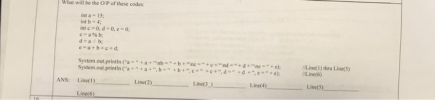 What will be the O/P of these codes: int a 15 int b- 4: ntcO,d-0,c-0 c-a%b; e a+b+c+d: System.out.printin "a+a "nbbnd-d"e System.out printin Ca _ " + a +".b-.. +b+",c--+e+", d-“ +d +",e-"+ek /Line(1) thru Line(5) /Line(6) ANS: Line I) Line(2) Line(3) Line(4) Line(5),
(B)(C)(D)(E)(G)(I)(J) 39 Write the Taylor expansion of function f order n at to given below. 1...
 (B)(C)(D)(E)(G)(I)(J)
39 Write the Taylor expansion of function f order n at to given below. 1 (a) (g)2+v1+ I, n 2,ro - 0 n = 7, xo = 0 1 -2-3 (b) sin z cos(2x), (c) z In(2+3z), VI+I n= 3, To = 0 1 +e-1/ (h) 2+x n =5,xo= +o0 n= 3, ro = 1 T (i) cos (2r), n 4, xo= 6 (d) n = 7,xo = 0 COSI i) V+-VI3-, n 4, 1o =+00 (e) In(1+ arcsin(2r)),...
(B)(C)(D)(E)(G)(I)(J)
39 Write the Taylor expansion of function f order n at to given below. 1 (a) (g)2+v1+ I, n 2,ro - 0 n = 7, xo = 0 1 -2-3 (b) sin z cos(2x), (c) z In(2+3z), VI+I n= 3, To = 0 1 +e-1/ (h) 2+x n =5,xo= +o0 n= 3, ro = 1 T (i) cos (2r), n 4, xo= 6 (d) n = 7,xo = 0 COSI i) V+-VI3-, n 4, 1o =+00 (e) In(1+ arcsin(2r)),...
(f) (g) (e) and (f) the last 4 questions are what i need help with Problem(12)...
 (f)
(g) (e) and (f) the last 4 questions are what i need help
with
Problem(12) Let X.X... X, be i.i.d. r.v's from Normal, a'). (a) (1 pt) What is the distribution of Mer? (b) (1 pt) What is the distribution of (S.)? (c) (1 pt) What is the distribution of (NL) (d) (7 pts) Show that (1) (e) (1 pt) What is the distribution of (1) S? (1) (3 pts) Simplify (B) (1 pt) What is the distribution of...
(f)
(g) (e) and (f) the last 4 questions are what i need help
with
Problem(12) Let X.X... X, be i.i.d. r.v's from Normal, a'). (a) (1 pt) What is the distribution of Mer? (b) (1 pt) What is the distribution of (S.)? (c) (1 pt) What is the distribution of (NL) (d) (7 pts) Show that (1) (e) (1 pt) What is the distribution of (1) S? (1) (3 pts) Simplify (B) (1 pt) What is the distribution of...
Rank the acids in increasing acidity. a b c d e I do not know the answer. My guess is e &g...
 Rank the acids in increasing acidity.
a b c d e
I do not know the answer.
My guess is e > c > a > d > b
reason: since this is positively charged, I thought that
stabilizing the positive charge will lead to a stronger acid. I did
not think about the conjugate bases. So, since lower
electronegativity atom will stabilize the positive charge more, c
and e would be the most acidic since N is less...
Rank the acids in increasing acidity.
a b c d e
I do not know the answer.
My guess is e > c > a > d > b
reason: since this is positively charged, I thought that
stabilizing the positive charge will lead to a stronger acid. I did
not think about the conjugate bases. So, since lower
electronegativity atom will stabilize the positive charge more, c
and e would be the most acidic since N is less...
why is this wrong for vectors vector<char> decrypt{ {'B', 'C', 'D', 'E', 'F', 'G', 'H', 'I',...
why is this wrong for vectors vector<char> decrypt{ {'B', 'C', 'D', 'E', 'F', 'G', 'H', 'I', 'J', 'K', 'L', 'M', 'N', 'O', 'P', 'Q', 'R', 'S', 'T', 'U', 'V', 'W', 'X', 'Y', 'Z', '1', '2', '3', '4', '5', '6', '7', '8', '9', 'A'}, {'C', 'D', 'E', 'F', 'G', 'H', 'I', 'J', 'K', 'L', 'M', 'N', 'O', 'P', 'Q', 'R', 'S', 'T', 'U', 'V', 'W', 'X', 'Y', 'Z', '1', '2', '3', '4', '5', '6', '7', '8', '9', 'A', 'B'}, }; for(int...
 I Parta A. -OH D. —NH2 B. o oro E. – SH c. o -C-0-H Which two functional groups shown in the figure are present in all amino acids? O C and D OB and D O A and B O C and E O A and D
 Let G be the following grammar: 1. S T 2. T O 3. T T 4. O V = E i [ E ] 5. V i 6. V i 7. E ( E) 8. E Construct the LR(0) DFA for this grammar a) b) Construct the LR(0) parsing table. Is it LR(o)? Why and why not?
Let G be the following grammar: 1. S T 2. T O 3. T T 4. O V = E i [ E...
Let G be the following grammar: 1. S T 2. T O 3. T T 4. O V = E i [ E ] 5. V i 6. V i 7. E ( E) 8. E Construct the LR(0) DFA for this grammar a) b) Construct the LR(0) parsing table. Is it LR(o)? Why and why not?
Let G be the following grammar: 1. S T 2. T O 3. T T 4. O V = E i [ E...
 (4) Let(an}n=o be a sequence in C. Define R-i-lim suplanlì/n. Recall that R e [0,x] o0 is the radius of convergence of the power series Σ a (z 20)" Assume that R > 0 (a) Prove that if 0 < ρ < R, then the power series converges uniformly on the closed (b) Prove that the power series converges uniformly on any compact subset of the disk Ix - xo< R
(4) Let(an}n=o be a sequence in C. Define R-i-lim...
(4) Let(an}n=o be a sequence in C. Define R-i-lim suplanlì/n. Recall that R e [0,x] o0 is the radius of convergence of the power series Σ a (z 20)" Assume that R > 0 (a) Prove that if 0 < ρ < R, then the power series converges uniformly on the closed (b) Prove that the power series converges uniformly on any compact subset of the disk Ix - xo< R
(4) Let(an}n=o be a sequence in C. Define R-i-lim...
 E) [Ar]3d04s44p 2) How many lone pairs of electrons are on the O atom in OF2? A) 0 B) 1 C) 2 D) 3 3) Which atom in each group (I and II) has the smallest atomic radius? (I) Ca, Ti, Br (II) O, S, Se A) Ca; Se B) Br; Se C) Br; O D) Ca; O 4) How many valence electrons are there in a Bi atom? A) 2 B) 3 C) 4 D) 5 E) 6 5)...
 What will be the O/P of these codes: int a 15 int b- 4: ntcO,d-0,c-0 c-a%b; e a+b+c+d: System.out.printin "a+a "nbbnd-d"e System.out printin Ca _ " + a +".b-.. +b+",c--+e+", d-“ +d +",e-"+ek /Line(1) thru Line(5) /Line(6) ANS: Line I) Line(2) Line(3) Line(4) Line(5),
 (B)(C)(D)(E)(G)(I)(J)
39 Write the Taylor expansion of function f order n at to given below. 1 (a) (g)2+v1+ I, n 2,ro - 0 n = 7, xo = 0 1 -2-3 (b) sin z cos(2x), (c) z In(2+3z), VI+I n= 3, To = 0 1 +e-1/ (h) 2+x n =5,xo= +o0 n= 3, ro = 1 T (i) cos (2r), n 4, xo= 6 (d) n = 7,xo = 0 COSI i) V+-VI3-, n 4, 1o =+00 (e) In(1+ arcsin(2r)),...
(B)(C)(D)(E)(G)(I)(J)
39 Write the Taylor expansion of function f order n at to given below. 1 (a) (g)2+v1+ I, n 2,ro - 0 n = 7, xo = 0 1 -2-3 (b) sin z cos(2x), (c) z In(2+3z), VI+I n= 3, To = 0 1 +e-1/ (h) 2+x n =5,xo= +o0 n= 3, ro = 1 T (i) cos (2r), n 4, xo= 6 (d) n = 7,xo = 0 COSI i) V+-VI3-, n 4, 1o =+00 (e) In(1+ arcsin(2r)),...
 (f)
(g) (e) and (f) the last 4 questions are what i need help
with
Problem(12) Let X.X... X, be i.i.d. r.v's from Normal, a'). (a) (1 pt) What is the distribution of Mer? (b) (1 pt) What is the distribution of (S.)? (c) (1 pt) What is the distribution of (NL) (d) (7 pts) Show that (1) (e) (1 pt) What is the distribution of (1) S? (1) (3 pts) Simplify (B) (1 pt) What is the distribution of...
(f)
(g) (e) and (f) the last 4 questions are what i need help
with
Problem(12) Let X.X... X, be i.i.d. r.v's from Normal, a'). (a) (1 pt) What is the distribution of Mer? (b) (1 pt) What is the distribution of (S.)? (c) (1 pt) What is the distribution of (NL) (d) (7 pts) Show that (1) (e) (1 pt) What is the distribution of (1) S? (1) (3 pts) Simplify (B) (1 pt) What is the distribution of...
 Rank the acids in increasing acidity.
a b c d e
I do not know the answer.
My guess is e > c > a > d > b
reason: since this is positively charged, I thought that
stabilizing the positive charge will lead to a stronger acid. I did
not think about the conjugate bases. So, since lower
electronegativity atom will stabilize the positive charge more, c
and e would be the most acidic since N is less...
Rank the acids in increasing acidity.
a b c d e
I do not know the answer.
My guess is e > c > a > d > b
reason: since this is positively charged, I thought that
stabilizing the positive charge will lead to a stronger acid. I did
not think about the conjugate bases. So, since lower
electronegativity atom will stabilize the positive charge more, c
and e would be the most acidic since N is less...
Most questions answered within 3 hours.
-
Where is the error in this code sequence?
String s1 = "Hello";
String s2 = "ello";...
asked 11 months ago -
Financial data for Joel de Paris, Inc., for last year
follow:
Joel de Paris, Inc.
Balance...
asked 11 months ago -
Consider this reaction:
Al2(SO4)3 (aq)+ BaCl3
(aq) Al2Cl6 (aq)- +
3BaSO4(s) . What is the...
asked 11 months ago -
Suppose that Savneet is considering increasing her
recent random sample from 20 car rentals to 40...
asked 11 months ago -
Trucks arrive at an unloading terminal at an average rate of 120
per hour.
Trucks arrive...
asked 11 months ago -
Why are methanol and ethanol completely soluble in water while
octanol is not very little soluble....
asked 11 months ago -
A facilities manager at a university reads in a research report
that the mean amount of...
asked 11 months ago -
When the CuSO4 is rehydrated by adding water to the anhydrous
compound, is this an endothermic...
asked 11 months ago -
A ray of sunlight is passing from diamond into crown glass; the
angle of incidence is...
asked 11 months ago -
A block of mass 0.249 kg is placed on top of a light, vertical
spring of...
asked 11 months ago -
how do the kidneys compensate in the presences of acidosis
a) trigger hyperventilate
b) reserve acid...
asked 11 months ago -
Question 501 pts
The rental rate of capital to the firm increases. Which of the
following...
asked 11 months ago