
Homework Answers

Add Answer to:
What alcohol IR spectrum is that when reacted with acetic
acid
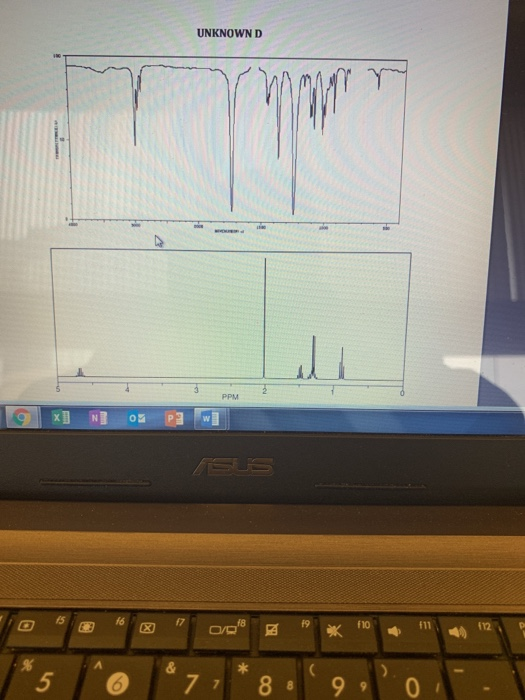
UNKNOWN D PPM 112 1-butanol...
Finding the structure of the ester from the following ir peaks. This experiment was performed by...
 Finding the structure of the ester from the following
ir peaks.
This experiment was performed by taking an unknown
alcohol;
1-butanol
2-butanol
3-methyl-1-propanol
cyclopentanol
1-pentanol
2-pentanol
3-pentanol
3-methyl-1-butanol
and acetic acid. to prepare the ester.
Finding the structure of the ester from the following
ir peaks.
This experiment was performed by taking an unknown
alcohol;
1-butanol
2-butanol
3-methyl-1-propanol
cyclopentanol
1-pentanol
2-pentanol
3-pentanol
3-methyl-1-butanol
and acetic acid. to prepare the ester.
using the IR, the 13C, and DEPT NMR spectra of your product determine the identity of...
 using the IR, the 13C, and DEPT NMR spectra of your product
determine the identity of your unknown ester from a C-4 or C-5
alcohol. the identity of the C-4 or C-5 alcohol also needs to be
determined.
The following C-4 or C-5 alcohols will be used in this
experiment:
1-butanol (n-butyl alcohol)
2-butanol (sec-butyl alcohol)
2-methyl-1-propanol (isobutyl alcohol)
3-methyl-1-butanol (isopentyl alcohol)
1-pentanol (n-pentyl alcohol)
2-pentanol
3-pentanol
cyclopentanol
Questions:
1. Why is the mixture extracted with aqueous sodium
bicarbonate solution?...
using the IR, the 13C, and DEPT NMR spectra of your product
determine the identity of your unknown ester from a C-4 or C-5
alcohol. the identity of the C-4 or C-5 alcohol also needs to be
determined.
The following C-4 or C-5 alcohols will be used in this
experiment:
1-butanol (n-butyl alcohol)
2-butanol (sec-butyl alcohol)
2-methyl-1-propanol (isobutyl alcohol)
3-methyl-1-butanol (isopentyl alcohol)
1-pentanol (n-pentyl alcohol)
2-pentanol
3-pentanol
cyclopentanol
Questions:
1. Why is the mixture extracted with aqueous sodium
bicarbonate solution?...
You react acetic acid with an unknown alcohol, and obtain the following NMR of the product....
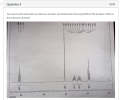 You react acetic acid with an unknown alcohol, and obtain the
following NMR of the product. What is the unknown alcohol?
Question 3 2 pts You react acetic acid with an unknown alcohol, and obtain the following NMR of the product. What is the unknown alcohol? 12.00 13.00 ppm (11) 3 ] 2.00 1- 3.00 0.0 4.0 ppm (11) 2-propanol (CH3)2CHOH) 1-propanol (CH3CH2CH2OH) 2-methyl-1-propanol (CH3)2CHCH2OH) 1-butanol (CH3CH2CH2CH2OH) 2-butanol (CH3CHOHCH2OHCH3)
You react acetic acid with an unknown alcohol, and obtain the
following NMR of the product. What is the unknown alcohol?
Question 3 2 pts You react acetic acid with an unknown alcohol, and obtain the following NMR of the product. What is the unknown alcohol? 12.00 13.00 ppm (11) 3 ] 2.00 1- 3.00 0.0 4.0 ppm (11) 2-propanol (CH3)2CHOH) 1-propanol (CH3CH2CH2OH) 2-methyl-1-propanol (CH3)2CHCH2OH) 1-butanol (CH3CH2CH2CH2OH) 2-butanol (CH3CHOHCH2OHCH3)
Which mechanism gives you this NMR spectrum and what is the name of it? Acetic acid...
 Which mechanism gives you this NMR spectrum and what is the name
of it?
Acetic acid + 1-pentanol
Acetic acid + 2-pentanol
Acetic acid + isopentyl alcohol
Acetic acid + hexyl alcohol
Acetic acid + 4-methyl-2-pentanol
Also, please label the structure's Hydrogens as (Ha,Hb,Hc,Hd
etc)
Thanks!
20 40 3.0 2.0 1.0 0 (ppm)
Which mechanism gives you this NMR spectrum and what is the name
of it?
Acetic acid + 1-pentanol
Acetic acid + 2-pentanol
Acetic acid + isopentyl alcohol
Acetic acid + hexyl alcohol
Acetic acid + 4-methyl-2-pentanol
Also, please label the structure's Hydrogens as (Ha,Hb,Hc,Hd
etc)
Thanks!
20 40 3.0 2.0 1.0 0 (ppm)
You react acetic acid with an unknown alcohol, and obtain the following NMR of the product....
 You react acetic acid with an unknown alcohol, and obtain the following NMR of the product. What is the unknown alcohol? 2.049 1.682 1.648 1.613 1.325 1.291 0.972 0.935 6680 - 2.00 4.0 ppm (t1) 2-methyl-1-propanol (CH3)2CHCH2OH) 1-butanol (CH3CH2CH2CH2OH) 2-propanol (CH3)2CHOH) 1-propanol (CH3CH2CH2OH) 2-butanol (CH3CHOHCH2OHCH3)
You react acetic acid with an unknown alcohol, and obtain the following NMR of the product...
 You react acetic acid with an unknown alcohol, and obtain the following NMR of the product What is the unknown alcohol? 1-butanol (CH3CH2CH2CH2OH) 2-propanol (CH3)2CHOH) 2-methyl-1-propanol ((CH3)2CHCH2OH) 1-propanol (CH3CH2CH2OH) 2-butanol (CH3CHOHCH2OHCH2)
Explain why the IR corresponds to a particular compound of those that are possible based on BP and why it couldn't be...
 Explain why the
IR corresponds to a particular compound of those that are possible
based on BP and why it couldn't be any of the others -mention at
least 3 IR peaks that are present that correspond to functional
groups in your molecule, and discuss specific peaks that were
either present or absent that allowed you to rule out the other
compounds possible based on the boiling point. Reference your IR
spectra as figures.
the boiling
point for unkown 2:...
Explain why the
IR corresponds to a particular compound of those that are possible
based on BP and why it couldn't be any of the others -mention at
least 3 IR peaks that are present that correspond to functional
groups in your molecule, and discuss specific peaks that were
either present or absent that allowed you to rule out the other
compounds possible based on the boiling point. Reference your IR
spectra as figures.
the boiling
point for unkown 2:...
i believe its 3,3-dimethyt-2-butanol 0r 4 methylbeNzyl alcohol based on the data provided. if not which...
 i believe its 3,3-dimethyt-2-butanol 0r 4 methylbeNzyl alcohol
based on the data provided. if not which alcohol would it be for
the unknown compunds.
#3 Unknown Al Data unknown Melting point of solid ("C) (leave blank if liquid at RT): 57 degrees Celsius Boiling point of liquid (C) (leave blank if solid at RT) 0-H Stretch alcohol The results from sodium fusion and follow up ion tests (578) Predicted color Nitrogen test absent Nitrogen red brown precipitate Sulfur test black...
i believe its 3,3-dimethyt-2-butanol 0r 4 methylbeNzyl alcohol
based on the data provided. if not which alcohol would it be for
the unknown compunds.
#3 Unknown Al Data unknown Melting point of solid ("C) (leave blank if liquid at RT): 57 degrees Celsius Boiling point of liquid (C) (leave blank if solid at RT) 0-H Stretch alcohol The results from sodium fusion and follow up ion tests (578) Predicted color Nitrogen test absent Nitrogen red brown precipitate Sulfur test black...
Name: Partner: 3. Identification of Unknown Alcohols Bottle Class of alcohol Name of alcohol 4. Draw...
 Name: Partner: 3. Identification of Unknown Alcohols Bottle Class of alcohol Name of alcohol 4. Draw the condensed and line-angle formulas for each alcohol Name Condensed Formula Line-angle Formula -Butyl alcohol (1-Butanol) see-Butyl alcohol (2-Butanol) lert-Butyl alcohol (2-Methyl-2-propanol)
**URGENT IR UNKNOWN: Please Identify the unknown molecule from the IR spectrum shown below. Pick one...
 **URGENT IR UNKNOWN: Please Identify the unknown molecule from
the IR spectrum shown below. Pick one from the following from the
list of of possibilities for the unknown molecule:
(1,2-dimethoxybenzene, 1,3-propanediol, 1-bromobutane,
1-octanol, 2,3-dimethyl-2-butanol, 2-cyclohexen-1-one,
2-cylopenten-1-one, 2-methylcyclohexanone, 3,3-dimethyl-2-butanone,
3-ethyltolulene, 3-methyl-1-butanol, 4-benzylpiperidine,
4-methylphenol, N,N-dimethylformamide, N-methylaniline, Acetic
anhydride, Acetone, Acetonitrile, Acetophenone, Acetyl chloride,
Allyl alcohol, Anisole, Benzaldehyde, Benzoic acid, Benzophenone,
Benzoyl chloride, Benzyl acetate, Bromobenzene, Cyclohexanone,
Cyclopentanone,Cyclopropyl methyl ketone, Diethylamine,Dimethyl
malonate, Ethyl cyanoacetate, Gamma-butyrolactone, Heptanoic acid,
Methyl benzoate, Methyl propionate, Napthalene,
Nitrobenzene,O-xylene,...
**URGENT IR UNKNOWN: Please Identify the unknown molecule from
the IR spectrum shown below. Pick one from the following from the
list of of possibilities for the unknown molecule:
(1,2-dimethoxybenzene, 1,3-propanediol, 1-bromobutane,
1-octanol, 2,3-dimethyl-2-butanol, 2-cyclohexen-1-one,
2-cylopenten-1-one, 2-methylcyclohexanone, 3,3-dimethyl-2-butanone,
3-ethyltolulene, 3-methyl-1-butanol, 4-benzylpiperidine,
4-methylphenol, N,N-dimethylformamide, N-methylaniline, Acetic
anhydride, Acetone, Acetonitrile, Acetophenone, Acetyl chloride,
Allyl alcohol, Anisole, Benzaldehyde, Benzoic acid, Benzophenone,
Benzoyl chloride, Benzyl acetate, Bromobenzene, Cyclohexanone,
Cyclopentanone,Cyclopropyl methyl ketone, Diethylamine,Dimethyl
malonate, Ethyl cyanoacetate, Gamma-butyrolactone, Heptanoic acid,
Methyl benzoate, Methyl propionate, Napthalene,
Nitrobenzene,O-xylene,...
 Finding the structure of the ester from the following
ir peaks.
This experiment was performed by taking an unknown
alcohol;
1-butanol
2-butanol
3-methyl-1-propanol
cyclopentanol
1-pentanol
2-pentanol
3-pentanol
3-methyl-1-butanol
and acetic acid. to prepare the ester.
Finding the structure of the ester from the following
ir peaks.
This experiment was performed by taking an unknown
alcohol;
1-butanol
2-butanol
3-methyl-1-propanol
cyclopentanol
1-pentanol
2-pentanol
3-pentanol
3-methyl-1-butanol
and acetic acid. to prepare the ester.
 using the IR, the 13C, and DEPT NMR spectra of your product
determine the identity of your unknown ester from a C-4 or C-5
alcohol. the identity of the C-4 or C-5 alcohol also needs to be
determined.
The following C-4 or C-5 alcohols will be used in this
experiment:
1-butanol (n-butyl alcohol)
2-butanol (sec-butyl alcohol)
2-methyl-1-propanol (isobutyl alcohol)
3-methyl-1-butanol (isopentyl alcohol)
1-pentanol (n-pentyl alcohol)
2-pentanol
3-pentanol
cyclopentanol
Questions:
1. Why is the mixture extracted with aqueous sodium
bicarbonate solution?...
using the IR, the 13C, and DEPT NMR spectra of your product
determine the identity of your unknown ester from a C-4 or C-5
alcohol. the identity of the C-4 or C-5 alcohol also needs to be
determined.
The following C-4 or C-5 alcohols will be used in this
experiment:
1-butanol (n-butyl alcohol)
2-butanol (sec-butyl alcohol)
2-methyl-1-propanol (isobutyl alcohol)
3-methyl-1-butanol (isopentyl alcohol)
1-pentanol (n-pentyl alcohol)
2-pentanol
3-pentanol
cyclopentanol
Questions:
1. Why is the mixture extracted with aqueous sodium
bicarbonate solution?...
 You react acetic acid with an unknown alcohol, and obtain the
following NMR of the product. What is the unknown alcohol?
Question 3 2 pts You react acetic acid with an unknown alcohol, and obtain the following NMR of the product. What is the unknown alcohol? 12.00 13.00 ppm (11) 3 ] 2.00 1- 3.00 0.0 4.0 ppm (11) 2-propanol (CH3)2CHOH) 1-propanol (CH3CH2CH2OH) 2-methyl-1-propanol (CH3)2CHCH2OH) 1-butanol (CH3CH2CH2CH2OH) 2-butanol (CH3CHOHCH2OHCH3)
You react acetic acid with an unknown alcohol, and obtain the
following NMR of the product. What is the unknown alcohol?
Question 3 2 pts You react acetic acid with an unknown alcohol, and obtain the following NMR of the product. What is the unknown alcohol? 12.00 13.00 ppm (11) 3 ] 2.00 1- 3.00 0.0 4.0 ppm (11) 2-propanol (CH3)2CHOH) 1-propanol (CH3CH2CH2OH) 2-methyl-1-propanol (CH3)2CHCH2OH) 1-butanol (CH3CH2CH2CH2OH) 2-butanol (CH3CHOHCH2OHCH3)
 Which mechanism gives you this NMR spectrum and what is the name
of it?
Acetic acid + 1-pentanol
Acetic acid + 2-pentanol
Acetic acid + isopentyl alcohol
Acetic acid + hexyl alcohol
Acetic acid + 4-methyl-2-pentanol
Also, please label the structure's Hydrogens as (Ha,Hb,Hc,Hd
etc)
Thanks!
20 40 3.0 2.0 1.0 0 (ppm)
Which mechanism gives you this NMR spectrum and what is the name
of it?
Acetic acid + 1-pentanol
Acetic acid + 2-pentanol
Acetic acid + isopentyl alcohol
Acetic acid + hexyl alcohol
Acetic acid + 4-methyl-2-pentanol
Also, please label the structure's Hydrogens as (Ha,Hb,Hc,Hd
etc)
Thanks!
20 40 3.0 2.0 1.0 0 (ppm)
 You react acetic acid with an unknown alcohol, and obtain the following NMR of the product. What is the unknown alcohol? 2.049 1.682 1.648 1.613 1.325 1.291 0.972 0.935 6680 - 2.00 4.0 ppm (t1) 2-methyl-1-propanol (CH3)2CHCH2OH) 1-butanol (CH3CH2CH2CH2OH) 2-propanol (CH3)2CHOH) 1-propanol (CH3CH2CH2OH) 2-butanol (CH3CHOHCH2OHCH3)
 You react acetic acid with an unknown alcohol, and obtain the following NMR of the product What is the unknown alcohol? 1-butanol (CH3CH2CH2CH2OH) 2-propanol (CH3)2CHOH) 2-methyl-1-propanol ((CH3)2CHCH2OH) 1-propanol (CH3CH2CH2OH) 2-butanol (CH3CHOHCH2OHCH2)
 Explain why the
IR corresponds to a particular compound of those that are possible
based on BP and why it couldn't be any of the others -mention at
least 3 IR peaks that are present that correspond to functional
groups in your molecule, and discuss specific peaks that were
either present or absent that allowed you to rule out the other
compounds possible based on the boiling point. Reference your IR
spectra as figures.
the boiling
point for unkown 2:...
Explain why the
IR corresponds to a particular compound of those that are possible
based on BP and why it couldn't be any of the others -mention at
least 3 IR peaks that are present that correspond to functional
groups in your molecule, and discuss specific peaks that were
either present or absent that allowed you to rule out the other
compounds possible based on the boiling point. Reference your IR
spectra as figures.
the boiling
point for unkown 2:...
 i believe its 3,3-dimethyt-2-butanol 0r 4 methylbeNzyl alcohol
based on the data provided. if not which alcohol would it be for
the unknown compunds.
#3 Unknown Al Data unknown Melting point of solid ("C) (leave blank if liquid at RT): 57 degrees Celsius Boiling point of liquid (C) (leave blank if solid at RT) 0-H Stretch alcohol The results from sodium fusion and follow up ion tests (578) Predicted color Nitrogen test absent Nitrogen red brown precipitate Sulfur test black...
i believe its 3,3-dimethyt-2-butanol 0r 4 methylbeNzyl alcohol
based on the data provided. if not which alcohol would it be for
the unknown compunds.
#3 Unknown Al Data unknown Melting point of solid ("C) (leave blank if liquid at RT): 57 degrees Celsius Boiling point of liquid (C) (leave blank if solid at RT) 0-H Stretch alcohol The results from sodium fusion and follow up ion tests (578) Predicted color Nitrogen test absent Nitrogen red brown precipitate Sulfur test black...
 Name: Partner: 3. Identification of Unknown Alcohols Bottle Class of alcohol Name of alcohol 4. Draw the condensed and line-angle formulas for each alcohol Name Condensed Formula Line-angle Formula -Butyl alcohol (1-Butanol) see-Butyl alcohol (2-Butanol) lert-Butyl alcohol (2-Methyl-2-propanol)
 **URGENT IR UNKNOWN: Please Identify the unknown molecule from
the IR spectrum shown below. Pick one from the following from the
list of of possibilities for the unknown molecule:
(1,2-dimethoxybenzene, 1,3-propanediol, 1-bromobutane,
1-octanol, 2,3-dimethyl-2-butanol, 2-cyclohexen-1-one,
2-cylopenten-1-one, 2-methylcyclohexanone, 3,3-dimethyl-2-butanone,
3-ethyltolulene, 3-methyl-1-butanol, 4-benzylpiperidine,
4-methylphenol, N,N-dimethylformamide, N-methylaniline, Acetic
anhydride, Acetone, Acetonitrile, Acetophenone, Acetyl chloride,
Allyl alcohol, Anisole, Benzaldehyde, Benzoic acid, Benzophenone,
Benzoyl chloride, Benzyl acetate, Bromobenzene, Cyclohexanone,
Cyclopentanone,Cyclopropyl methyl ketone, Diethylamine,Dimethyl
malonate, Ethyl cyanoacetate, Gamma-butyrolactone, Heptanoic acid,
Methyl benzoate, Methyl propionate, Napthalene,
Nitrobenzene,O-xylene,...
**URGENT IR UNKNOWN: Please Identify the unknown molecule from
the IR spectrum shown below. Pick one from the following from the
list of of possibilities for the unknown molecule:
(1,2-dimethoxybenzene, 1,3-propanediol, 1-bromobutane,
1-octanol, 2,3-dimethyl-2-butanol, 2-cyclohexen-1-one,
2-cylopenten-1-one, 2-methylcyclohexanone, 3,3-dimethyl-2-butanone,
3-ethyltolulene, 3-methyl-1-butanol, 4-benzylpiperidine,
4-methylphenol, N,N-dimethylformamide, N-methylaniline, Acetic
anhydride, Acetone, Acetonitrile, Acetophenone, Acetyl chloride,
Allyl alcohol, Anisole, Benzaldehyde, Benzoic acid, Benzophenone,
Benzoyl chloride, Benzyl acetate, Bromobenzene, Cyclohexanone,
Cyclopentanone,Cyclopropyl methyl ketone, Diethylamine,Dimethyl
malonate, Ethyl cyanoacetate, Gamma-butyrolactone, Heptanoic acid,
Methyl benzoate, Methyl propionate, Napthalene,
Nitrobenzene,O-xylene,...
Most questions answered within 3 hours.
-
Where is the error in this code sequence?
String s1 = "Hello";
String s2 = "ello";...
asked 10 months ago -
Financial data for Joel de Paris, Inc., for last year
follow:
Joel de Paris, Inc.
Balance...
asked 10 months ago -
Consider this reaction:
Al2(SO4)3 (aq)+ BaCl3
(aq) Al2Cl6 (aq)- +
3BaSO4(s) . What is the...
asked 10 months ago -
Suppose that Savneet is considering increasing her
recent random sample from 20 car rentals to 40...
asked 10 months ago -
Trucks arrive at an unloading terminal at an average rate of 120
per hour.
Trucks arrive...
asked 10 months ago -
Why are methanol and ethanol completely soluble in water while
octanol is not very little soluble....
asked 10 months ago -
A facilities manager at a university reads in a research report
that the mean amount of...
asked 10 months ago -
When the CuSO4 is rehydrated by adding water to the anhydrous
compound, is this an endothermic...
asked 10 months ago -
A ray of sunlight is passing from diamond into crown glass; the
angle of incidence is...
asked 10 months ago -
A block of mass 0.249 kg is placed on top of a light, vertical
spring of...
asked 10 months ago -
how do the kidneys compensate in the presences of acidosis
a) trigger hyperventilate
b) reserve acid...
asked 10 months ago -
Question 501 pts
The rental rate of capital to the firm increases. Which of the
following...
asked 10 months ago