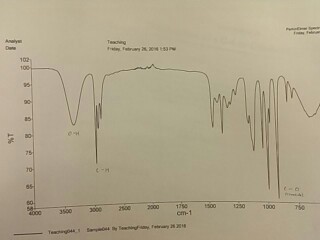
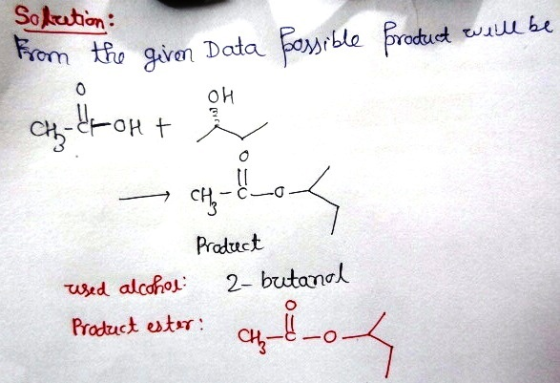
Finding the structure of the ester from the following ir peaks. This experiment was performed by...
Finding the structure of the ester from the following
ir peaks.

This experiment was performed by taking an unknown
alcohol;
1-butanol
2-butanol
3-methyl-1-propanol
cyclopentanol
1-pentanol
2-pentanol
3-pentanol
3-methyl-1-butanol
and acetic acid. to prepare the ester.
Homework Answers
Add Answer to:
Finding the structure of the ester from the following
ir peaks.
This experiment was performed by...
What alcohol IR spectrum is that when reacted with acetic acid UNKNOWN D PPM 112 1-butanol...
 What alcohol IR spectrum is that when reacted with acetic
acid
UNKNOWN D PPM 112 1-butanol (n-butyl alcohol) 2-butanol (sec-butyl alcohol) 2-methyl-1-propanol (isobutyl alcohol) 3-methyl-1-butanol (isopentyl alcohol) 1-pentanol (n-pentyl alcohol) 2-pentanol 3-pentanol cyclopentanol
What alcohol IR spectrum is that when reacted with acetic
acid
UNKNOWN D PPM 112 1-butanol (n-butyl alcohol) 2-butanol (sec-butyl alcohol) 2-methyl-1-propanol (isobutyl alcohol) 3-methyl-1-butanol (isopentyl alcohol) 1-pentanol (n-pentyl alcohol) 2-pentanol 3-pentanol cyclopentanol
using the IR, the 13C, and DEPT NMR spectra of your product determine the identity of...
 using the IR, the 13C, and DEPT NMR spectra of your product
determine the identity of your unknown ester from a C-4 or C-5
alcohol. the identity of the C-4 or C-5 alcohol also needs to be
determined.
The following C-4 or C-5 alcohols will be used in this
experiment:
1-butanol (n-butyl alcohol)
2-butanol (sec-butyl alcohol)
2-methyl-1-propanol (isobutyl alcohol)
3-methyl-1-butanol (isopentyl alcohol)
1-pentanol (n-pentyl alcohol)
2-pentanol
3-pentanol
cyclopentanol
Questions:
1. Why is the mixture extracted with aqueous sodium
bicarbonate solution?...
using the IR, the 13C, and DEPT NMR spectra of your product
determine the identity of your unknown ester from a C-4 or C-5
alcohol. the identity of the C-4 or C-5 alcohol also needs to be
determined.
The following C-4 or C-5 alcohols will be used in this
experiment:
1-butanol (n-butyl alcohol)
2-butanol (sec-butyl alcohol)
2-methyl-1-propanol (isobutyl alcohol)
3-methyl-1-butanol (isopentyl alcohol)
1-pentanol (n-pentyl alcohol)
2-pentanol
3-pentanol
cyclopentanol
Questions:
1. Why is the mixture extracted with aqueous sodium
bicarbonate solution?...
report 13 C NMR, DEPT, observed bp. Evidence should be given that shows the reaction yeilded...
 report 13 C NMR, DEPT, observed bp. Evidence should be given
that shows the reaction yeilded an ester product. Specific
evidenceshould be given to support the identification of the
product ester and starting alcohol.
find the starting alcohol and state product ester
Compare the IR spectrum to the IR spectrum of the starting
material. Assign all the major peaks above the fingerprint region
in your IR spectra. Assign the signals in the carbon and Dept NMR
spectra.
what evidence do...
report 13 C NMR, DEPT, observed bp. Evidence should be given
that shows the reaction yeilded an ester product. Specific
evidenceshould be given to support the identification of the
product ester and starting alcohol.
find the starting alcohol and state product ester
Compare the IR spectrum to the IR spectrum of the starting
material. Assign all the major peaks above the fingerprint region
in your IR spectra. Assign the signals in the carbon and Dept NMR
spectra.
what evidence do...
You react acetic acid with an unknown alcohol, and obtain the following NMR of the product....
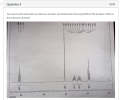 You react acetic acid with an unknown alcohol, and obtain the
following NMR of the product. What is the unknown alcohol?
Question 3 2 pts You react acetic acid with an unknown alcohol, and obtain the following NMR of the product. What is the unknown alcohol? 12.00 13.00 ppm (11) 3 ] 2.00 1- 3.00 0.0 4.0 ppm (11) 2-propanol (CH3)2CHOH) 1-propanol (CH3CH2CH2OH) 2-methyl-1-propanol (CH3)2CHCH2OH) 1-butanol (CH3CH2CH2CH2OH) 2-butanol (CH3CHOHCH2OHCH3)
You react acetic acid with an unknown alcohol, and obtain the
following NMR of the product. What is the unknown alcohol?
Question 3 2 pts You react acetic acid with an unknown alcohol, and obtain the following NMR of the product. What is the unknown alcohol? 12.00 13.00 ppm (11) 3 ] 2.00 1- 3.00 0.0 4.0 ppm (11) 2-propanol (CH3)2CHOH) 1-propanol (CH3CH2CH2OH) 2-methyl-1-propanol (CH3)2CHCH2OH) 1-butanol (CH3CH2CH2CH2OH) 2-butanol (CH3CHOHCH2OHCH3)
Interpret the IR and NMR spectra for an unknown substance. Label all peaks and protons. Correctly...
 Interpret the IR and NMR spectra for an unknown substance.
Label all peaks and protons. Correctly Identify
the compound and draw its structure.
The unknown compound may be one of the following:
1,2-dichloropropane
2-chloro-2-methylpropane
1-bromobutane
2-bromobutane
1-bromo-3-methylbutane
bromocyclohexane
ethanol
1-propanol
2-propanol
1-butanol
2-butanol
2-methyl-2-propanol
n-pentane
2,2,4-tri-methylpentane
toluene
1,2-dimethylbenzene
1,3-dimethylbenzene 1,4-dimethylbenzene
ethylbenzene
n-butylbenzene
2-butylbenzene
isobutylbenzene
cyclohexene
alpha-methylstyrene
10 NAME 15 VENUMBERS COPYRIGHT 1992 -3 và DOL 140 120 100 80 60 40 20 PPM
Interpret the IR and NMR spectra for an unknown substance.
Label all peaks and protons. Correctly Identify
the compound and draw its structure.
The unknown compound may be one of the following:
1,2-dichloropropane
2-chloro-2-methylpropane
1-bromobutane
2-bromobutane
1-bromo-3-methylbutane
bromocyclohexane
ethanol
1-propanol
2-propanol
1-butanol
2-butanol
2-methyl-2-propanol
n-pentane
2,2,4-tri-methylpentane
toluene
1,2-dimethylbenzene
1,3-dimethylbenzene 1,4-dimethylbenzene
ethylbenzene
n-butylbenzene
2-butylbenzene
isobutylbenzene
cyclohexene
alpha-methylstyrene
10 NAME 15 VENUMBERS COPYRIGHT 1992 -3 và DOL 140 120 100 80 60 40 20 PPM
Explain why the IR corresponds to a particular compound of those that are possible based on BP and why it couldn't be...
 Explain why the
IR corresponds to a particular compound of those that are possible
based on BP and why it couldn't be any of the others -mention at
least 3 IR peaks that are present that correspond to functional
groups in your molecule, and discuss specific peaks that were
either present or absent that allowed you to rule out the other
compounds possible based on the boiling point. Reference your IR
spectra as figures.
the boiling
point for unkown 2:...
Explain why the
IR corresponds to a particular compound of those that are possible
based on BP and why it couldn't be any of the others -mention at
least 3 IR peaks that are present that correspond to functional
groups in your molecule, and discuss specific peaks that were
either present or absent that allowed you to rule out the other
compounds possible based on the boiling point. Reference your IR
spectra as figures.
the boiling
point for unkown 2:...
You react acetic acid with an unknown alcohol, and obtain the following NMR of the product...
 You react acetic acid with an unknown alcohol, and obtain the following NMR of the product What is the unknown alcohol? 1-butanol (CH3CH2CH2CH2OH) 2-propanol (CH3)2CHOH) 2-methyl-1-propanol ((CH3)2CHCH2OH) 1-propanol (CH3CH2CH2OH) 2-butanol (CH3CHOHCH2OHCH2)
Hi I just need a little help breaking down some information. I have an unknown, which...
Hi I just need a little help breaking down some information. I have an unknown, which i distilled on a microscale. The boiling point I got was 102 C. I performed a DNPH test which came back negative so its not an aldehyde or ketone, also a chromic acid was positive for a primary or secondary alcohol, and potassium permanganate negative for alkene or alkyne. My IR came back with 3 sp3 C-H peaks an O-H and C-O. The possible...
You react acetic acid with an unknown alcohol, and obtain the following NMR of the product....
 You react acetic acid with an unknown alcohol, and obtain the following NMR of the product. What is the unknown alcohol? 2.049 1.682 1.648 1.613 1.325 1.291 0.972 0.935 6680 - 2.00 4.0 ppm (t1) 2-methyl-1-propanol (CH3)2CHCH2OH) 1-butanol (CH3CH2CH2CH2OH) 2-propanol (CH3)2CHOH) 1-propanol (CH3CH2CH2OH) 2-butanol (CH3CHOHCH2OHCH3)
You add 0.58 mL of n-propanol (0.803 g/mL, 60.1 g/mol) to an excess of acetic acid...
 You add 0.58 mL of n-propanol (0.803 g/mL, 60.1 g/mol) to an excess of acetic acid to create the pear ester propyl acetate (102.1 g/mol). If you obtain 0.53 grams of the product, what was your percent yield? You react acetic acid with an unknown alcohol, and obtain the following NMR of the product. What is the unknown alcohol? LLLLLLLL LES LL 20 1-butanol (CH3CH2CH2CH2OH) 2-propanol (CH3)2CHOH) 1-propanol (CH3CH2CH20H) 2-methyl-1-propanol (CH3)2CHCH2OH) 2 butanol (CH3CHOHCH2OHCH) 3 Mi Consider the below general...
 What alcohol IR spectrum is that when reacted with acetic
acid
UNKNOWN D PPM 112 1-butanol (n-butyl alcohol) 2-butanol (sec-butyl alcohol) 2-methyl-1-propanol (isobutyl alcohol) 3-methyl-1-butanol (isopentyl alcohol) 1-pentanol (n-pentyl alcohol) 2-pentanol 3-pentanol cyclopentanol
What alcohol IR spectrum is that when reacted with acetic
acid
UNKNOWN D PPM 112 1-butanol (n-butyl alcohol) 2-butanol (sec-butyl alcohol) 2-methyl-1-propanol (isobutyl alcohol) 3-methyl-1-butanol (isopentyl alcohol) 1-pentanol (n-pentyl alcohol) 2-pentanol 3-pentanol cyclopentanol
 using the IR, the 13C, and DEPT NMR spectra of your product
determine the identity of your unknown ester from a C-4 or C-5
alcohol. the identity of the C-4 or C-5 alcohol also needs to be
determined.
The following C-4 or C-5 alcohols will be used in this
experiment:
1-butanol (n-butyl alcohol)
2-butanol (sec-butyl alcohol)
2-methyl-1-propanol (isobutyl alcohol)
3-methyl-1-butanol (isopentyl alcohol)
1-pentanol (n-pentyl alcohol)
2-pentanol
3-pentanol
cyclopentanol
Questions:
1. Why is the mixture extracted with aqueous sodium
bicarbonate solution?...
using the IR, the 13C, and DEPT NMR spectra of your product
determine the identity of your unknown ester from a C-4 or C-5
alcohol. the identity of the C-4 or C-5 alcohol also needs to be
determined.
The following C-4 or C-5 alcohols will be used in this
experiment:
1-butanol (n-butyl alcohol)
2-butanol (sec-butyl alcohol)
2-methyl-1-propanol (isobutyl alcohol)
3-methyl-1-butanol (isopentyl alcohol)
1-pentanol (n-pentyl alcohol)
2-pentanol
3-pentanol
cyclopentanol
Questions:
1. Why is the mixture extracted with aqueous sodium
bicarbonate solution?...
 report 13 C NMR, DEPT, observed bp. Evidence should be given
that shows the reaction yeilded an ester product. Specific
evidenceshould be given to support the identification of the
product ester and starting alcohol.
find the starting alcohol and state product ester
Compare the IR spectrum to the IR spectrum of the starting
material. Assign all the major peaks above the fingerprint region
in your IR spectra. Assign the signals in the carbon and Dept NMR
spectra.
what evidence do...
report 13 C NMR, DEPT, observed bp. Evidence should be given
that shows the reaction yeilded an ester product. Specific
evidenceshould be given to support the identification of the
product ester and starting alcohol.
find the starting alcohol and state product ester
Compare the IR spectrum to the IR spectrum of the starting
material. Assign all the major peaks above the fingerprint region
in your IR spectra. Assign the signals in the carbon and Dept NMR
spectra.
what evidence do...
 You react acetic acid with an unknown alcohol, and obtain the
following NMR of the product. What is the unknown alcohol?
Question 3 2 pts You react acetic acid with an unknown alcohol, and obtain the following NMR of the product. What is the unknown alcohol? 12.00 13.00 ppm (11) 3 ] 2.00 1- 3.00 0.0 4.0 ppm (11) 2-propanol (CH3)2CHOH) 1-propanol (CH3CH2CH2OH) 2-methyl-1-propanol (CH3)2CHCH2OH) 1-butanol (CH3CH2CH2CH2OH) 2-butanol (CH3CHOHCH2OHCH3)
You react acetic acid with an unknown alcohol, and obtain the
following NMR of the product. What is the unknown alcohol?
Question 3 2 pts You react acetic acid with an unknown alcohol, and obtain the following NMR of the product. What is the unknown alcohol? 12.00 13.00 ppm (11) 3 ] 2.00 1- 3.00 0.0 4.0 ppm (11) 2-propanol (CH3)2CHOH) 1-propanol (CH3CH2CH2OH) 2-methyl-1-propanol (CH3)2CHCH2OH) 1-butanol (CH3CH2CH2CH2OH) 2-butanol (CH3CHOHCH2OHCH3)
 Interpret the IR and NMR spectra for an unknown substance.
Label all peaks and protons. Correctly Identify
the compound and draw its structure.
The unknown compound may be one of the following:
1,2-dichloropropane
2-chloro-2-methylpropane
1-bromobutane
2-bromobutane
1-bromo-3-methylbutane
bromocyclohexane
ethanol
1-propanol
2-propanol
1-butanol
2-butanol
2-methyl-2-propanol
n-pentane
2,2,4-tri-methylpentane
toluene
1,2-dimethylbenzene
1,3-dimethylbenzene 1,4-dimethylbenzene
ethylbenzene
n-butylbenzene
2-butylbenzene
isobutylbenzene
cyclohexene
alpha-methylstyrene
10 NAME 15 VENUMBERS COPYRIGHT 1992 -3 và DOL 140 120 100 80 60 40 20 PPM
Interpret the IR and NMR spectra for an unknown substance.
Label all peaks and protons. Correctly Identify
the compound and draw its structure.
The unknown compound may be one of the following:
1,2-dichloropropane
2-chloro-2-methylpropane
1-bromobutane
2-bromobutane
1-bromo-3-methylbutane
bromocyclohexane
ethanol
1-propanol
2-propanol
1-butanol
2-butanol
2-methyl-2-propanol
n-pentane
2,2,4-tri-methylpentane
toluene
1,2-dimethylbenzene
1,3-dimethylbenzene 1,4-dimethylbenzene
ethylbenzene
n-butylbenzene
2-butylbenzene
isobutylbenzene
cyclohexene
alpha-methylstyrene
10 NAME 15 VENUMBERS COPYRIGHT 1992 -3 và DOL 140 120 100 80 60 40 20 PPM
 Explain why the
IR corresponds to a particular compound of those that are possible
based on BP and why it couldn't be any of the others -mention at
least 3 IR peaks that are present that correspond to functional
groups in your molecule, and discuss specific peaks that were
either present or absent that allowed you to rule out the other
compounds possible based on the boiling point. Reference your IR
spectra as figures.
the boiling
point for unkown 2:...
Explain why the
IR corresponds to a particular compound of those that are possible
based on BP and why it couldn't be any of the others -mention at
least 3 IR peaks that are present that correspond to functional
groups in your molecule, and discuss specific peaks that were
either present or absent that allowed you to rule out the other
compounds possible based on the boiling point. Reference your IR
spectra as figures.
the boiling
point for unkown 2:...
 You react acetic acid with an unknown alcohol, and obtain the following NMR of the product What is the unknown alcohol? 1-butanol (CH3CH2CH2CH2OH) 2-propanol (CH3)2CHOH) 2-methyl-1-propanol ((CH3)2CHCH2OH) 1-propanol (CH3CH2CH2OH) 2-butanol (CH3CHOHCH2OHCH2)
 You react acetic acid with an unknown alcohol, and obtain the following NMR of the product. What is the unknown alcohol? 2.049 1.682 1.648 1.613 1.325 1.291 0.972 0.935 6680 - 2.00 4.0 ppm (t1) 2-methyl-1-propanol (CH3)2CHCH2OH) 1-butanol (CH3CH2CH2CH2OH) 2-propanol (CH3)2CHOH) 1-propanol (CH3CH2CH2OH) 2-butanol (CH3CHOHCH2OHCH3)
 You add 0.58 mL of n-propanol (0.803 g/mL, 60.1 g/mol) to an excess of acetic acid to create the pear ester propyl acetate (102.1 g/mol). If you obtain 0.53 grams of the product, what was your percent yield? You react acetic acid with an unknown alcohol, and obtain the following NMR of the product. What is the unknown alcohol? LLLLLLLL LES LL 20 1-butanol (CH3CH2CH2CH2OH) 2-propanol (CH3)2CHOH) 1-propanol (CH3CH2CH20H) 2-methyl-1-propanol (CH3)2CHCH2OH) 2 butanol (CH3CHOHCH2OHCH) 3 Mi Consider the below general...
Most questions answered within 3 hours.
-
Where is the error in this code sequence?
String s1 = "Hello";
String s2 = "ello";...
asked 10 months ago -
Financial data for Joel de Paris, Inc., for last year
follow:
Joel de Paris, Inc.
Balance...
asked 10 months ago -
Consider this reaction:
Al2(SO4)3 (aq)+ BaCl3
(aq) Al2Cl6 (aq)- +
3BaSO4(s) . What is the...
asked 10 months ago -
Suppose that Savneet is considering increasing her
recent random sample from 20 car rentals to 40...
asked 10 months ago -
Trucks arrive at an unloading terminal at an average rate of 120
per hour.
Trucks arrive...
asked 10 months ago -
Why are methanol and ethanol completely soluble in water while
octanol is not very little soluble....
asked 10 months ago -
A facilities manager at a university reads in a research report
that the mean amount of...
asked 10 months ago -
When the CuSO4 is rehydrated by adding water to the anhydrous
compound, is this an endothermic...
asked 10 months ago -
A ray of sunlight is passing from diamond into crown glass; the
angle of incidence is...
asked 10 months ago -
A block of mass 0.249 kg is placed on top of a light, vertical
spring of...
asked 10 months ago -
how do the kidneys compensate in the presences of acidosis
a) trigger hyperventilate
b) reserve acid...
asked 10 months ago -
Question 501 pts
The rental rate of capital to the firm increases. Which of the
following...
asked 10 months ago