-Understand the concept of (restriction enzyme produced) DNA fragment separation by gel electrophoresis. -In gel electrophoresis,...
-Understand the concept of (restriction enzyme produced) DNA fragment separation by gel electrophoresis.
-In gel electrophoresis, which DNA fragment (in terms of size) would migrate further from the sample well?
-Understand restriction enzyme(s) and recognize they leave blunt or sticky ends (ie. XbaI, SmaI, EcoRI, BamHI)?
-Understand the steps (process) of the Polymerase Chain Reaction and Thermal Cycling.
Please answer as much as you can and I will give a high rate
Homework Answers
1. DNA digestion by using restriction enzymes are loaded onto gel electrophoresis. DNA is digested in separate reactions with one of up to three. A control 'uncut' sample is incubated without adding enzyme. Digested DNA samples are loaded into wells of an 0.8% agarose gel, and an electric field is applied causing negatively-charged DNA fragments to migrate toward the + electrode. The gel matrix acts as a sieve and allows smaller DNA molecules to migrate faster than larger molecules, so that the fragments are separated by size. The rate of migration is approximately proportional to the log of the molecular weight of the DNA molecule.
Enzymatic Unit = amount of enzyme necessary to digest 1 µg ds DNA to completion in 1 hr under standard conditions (typically 37°C, with optimal buffer). RE's typically are sold at a concentration of 5-20 U / µl, although high concentration versions may also be available.
2. DNA molecules migrate through the gel matrix at a rate that is inversely proportional to the log10 of their molecular weight (for convenience, expressed in base pairs). Larger molecules move more slowly because of greater frictional drag and because they worm their way through the pores in the gel less efficiently than small molecules.DNA molecules migrate at different rates, depending on the concentration of agarose in the gel. Higher percentage gels are better for resolving small fragments; lower percentage gels are better for resolving large fragments.
3. Xbal: Sticky ends, Smal: blunt ends,
EcoRI: recognises the sequence 5'GAATTC'3 - sticky ends
BamHI: recognises the sequence 5'GGATCC'3 - sticky ends
4. The polymerase chain reaction (PCR) was originally developed in 1983 by the American biochemist Kary Mullis. It is a technique used in the lab to make millions of copies of a particular section of DNA. It is a common tool used in medical and biological research labs.
Principle: Five components are required to set up a PCR:
- the DNA template to be copied
- primers, short stretches of DNA that initiate the PCR reaction
- DNA bases (A, C, G and T) are the building blocks of DNA and are needed to construct the new strand of DNA
- Taq polymerase
- buffer to ensure the right conditions for the reaction.
Three main steps:
- Denaturing – when the double-stranded template DNA is heated to separate it into two single strands.
- Annealing – when the temperature is lowered to enable the DNA primers to attach to the template DNA.
- Extending – when the temperature is raised and the new strand of DNA is made by the Taq polymerase enzyme.
- These three stages are repeated 20-40 times, doubling the number of DNA copies each time.
- After PCR has been completed, electrophoresis can be used to check the quantity and size of the DNA fragments produced.
Add Answer to:
-Understand the concept of (restriction enzyme produced) DNA
fragment separation by gel electrophoresis.
-In gel electrophoresis,...
-Which elements are found in a eukaryotic promoter vs. a prokaryotic promoter? -what is the concept...
-Which elements are found in a eukaryotic promoter vs. a prokaryotic promoter? -what is the concept of (restriction enzyme produced) DNA fragment separation by gel electrophoresis -what are the steps and process of thermal cycling? -what is the restriction enzyme(s) and how do you know when they leave blunt or sticky ends (ie. XbaI, SmaI, EcoRI, BamHI)? -The lac and trp operons (form a figure showing the operon). - What is RNA silencing involvee (in general, what is RNA interference;...
Use the results of the agarose gel electrophoresis separation to construct a restriction map for the...
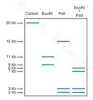 Use the results of the agarose gel electrophoresis separation to
construct a restriction map for the sample of DNA
EcoRI Control EcoRI Pst Pst 15kb-. 8kb → 3 kb
Use the results of the agarose gel electrophoresis separation to
construct a restriction map for the sample of DNA
EcoRI Control EcoRI Pst Pst 15kb-. 8kb → 3 kb
A plasmid used as a cloning vector in E. coli must have… Does sequence similarity between...
A plasmid used as a cloning vector in E. coli must have… Does sequence similarity between genes play an important role in assigning gene function? Successful insertion of a DNA fragment into the multi-cloning region (restriction sites) of a recombinant plasmid is detected by what changes? Understand the concept of (restriction enzyme produced) DNA fragment separation by gel electrophoresis. In addition to restriction enzymes, which enzyme(s) are required to insert a fragment of DNA into a cloning vector? What is...
3. With reference to your PCR amplicon, detail the terminal DNA sequences at the two ends...
 3. With reference to your PCR amplicon, detail the terminal DNA sequences at the two ends of the fragment that will be generated after digestion with Eael (indicate these in the two blocks below). What type of ends are generated by this enzyme (blunt/sticky, 5' or 3 overhang)? (4) GGCCR PCR amplicon RCCGG The PCR was a success and your target region of 770 bp in length has been amplified. You now plan to digest the DNA amplicon with the...
A plasmid is cleaved by restriction endonucleases and analyzed by agarose gel electrophoresis. Assume there is...
 A plasmid is cleaved by restriction endonucleases and analyzed
by agarose gel electrophoresis. Assume there is no supercoiling.
Answer the following three questions about the plasmid.
Can you please help below? I also don't understand it so a
explanation for each would be helpful. For the first one I think
its 1000bp but unsure. For the second, I think there is 2 HindIII
sites and for the last one there is 1 EcoRI site? Please
explain.
A plasmid is cleaved...
A plasmid is cleaved by restriction endonucleases and analyzed
by agarose gel electrophoresis. Assume there is no supercoiling.
Answer the following three questions about the plasmid.
Can you please help below? I also don't understand it so a
explanation for each would be helpful. For the first one I think
its 1000bp but unsure. For the second, I think there is 2 HindIII
sites and for the last one there is 1 EcoRI site? Please
explain.
A plasmid is cleaved...
Suppose you digest the genomic DNA of a particular organism with the restriction enzyme SauA. Then...
 Suppose you digest the genomic DNA of a particular organism with
the restriction enzyme SauA. Then you ligate the resulting fragment
into a unique BamHI cloning site of a plasmid. The sequence of the
restriction sites and position of cleavage is shown below
Note: X and Y and their complementary bases Z and Y’
respectively can be any base (A,C, G, or T)
1) As you can see, ligation is possible because the two restriction
enzymes produce compatible sticky ends....
Suppose you digest the genomic DNA of a particular organism with
the restriction enzyme SauA. Then you ligate the resulting fragment
into a unique BamHI cloning site of a plasmid. The sequence of the
restriction sites and position of cleavage is shown below
Note: X and Y and their complementary bases Z and Y’
respectively can be any base (A,C, G, or T)
1) As you can see, ligation is possible because the two restriction
enzymes produce compatible sticky ends....
In rho-dependent transcription termination: the formation of a hairpin in the transcribed mRNA causes RNA polymerase...
 In rho-dependent transcription termination: the formation of a hairpin in the transcribed mRNA causes RNA polymerase to pause, facilitating termination. rho binds the mRNA, and when it makes contact with RNA polymerase, it assists with the removal of the mRNA from the DNA template. the rho factor binds to the -10 consensus sequence located in the promoter region to terminate transcription. a site within the poly(A) tail is cleaved which signals termination. the 3' untranslated region (3" UTR) is synthesized....
2. Here are some DNA fragments that have been isolated by gel electrophoresis after being cut...
 2. Here are some DNA fragments that have been isolated by gel electrophoresis after being cut with restriction enzynes. A. 5 '-ACTGACATAGGCACCCCTTAA-3 3'-TGACTGTATCCGTGGGG-5 5 '-TGACTGTATCCGTGGGG-3' 3 '-ACTGACATAGGCACCCCTTAA-5' 5 '-GGCATACTAGATCCACGTTAA-3 3'-CCGTATGATCTAGGTGC-5 5 '-GGCATACTAGATCCACGAATT-3 3'-CCGTATGATCTAGGTGC-5 E. 5 '-GGCATACTAGATCCACGGATC-3 3'-CCGTATGATCTAGGTGC-5 a. Which pair of these fragments has appropriate complementary sticky ends to get joined together in a recombinant DNA molecule? b. What enzyme would we use to join up the DNA backbones to make the make the recombinant molecule?
L= No restriction B=Bam HI E=EcoRI H=Hind III Band 1 27mm 31mm 29mm 29mm Band 2...
 L= No restriction
B=Bam HI
E=EcoRI
H=Hind III
Band 1
27mm
31mm
29mm
29mm
Band 2
NA
34mm
41mm
37mm
Band 3
NA
41mm
46mm
43mm
Band 4
NA
43mm
49mm
52mm
Band 5
NA
46mm
57mm
71mm
Band 6
NA
NA
NA
76mm
Above is the actual measurements for the distance in mm. Please
plug this in with the existing chart located above
Gel Electrophoresis lab assignment The following sheets will be used to demonstrate your knowledge of gel...
L= No restriction
B=Bam HI
E=EcoRI
H=Hind III
Band 1
27mm
31mm
29mm
29mm
Band 2
NA
34mm
41mm
37mm
Band 3
NA
41mm
46mm
43mm
Band 4
NA
43mm
49mm
52mm
Band 5
NA
46mm
57mm
71mm
Band 6
NA
NA
NA
76mm
Above is the actual measurements for the distance in mm. Please
plug this in with the existing chart located above
Gel Electrophoresis lab assignment The following sheets will be used to demonstrate your knowledge of gel...
Chromosomal and plasmid DNA can be cut into manageable pieces by restriction enzymes. Using agarose gel...
 Chromosomal and plasmid DNA can be cut into manageable pieces by
restriction enzymes. Using agarose gel electrophoresis, the DNA
fragments can be separated on a gel, based on their lengths. In
order to see the fragments, a stain is typically added to the gel.
The size of each fragment can be determined by comparing each one
to a DNA molecular weight marker of known size.
Below is a map of pBR22 plasmid. The position and base pair
number of the...
Chromosomal and plasmid DNA can be cut into manageable pieces by
restriction enzymes. Using agarose gel electrophoresis, the DNA
fragments can be separated on a gel, based on their lengths. In
order to see the fragments, a stain is typically added to the gel.
The size of each fragment can be determined by comparing each one
to a DNA molecular weight marker of known size.
Below is a map of pBR22 plasmid. The position and base pair
number of the...
 Use the results of the agarose gel electrophoresis separation to
construct a restriction map for the sample of DNA
EcoRI Control EcoRI Pst Pst 15kb-. 8kb → 3 kb
Use the results of the agarose gel electrophoresis separation to
construct a restriction map for the sample of DNA
EcoRI Control EcoRI Pst Pst 15kb-. 8kb → 3 kb
 3. With reference to your PCR amplicon, detail the terminal DNA sequences at the two ends of the fragment that will be generated after digestion with Eael (indicate these in the two blocks below). What type of ends are generated by this enzyme (blunt/sticky, 5' or 3 overhang)? (4) GGCCR PCR amplicon RCCGG The PCR was a success and your target region of 770 bp in length has been amplified. You now plan to digest the DNA amplicon with the...
 A plasmid is cleaved by restriction endonucleases and analyzed
by agarose gel electrophoresis. Assume there is no supercoiling.
Answer the following three questions about the plasmid.
Can you please help below? I also don't understand it so a
explanation for each would be helpful. For the first one I think
its 1000bp but unsure. For the second, I think there is 2 HindIII
sites and for the last one there is 1 EcoRI site? Please
explain.
A plasmid is cleaved...
A plasmid is cleaved by restriction endonucleases and analyzed
by agarose gel electrophoresis. Assume there is no supercoiling.
Answer the following three questions about the plasmid.
Can you please help below? I also don't understand it so a
explanation for each would be helpful. For the first one I think
its 1000bp but unsure. For the second, I think there is 2 HindIII
sites and for the last one there is 1 EcoRI site? Please
explain.
A plasmid is cleaved...
 Suppose you digest the genomic DNA of a particular organism with
the restriction enzyme SauA. Then you ligate the resulting fragment
into a unique BamHI cloning site of a plasmid. The sequence of the
restriction sites and position of cleavage is shown below
Note: X and Y and their complementary bases Z and Y’
respectively can be any base (A,C, G, or T)
1) As you can see, ligation is possible because the two restriction
enzymes produce compatible sticky ends....
Suppose you digest the genomic DNA of a particular organism with
the restriction enzyme SauA. Then you ligate the resulting fragment
into a unique BamHI cloning site of a plasmid. The sequence of the
restriction sites and position of cleavage is shown below
Note: X and Y and their complementary bases Z and Y’
respectively can be any base (A,C, G, or T)
1) As you can see, ligation is possible because the two restriction
enzymes produce compatible sticky ends....
 In rho-dependent transcription termination: the formation of a hairpin in the transcribed mRNA causes RNA polymerase to pause, facilitating termination. rho binds the mRNA, and when it makes contact with RNA polymerase, it assists with the removal of the mRNA from the DNA template. the rho factor binds to the -10 consensus sequence located in the promoter region to terminate transcription. a site within the poly(A) tail is cleaved which signals termination. the 3' untranslated region (3" UTR) is synthesized....
 2. Here are some DNA fragments that have been isolated by gel electrophoresis after being cut with restriction enzynes. A. 5 '-ACTGACATAGGCACCCCTTAA-3 3'-TGACTGTATCCGTGGGG-5 5 '-TGACTGTATCCGTGGGG-3' 3 '-ACTGACATAGGCACCCCTTAA-5' 5 '-GGCATACTAGATCCACGTTAA-3 3'-CCGTATGATCTAGGTGC-5 5 '-GGCATACTAGATCCACGAATT-3 3'-CCGTATGATCTAGGTGC-5 E. 5 '-GGCATACTAGATCCACGGATC-3 3'-CCGTATGATCTAGGTGC-5 a. Which pair of these fragments has appropriate complementary sticky ends to get joined together in a recombinant DNA molecule? b. What enzyme would we use to join up the DNA backbones to make the make the recombinant molecule?
 L= No restriction
B=Bam HI
E=EcoRI
H=Hind III
Band 1
27mm
31mm
29mm
29mm
Band 2
NA
34mm
41mm
37mm
Band 3
NA
41mm
46mm
43mm
Band 4
NA
43mm
49mm
52mm
Band 5
NA
46mm
57mm
71mm
Band 6
NA
NA
NA
76mm
Above is the actual measurements for the distance in mm. Please
plug this in with the existing chart located above
Gel Electrophoresis lab assignment The following sheets will be used to demonstrate your knowledge of gel...
L= No restriction
B=Bam HI
E=EcoRI
H=Hind III
Band 1
27mm
31mm
29mm
29mm
Band 2
NA
34mm
41mm
37mm
Band 3
NA
41mm
46mm
43mm
Band 4
NA
43mm
49mm
52mm
Band 5
NA
46mm
57mm
71mm
Band 6
NA
NA
NA
76mm
Above is the actual measurements for the distance in mm. Please
plug this in with the existing chart located above
Gel Electrophoresis lab assignment The following sheets will be used to demonstrate your knowledge of gel...
 Chromosomal and plasmid DNA can be cut into manageable pieces by
restriction enzymes. Using agarose gel electrophoresis, the DNA
fragments can be separated on a gel, based on their lengths. In
order to see the fragments, a stain is typically added to the gel.
The size of each fragment can be determined by comparing each one
to a DNA molecular weight marker of known size.
Below is a map of pBR22 plasmid. The position and base pair
number of the...
Chromosomal and plasmid DNA can be cut into manageable pieces by
restriction enzymes. Using agarose gel electrophoresis, the DNA
fragments can be separated on a gel, based on their lengths. In
order to see the fragments, a stain is typically added to the gel.
The size of each fragment can be determined by comparing each one
to a DNA molecular weight marker of known size.
Below is a map of pBR22 plasmid. The position and base pair
number of the...
Most questions answered within 3 hours.
-
Where is the error in this code sequence?
String s1 = "Hello";
String s2 = "ello";...
asked 10 months ago -
Financial data for Joel de Paris, Inc., for last year
follow:
Joel de Paris, Inc.
Balance...
asked 10 months ago -
Consider this reaction:
Al2(SO4)3 (aq)+ BaCl3
(aq) Al2Cl6 (aq)- +
3BaSO4(s) . What is the...
asked 10 months ago -
Suppose that Savneet is considering increasing her
recent random sample from 20 car rentals to 40...
asked 10 months ago -
Trucks arrive at an unloading terminal at an average rate of 120
per hour.
Trucks arrive...
asked 10 months ago -
Why are methanol and ethanol completely soluble in water while
octanol is not very little soluble....
asked 10 months ago -
A facilities manager at a university reads in a research report
that the mean amount of...
asked 10 months ago -
When the CuSO4 is rehydrated by adding water to the anhydrous
compound, is this an endothermic...
asked 10 months ago -
A ray of sunlight is passing from diamond into crown glass; the
angle of incidence is...
asked 10 months ago -
A block of mass 0.249 kg is placed on top of a light, vertical
spring of...
asked 10 months ago -
how do the kidneys compensate in the presences of acidosis
a) trigger hyperventilate
b) reserve acid...
asked 10 months ago -
Question 501 pts
The rental rate of capital to the firm increases. Which of the
following...
asked 10 months ago